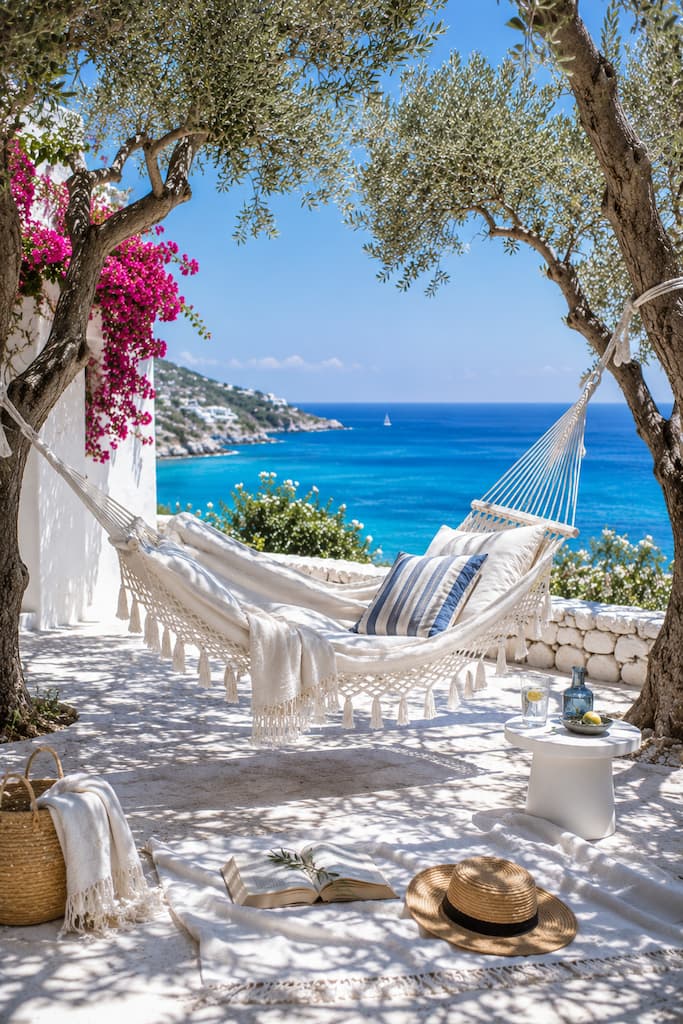
Weekend coastal mornings are not actually about sitting still.
Monday through Friday, morning is mostly logistics. The alarm goes off, the phone gets checked, emails have somehow arrived before anyone has had coffee, breakfast is eaten quickly or taken along for the ride, children need dropping off, adults need commuting, and traffic has already decided how patient everyone will be that day. Coffee is less a pleasure than equipment. By the time we properly notice the morning, much of it is already gone.
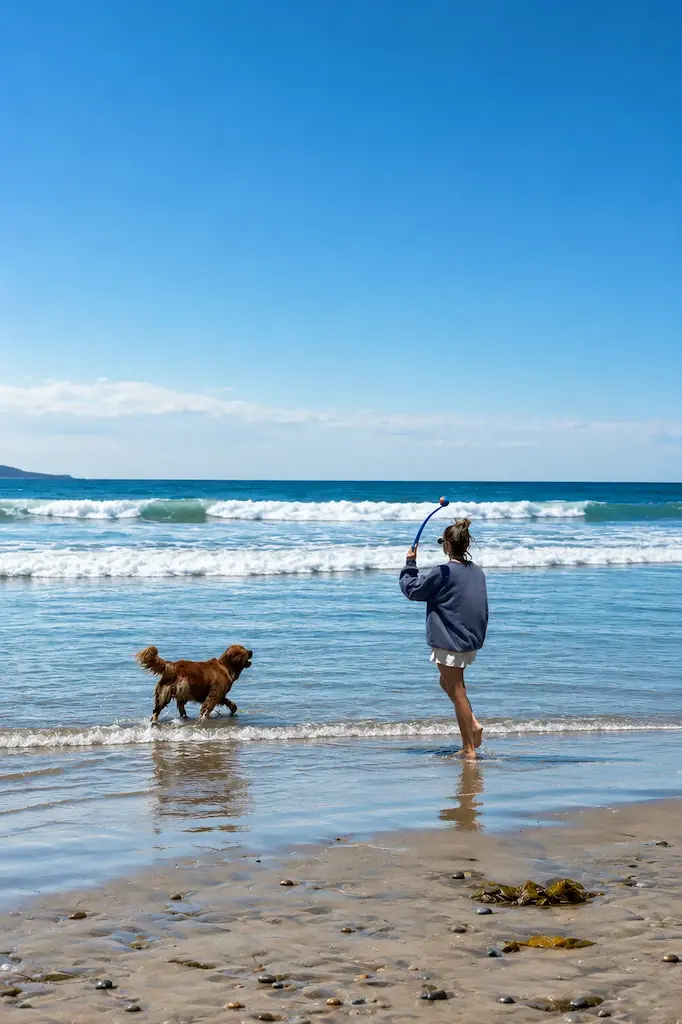
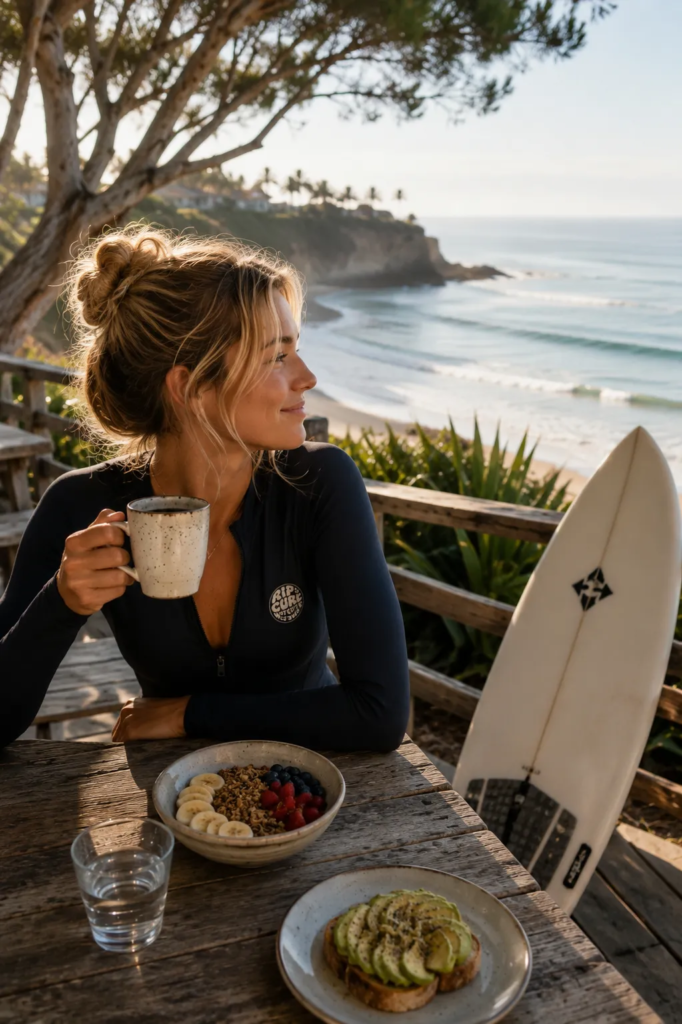
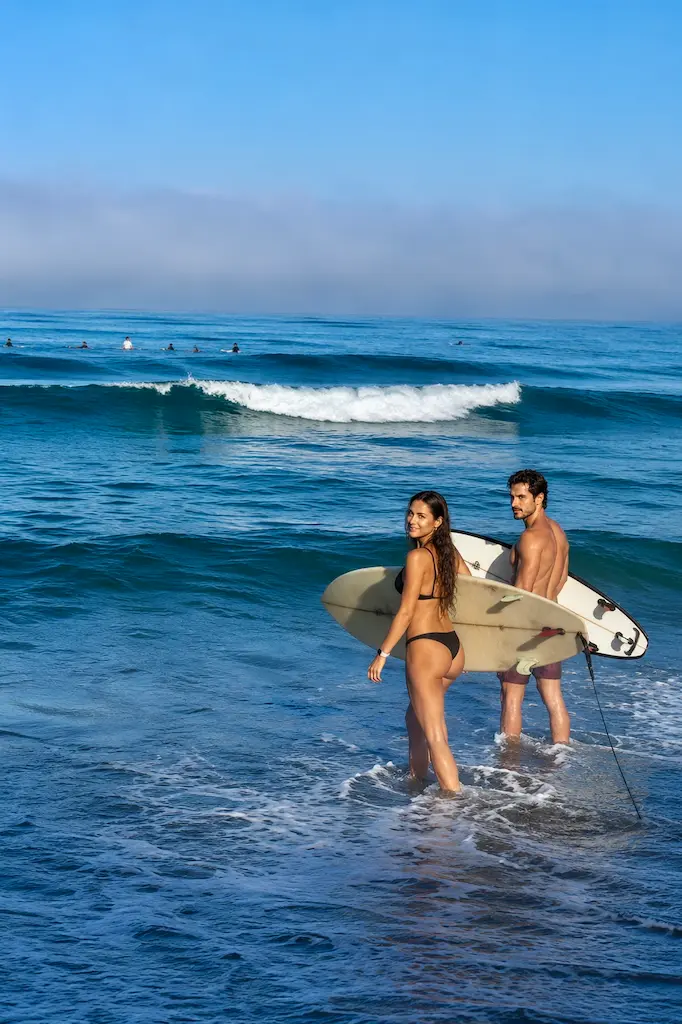
Then the weekend arrives. It is not necessarily any quieter, but the whole rhythm changes. People still wake early, only now it is because they want to. They drive places, buy groceries, exercise, walk dogs, meet friends and accomplish a surprising number of things before noon. For a few hours, the alarm is no longer the boss. Nobody forced the Californian surfer out of bed before sunrise. Surfers know that “dawn patrol” can mean lighter winds, cleaner conditions and fewer people in the water. Surfing is so embedded in California culture that it became the state’s official sport in 2018. Getting up at six on Monday feels cruel. Getting up at six because the waves are good apparently counts as recreation.
That contradiction is what makes the coastal weekend morning interesting. It is often described as slow, but that is not quite true. Plenty is happening. The coast can be swimming, surfing, cycling, shopping and carrying breakfast home before other people have found their slippers. What changes is not necessarily the amount of activity. It is who chooses it.
What Gets the Coast Out of Bed
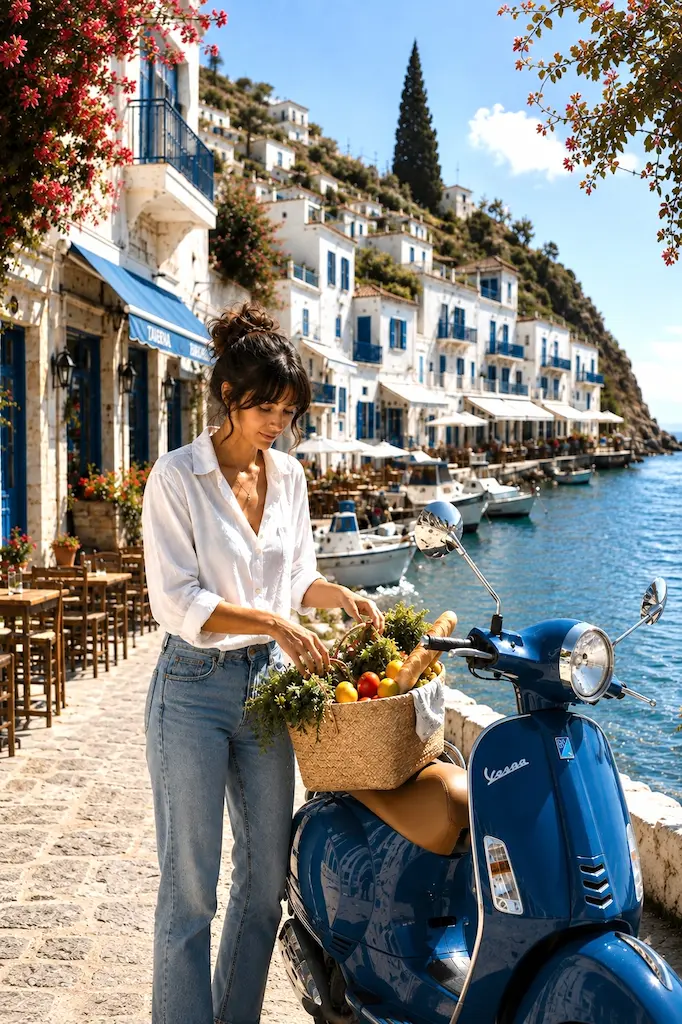
Markets are one of the clearest examples. In Nice, Cours Saleya fills with local fruit, vegetables and flowers through the weekend, right in the old town near the sea. In Cannes, Forville Market comes alive in the morning with Provençal produce and fresh fish. These are technically places to buy groceries, yet nobody looking at a crowded Mediterranean market on a Saturday or Sunday morning would mistake the experience for racing through a supermarket with a list and twelve minutes to spare. Buying lunch has become part of the morning itself.
Italy makes that relationship with the sea even more literal. Rimini’s covered market opens at 7 a.m., with more than 60 stalls and Adriatic fish caught during the night only hours before reaching the counter. There is something wonderfully efficient about this, although nobody seems particularly interested in calling it efficiency. The boats worked overnight, the fish reaches the market in the morning, and the person standing there deciding what to cook becomes the final part of a routine that began offshore while most of the city was asleep.
Spain offers an even more dramatic weekend transformation. Teguise, the old capital of Lanzarote, is ordinarily a quiet town. Every Sunday morning, that changes. From 9 until 2, streets and squares fill with market stalls, local products, craftspeople, food, music and crowds. For a few hours, the town seems to change personality. Nothing about that sounds particularly slow. It sounds busy. But it is the kind of busy people voluntarily walk toward.
And then, far beyond our usual shores, Australia takes the idea of a lazy Sunday morning and cheerfully throws it into the ocean. Along the New South Wales North Coast, many surf lifesaving clubs hold Nippers on Sunday mornings, often beginning before nine. Children swim, paddle boards, run on the beach and learn surf awareness and lifesaving skills while parents become part of the clubs around them. Hundreds of families can therefore spend Sunday morning getting children dressed, finding towels, loading the car and participating in several hours of organized activity. Anyone who has ever tried to get an entire family to the beach will recognize that this is not relaxation in the traditional sense.
And that is only the organized version. Elsewhere, the ritual may be a beach walk, an early swim, a coastal bike ride, breakfast at a café, a farmers market, buying bread, checking the waves or packing food for later. The objects change—surfboard, market basket, bicycle, picnic bag—but the coast has a peculiar way of pulling weekend life outdoors. Nobody has issued instructions. People simply keep turning toward the water.
It Was Never Really About Slowing Down
This is where the familiar idea of the “slow coastal morning” begins to fall apart. The surfer has been awake since dawn. The market is crowded. The fish seller has been working for hours. Teguise has turned an otherwise quiet Sunday into five hours of bustle. Apparently, the secret to taking it easy is to become extraordinarily active doing things nobody is paying you to do.
And perhaps that is why a coastal weekend morning feels so different from a weekday one. Monday morning activity is largely prescribed: leave now, arrive there, answer this, finish that. Weekend activity can be equally energetic, but it begins with a very different question: What do I feel like doing this morning? Along the coast, the answers become rituals. Check the waves. Go to the market. Walk by the water. Swim. Ride. Run along the beach path. Buy something for lunch. Meet someone for coffee. Pack far too much food for what was described as a “simple” beach picnic.
None of these activities is remarkable on its own, and none proves that coastal people have discovered a superior way to live. They simply show what happens when a morning is shaped more by preference than obligation. So perhaps the original idea of “the luxury of an unhurried morning” had the wrong word. Coastal weekend mornings are not always unhurried at all. The luxury is choosing what is worth hurrying for.
CONTINUE EXPLORING
Inspired by this story? Continue your journey with Encinitas | California’s Closest Thing to Utopia →