The Many Stories Hidden Behind One Color
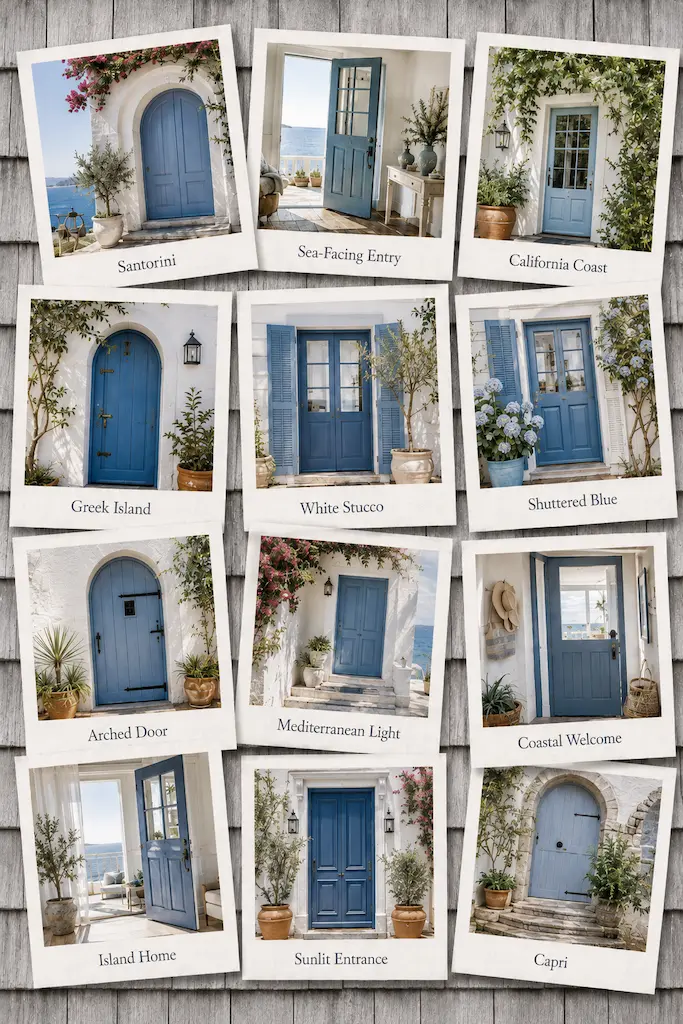
There are few architectural details photographed more often than a blue door. We stop, admire it, and almost instinctively reach for our camera. Yet ask ten people why it is blue and you’ll hear ten different stories. Protection from the evil eye. Cheap boat paint. A government decree. The Greek flag. The sea. The sky. Every explanation sounds convincing, but perhaps we’ve been asking the wrong question all along.
The real mystery isn’t why people paint doors blue. It’s why so many different coastal cultures, separated by languages, religions, and centuries of history, all arrived at the same colour. Somehow, the blue door became part of the Mediterranean story, then crossed the Atlantic and settled comfortably into California, where it still feels perfectly at home. Maybe the door tells us less about architecture than it does about the way people create meaning.
For centuries, blue carried spiritual significance across the Mediterranean. In Greece and Turkey, it became associated with protection from the evil eye, while in parts of North Africa it was linked with spirituality and divine presence. Every coastline seemed to adopt blue, then give it a story of its own. Whether those beliefs were universally shared matters less than the fact that people kept telling them. Like many traditions, the symbolism evolved over generations until history and folklore became almost impossible to separate.
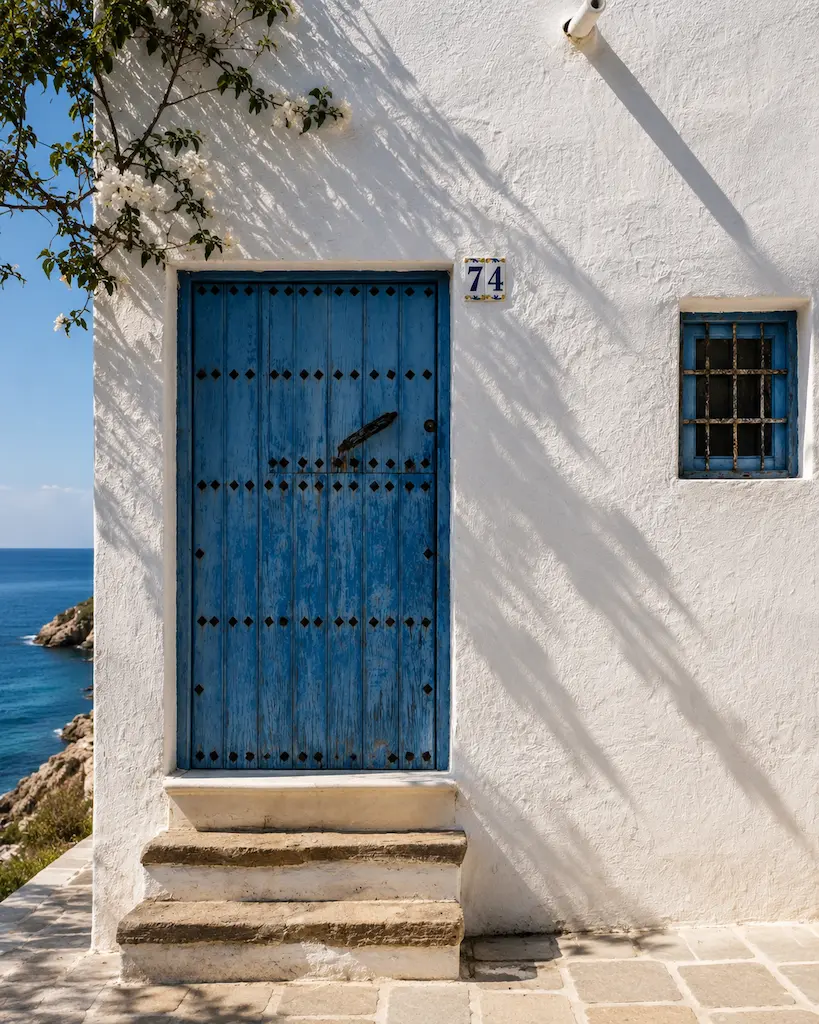
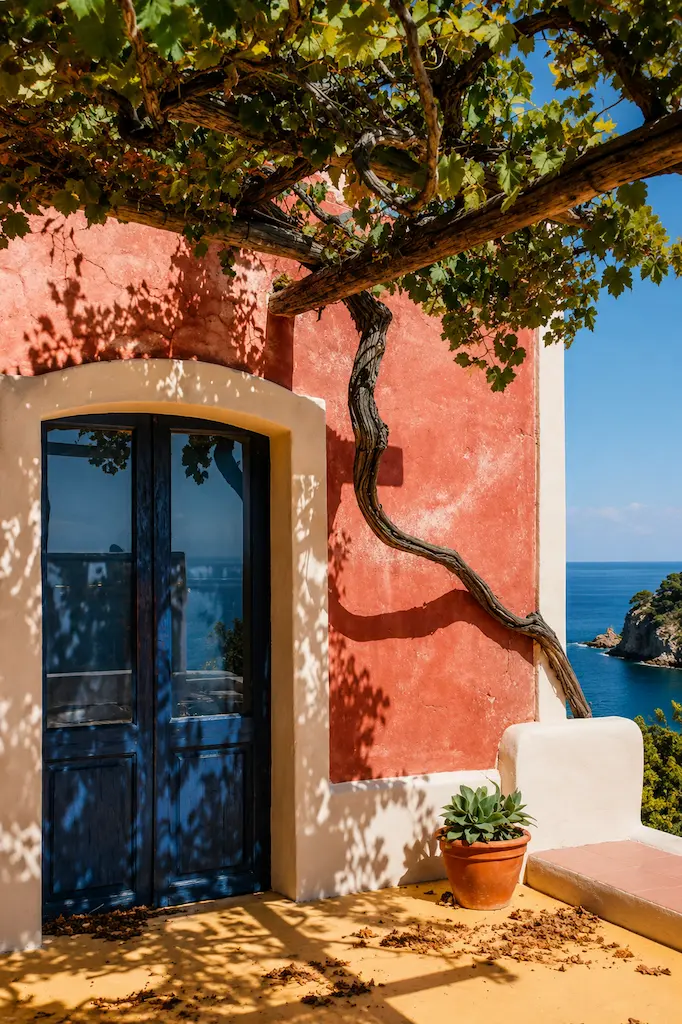
Practicality, however, deserves just as much credit as mythology. Long before disinfectants came in bottles, limewash came in buckets. Whitewashed homes reflected the fierce Mediterranean sun while helping sanitize buildings during outbreaks of disease, turning an everyday necessity into one of the region’s defining architectural traditions. Against those brilliant white walls, blue doors and shutters offered a striking contrast, whether chosen for symbolism, convenience, or simply because durable blue marine paint was already common in fishing communities. What began as practical gradually became beautiful.
Politics even found its way to the front door. During the twentieth century, Greek governments embraced the blue-and-white aesthetic as a symbol of national identity, encouraging the colours that today have become inseparable from the Cyclades. Yet even politics was only writing another chapter in a much older story. Blue doors and whitewashed villages already existed. Governments helped define the image the world would come to recognize, but they didn’t invent it.
Artists were drawn to blue doors long before they became Instagram icons. In The Bedroom (1888), Vincent van Gogh filled his modest room with warm yellows, earthy timber, and soft blue walls. Tucked into the composition is a simple blue door—unadorned, almost easy to overlook. Yet it quietly balances the room, creating a sense of calm and openness against the warm furniture. Van Gogh never explained the door itself, but throughout his work, colour was rarely accidental. Here, blue feels less like decoration and more like a gentle invitation into an ordinary home. Yet blue isn’t always cheerful. Picasso devoted an entire period of his career to exploring melancholy through shades of blue. The colour can feel hopeful or reflective, peaceful or lonely. Like the sea itself, it rarely expresses just one emotion.
Architecture may offer the simplest explanation of all. Stand in almost any coastal village and you’ll notice that blue isn’t confined to the front door. It’s painted onto fishing boats, shutters, harbour ropes, ceramic pots, window frames, and church domes. Surrounded by sea and sky, the colour begins to feel inevitable. Perhaps coastal architecture never tried to imitate the landscape. Perhaps it simply learned to belong to it.
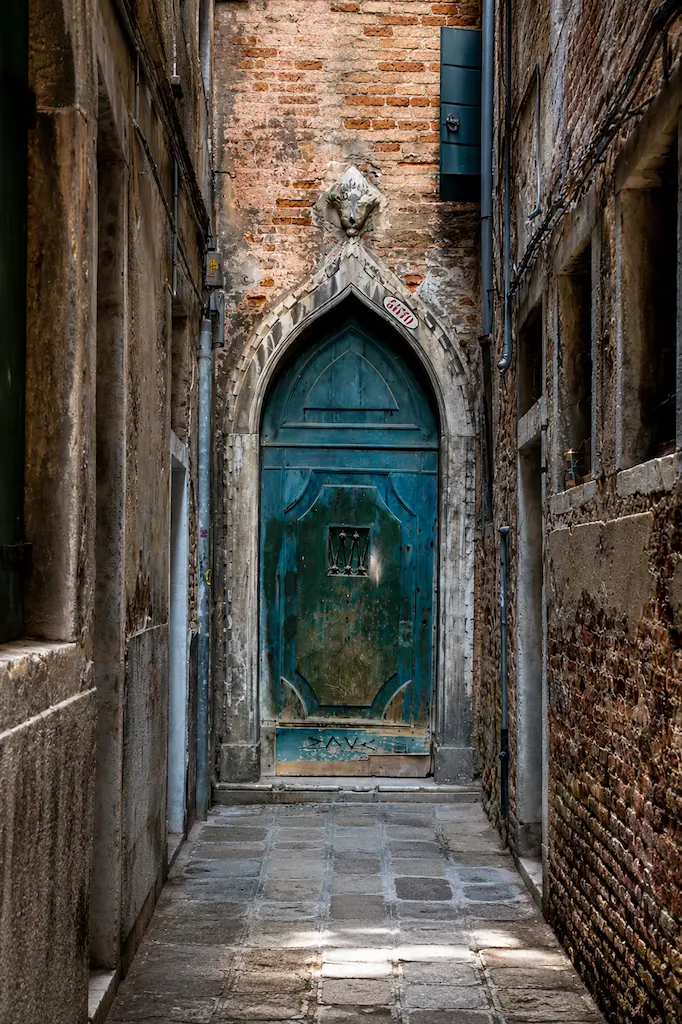
Sometimes a single blue door becomes famous in its own right. Hidden away in Venice’s Castello district is a weathered turquoise doorway that has become one of the city’s most photographed details. It doesn’t belong to a grand palace or a celebrated church, yet visitors search for it with the same enthusiasm as Venice’s greatest landmarks. In Marseille, the idea evolved even further. La Porte Bleue—The Blue Door—isn’t a front door at all but a contemporary landmark whose sweeping design symbolizes an opening toward the Mediterranean and the many cultures that have arrived through its port. In both cities, the blue door becomes something larger than architecture. It becomes identity.
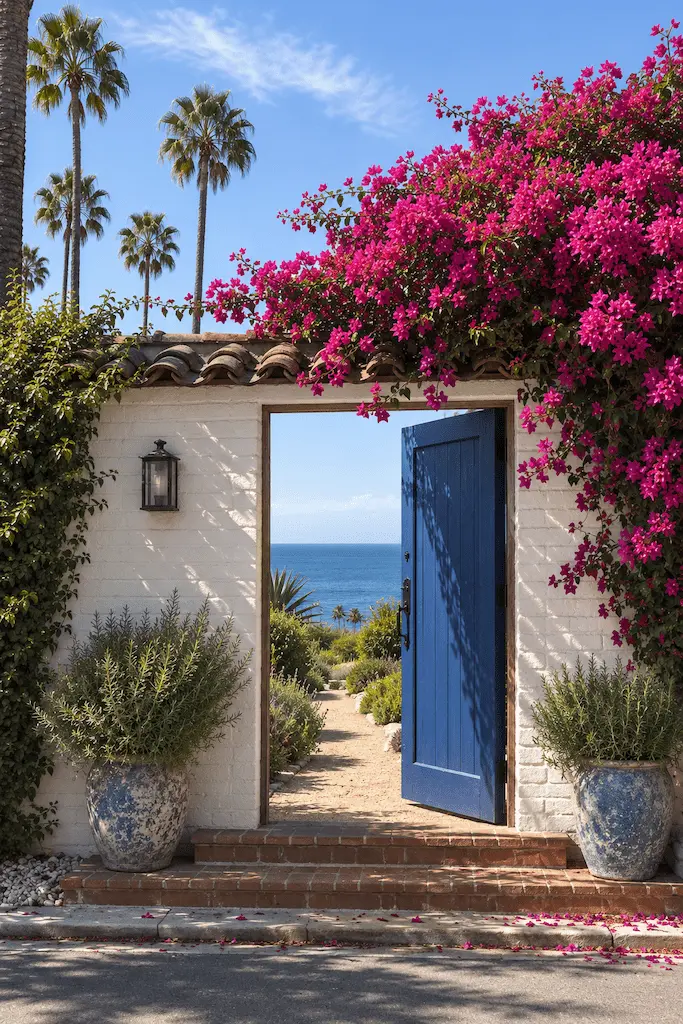
Across the Pacific, the tradition quietly found a new home. Blue doors appear throughout California’s Spanish Colonial Revival houses, Mediterranean villas, and relaxed coastal cottages. Few homeowners are thinking about ancient folklore when they choose the colour, yet they continue choosing it for the same reason people always have. A blue door immediately feels welcoming. It suggests fresh air, slower mornings, and a home that belongs to its surroundings rather than competing with them. Somewhere along the way, blue stopped being a superstition and became a feeling.
So why are blue doors blue? The answer depends entirely on whom you ask. A historian will tell one story, an architect another, a fisherman a different one again. All of them contain a piece of the truth, but none tells the whole story. Perhaps that’s why blue doors continue to fascinate us. They remind us that the best traditions are rarely born from a single moment. They evolve through centuries of beliefs, practical decisions, artistic expression, and life beside the sea until nobody can quite remember where the story began.
Maybe that’s the true symbolism of the blue door. It isn’t protection, politics, or even the sea itself. It’s the quiet promise that, beyond this threshold, life moves at a gentler pace. Home, after all, begins long before we step inside. It begins at the front door.
CONTINUE EXPLORING
Inspired by this story? The story continues. Here is your next read Greek Homes Beyond the White Walls & Blue Doors →