Why Sailing Still Defines the Coastal Life

There is a Greek sailor named Loucas Gourtsoyannis who has spent years doing something that sounds almost suspiciously pleasant. He sails between Aegean islands carrying local products—cheeses, honey, herbs, olive oil and other goods—while introducing travelers to the people who make them. National Geographic has already told his wonderful story in detail, so we will not repeat it here. But Gourtsoyannis and Aegean Cargo Sailing point toward something bigger: there is still something magical about sailing—not aboard a floating luxury hotel, but on a small sailing vessel where the boat itself becomes your tiny home on the water.
There is no urgency to arrive before everyone else, because arriving first rather misses the point. You help with the boat, swim between stops, step ashore in smaller ports and discover that an island becomes considerably more interesting once it is something other than a backdrop for lunch reservations. Perhaps that explains why sailing feels unusually relevant right now. We have become exceptionally good at moving quickly through beautiful places: fly in, rent the car, make the reservation, photograph the beach, locate the next beach, repeat. Sailing makes that system slightly inconvenient. The wind gets involved. That may be its greatest feature.
A day under sail has remarkably little room for multitasking. There is water to watch, sails to adjust, somewhere to swim and the increasingly serious question of where you might stop later. Your phone may still be aboard, but the Mediterranean is very good competition for it. Wi-Fi may be unreliable, calls become less important, and suddenly checking messages feels rather ridiculous when there is an entire coastline waiting outside.
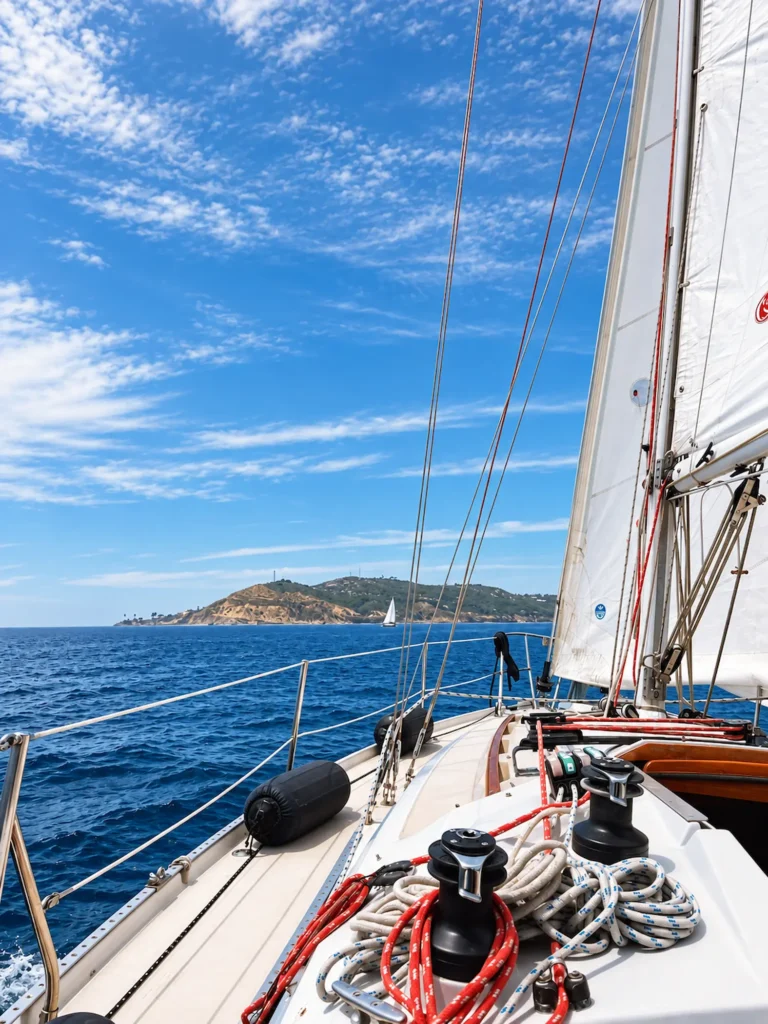
Sailing also changes what you can discover. Roads deliver everyone to places with roads. Sailboats have other options: small harbors, quiet coves and islands that require considerably more effort from anyone arriving by land. The coast stops being something you drive beside and becomes the route itself.
Then there is the environmental argument, although it deserves more honesty than the phrase eco-friendly sailing holiday sometimes receives. A sailboat is not magically impact-free. Engines may still be used, marinas have environmental footprints, and travelers have to reach the coast somehow. But when wind replaces fuel for a meaningful portion of the journey—and particularly when electric and solar systems replace conventional propulsion—the equation starts looking considerably more interesting.
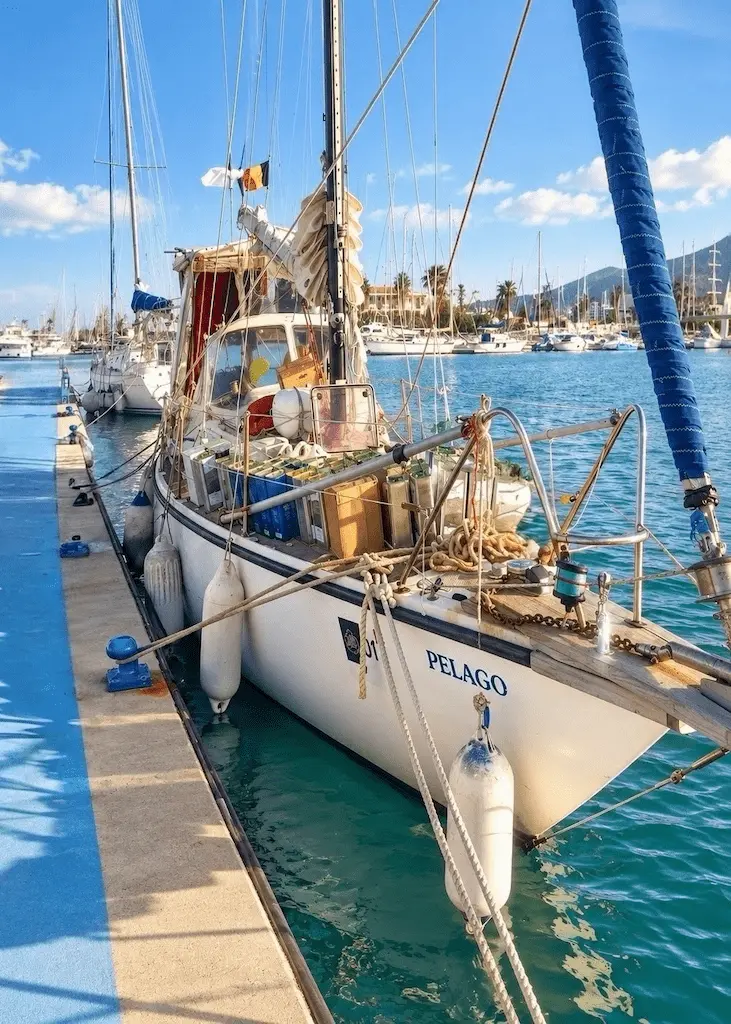
Aegean Cargo Sailing has pushed that idea far beyond vacationing. Its vessel Pelago was converted into an electric-solar cargo sailboat and demonstrated wind- and solar-powered transport over more than 3,100 nautical miles in Greek and Italian waters. In 2025, Pelago was one of two low-to-zero-emission sailing boats supplied by Aegean Cargo Sailing for a voyage across the Aegean and Ionian seas promoting protection of the Mediterranean monk seal. In other words, the sail is no longer merely picturesque technology from the past. It may have something useful to contribute to the future.
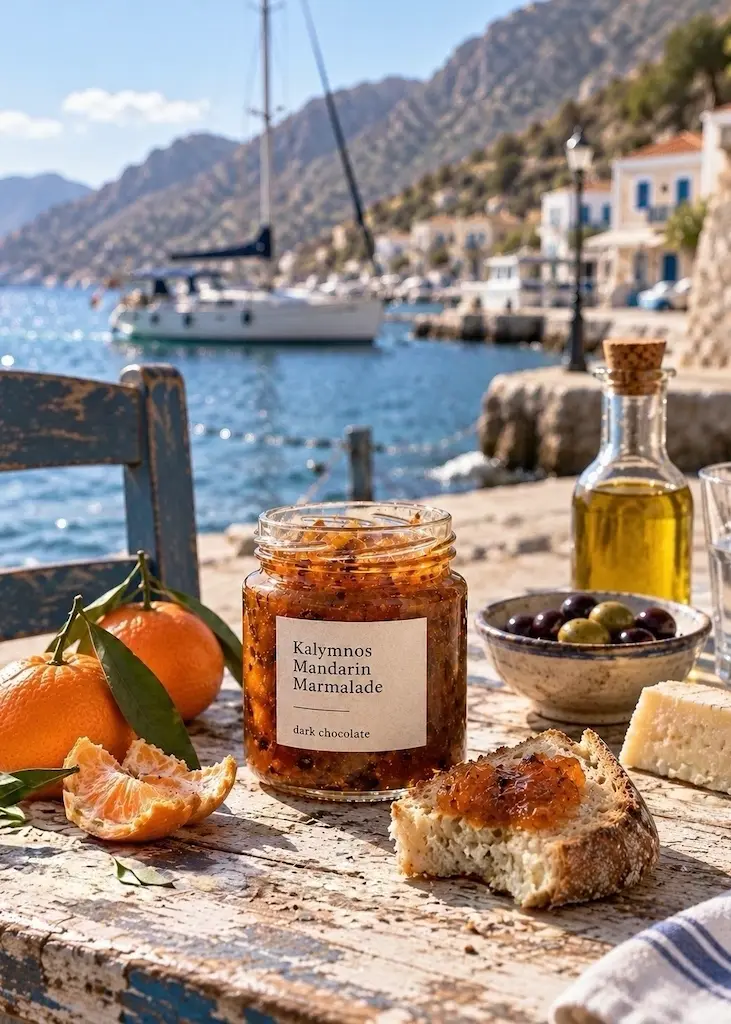
There is another benefit that carbon calculations cannot quite measure: sailing can keep money and attention close to the coast itself. Gourtsoyannis built his routes around small island producers, connecting travelers with the cheeses, wines, honeys and other foods made in the places they were actually visiting. National Geographic documented guests joining those journeys, meeting producers and sampling regional foods along the way. Tourism becomes considerably more interesting when the person making your lunch is part of the story rather than somebody hidden behind the supply chain.
Several hundred nautical miles away, California understands part of this instinct too. Its coast has its own sailing culture, from San Francisco Bay south toward Santa Barbara, Newport Beach and Catalina. The geography is different and the traditions are different, but the attraction is remarkably similar: once the engine quiets and the sails take over, a familiar coastline becomes something else entirely.
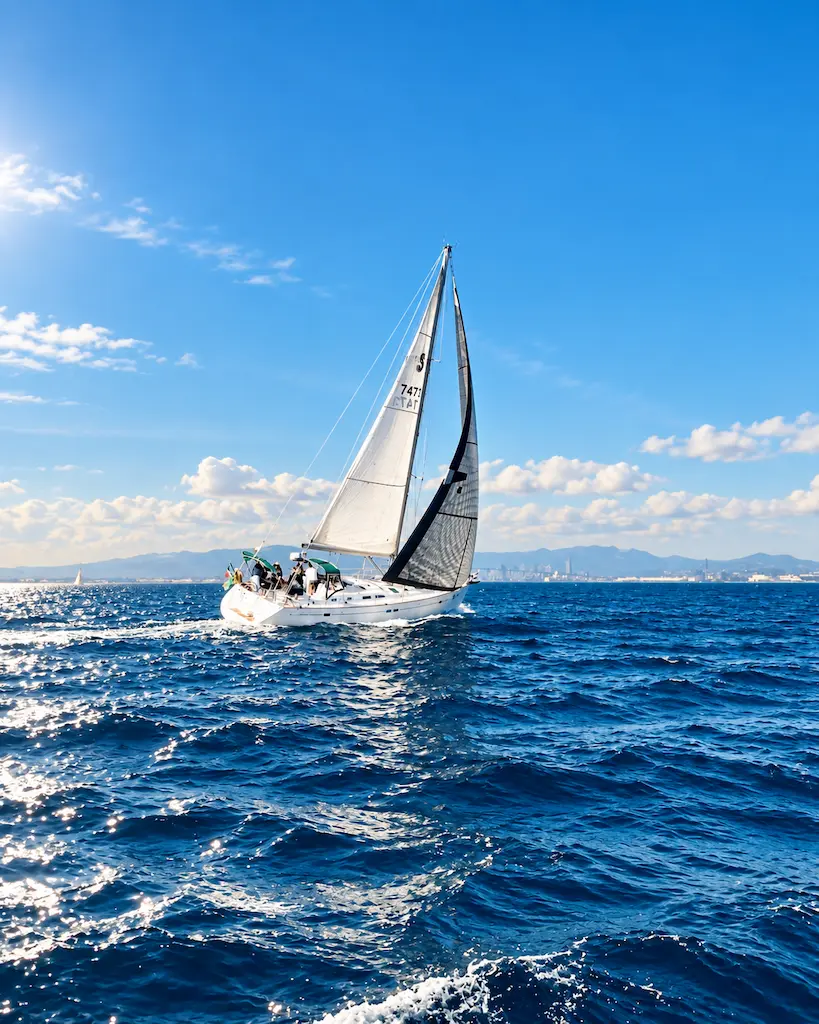
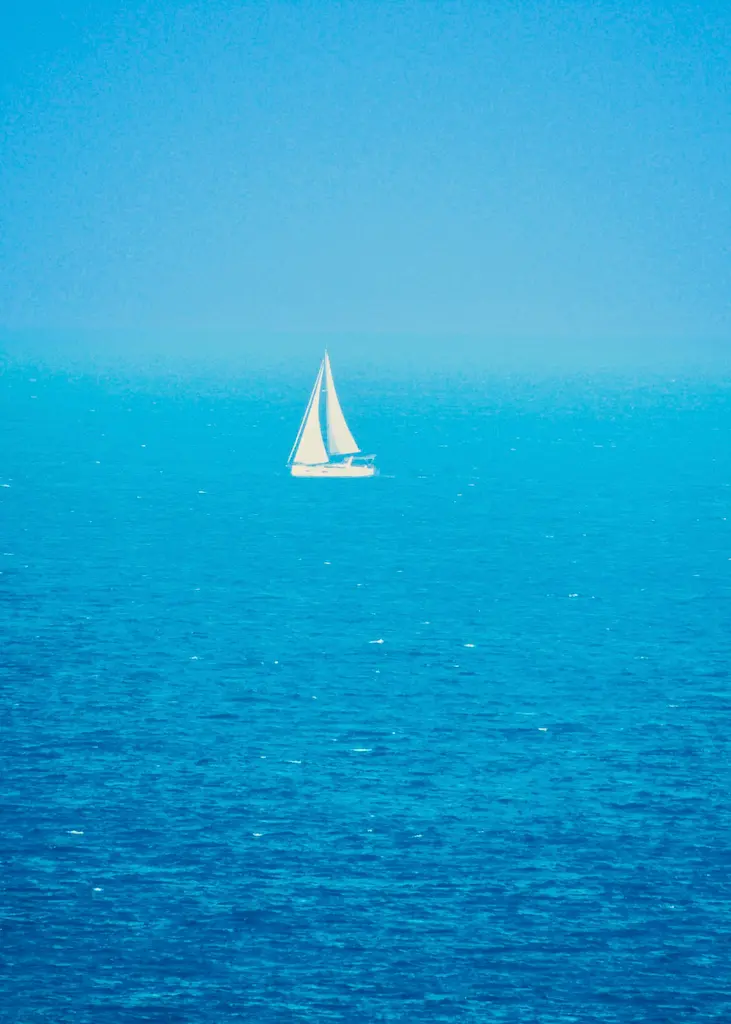
May be that is why sailing belongs in Lifestyle rather than merely Travel. It changes the mechanics of a day. Breakfast happens aboard. The swim does not require parking. Lunch can follow the harbor rather than the itinerary. A place becomes memorable because you approached it from the water, not because somebody ranked it number seven on a list.
Modern luxury has become very skilled at giving us more: more amenities, more entertainment, more speed, more things scheduled between breakfast and dinner. Sailing proposes something rather refreshing. Less machinery. Less noise. Fewer plans that absolutely must happen at certain time. And yet somehow you swim more, see more, talk more, eat closer to where food is produced and spend considerably more time outside.
Loucas Gourtsoyannis may have built a cargo project, but he has also demonstrated a rather good formula for contemporary coastal living: let the wind do some of the work, support the places you visit, leave a lighter wake where possible—and enjoy the journey enough that arriving becomes almost beside the point. Going nowhere fast suddenly sounds like excellent progress.
If you are heading to Greece, Aegean Cargo Sailing is worth knowing about. The organization continues to combine low-impact sailing, local products, environmental work and experiential travel in the Aegean. Check its current sailing programs directly before planning your trip; availability and formats can change from season to season. Book ECO Tour →
CONTINUE EXPLORING
Inspired by this story? The story continues. Here is your next read The Joy of Being a Beginner →