The Clothes Behind the Characters
From Bardot in Saint-Tropez to Dean in Los Angeles, the costume designers who helped shape the style of two coasts on screen and beyond—and why fashion in 2026 feels oddly familiar.
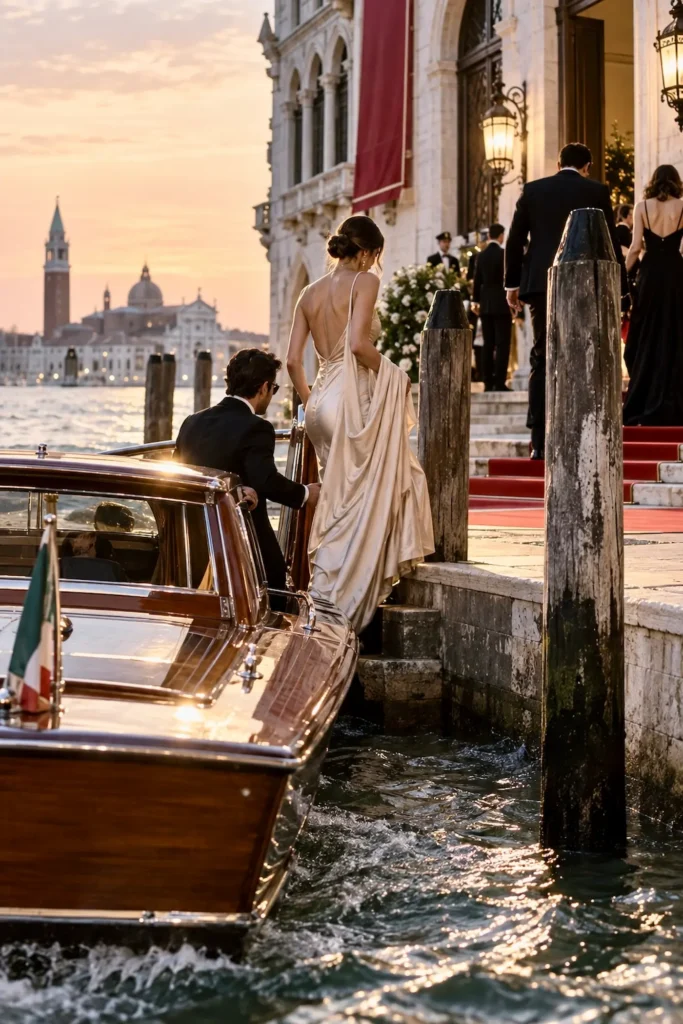
At the beginning of September, Venice, Italy, spent the past two weeks doing what Venice does rather well: filling boats, palazzos and red carpets with movie stars at the La Biennale di Venezia. But this year, on September 7, Vanity Fair’s Behind the Screen shifted attention to people accustomed to standing considerably farther from the camera. At the historic Pescheria di Rialto, six imagined dressing rooms celebrated the costume designers behind characters played by Monica Vitti, Sophia Loren, Marcello Mastroianni, Monica Bellucci, Roberto Benigni and Toni Servillo.
It is a wonderful premise because the dressing room is where an actor quietly stops looking like an actor. Daniela Ciancio, who created Toni Servillo’s wardrobe for the movie La grande bellezza, describes costume design as aesthetic, anthropological and sociological research. Jep Gambardella, the main character—a cynical 65-year-old journalist—in Paolo Sorrentino’s Oscar-winning 2013 film The Great Beauty, had Neapolitan origins. His social position and desire to be noticed were all hiding inside those beautifully cut jackets seen in the movie. In other words, there is rather more thinking behind a supposedly effortless Italian man than the effortless Italian man would probably like us to know.
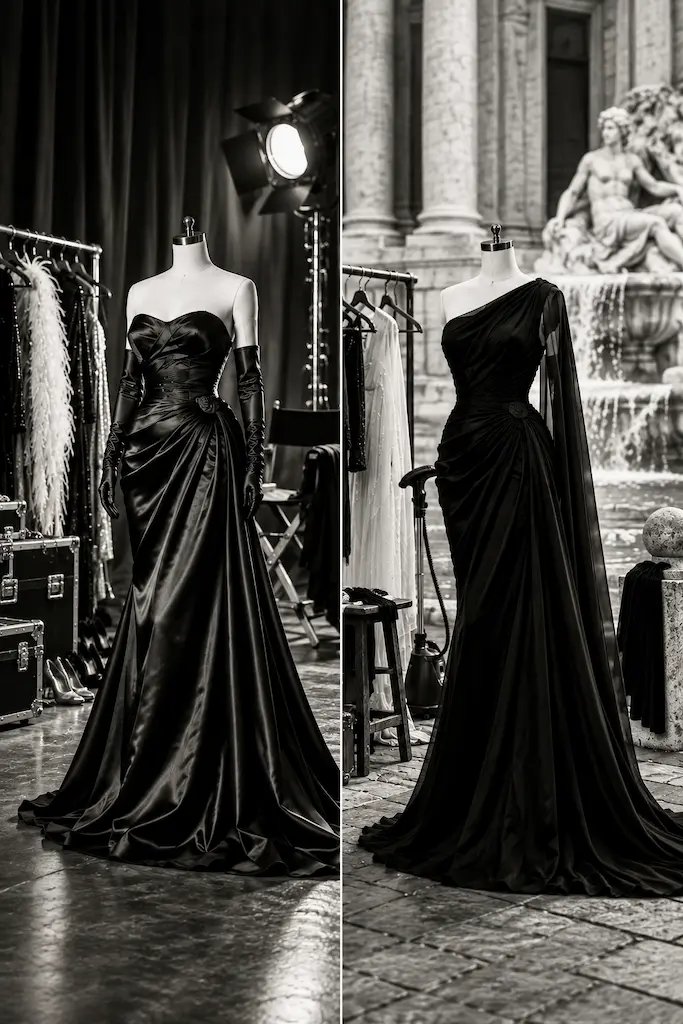
But Venice’s exhibition raises a question bigger than any single character. If costume designers helped create the people we remember from films, did they also help create the places we remember? Saint-Tropez, Rome, Malibu, San Francisco and Los Angeles all acquired cinematic wardrobes so convincing that decades later we can identify the coast almost before we identify the movie.
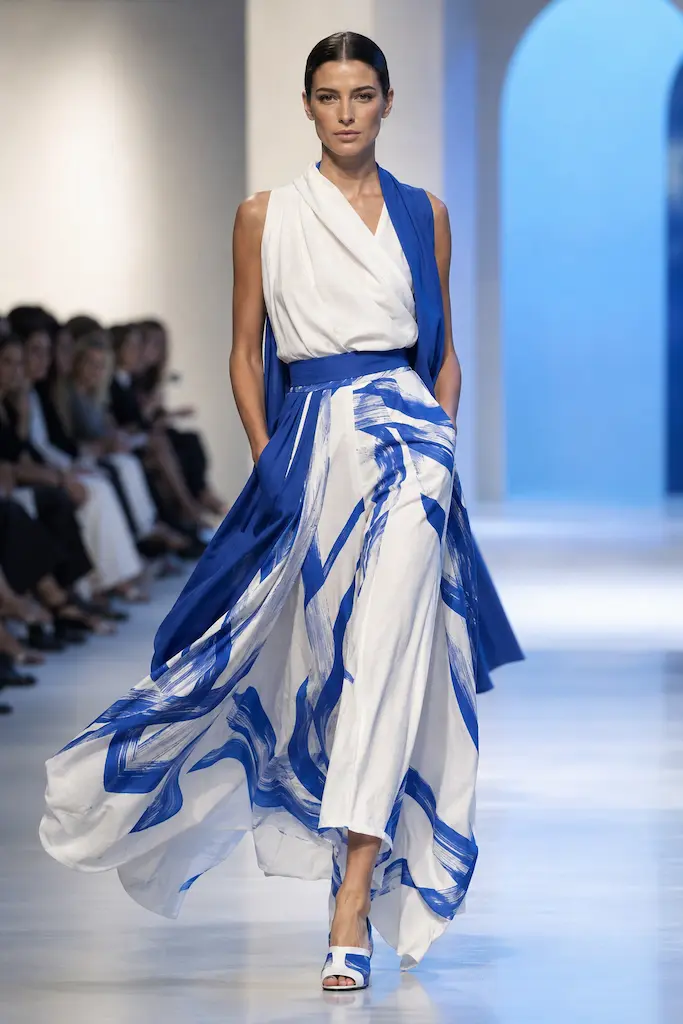
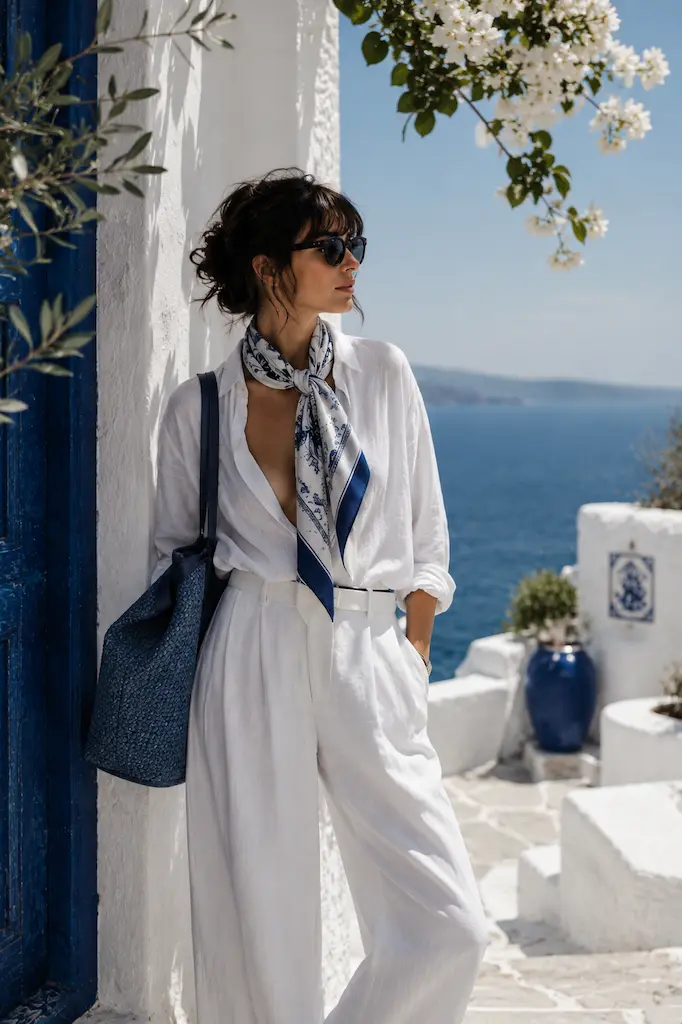
That feels especially relevant in 2026. Scarves are being tied into tops and around waists again; tailoring has softened; draping has returned; expressive sunglasses and more characterful accessories are replacing years of anonymous understatement. Vogue has even given one of this year’s moods the wonderfully unhurried name “Lady of Leisure,” built around fluid fabrics, scarves and Riviera-style ease.
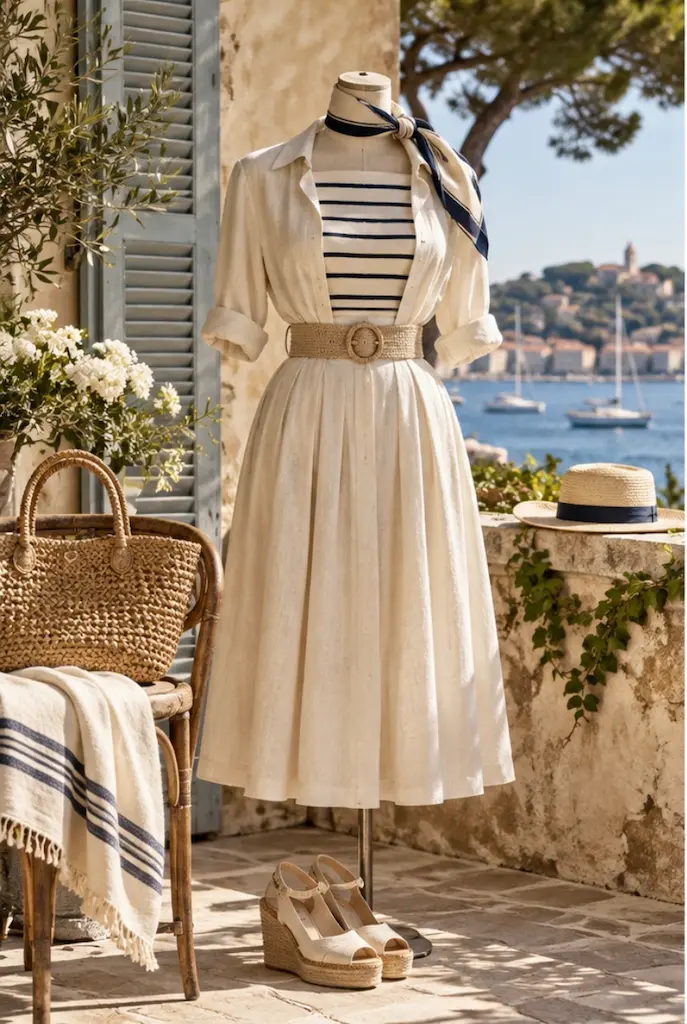
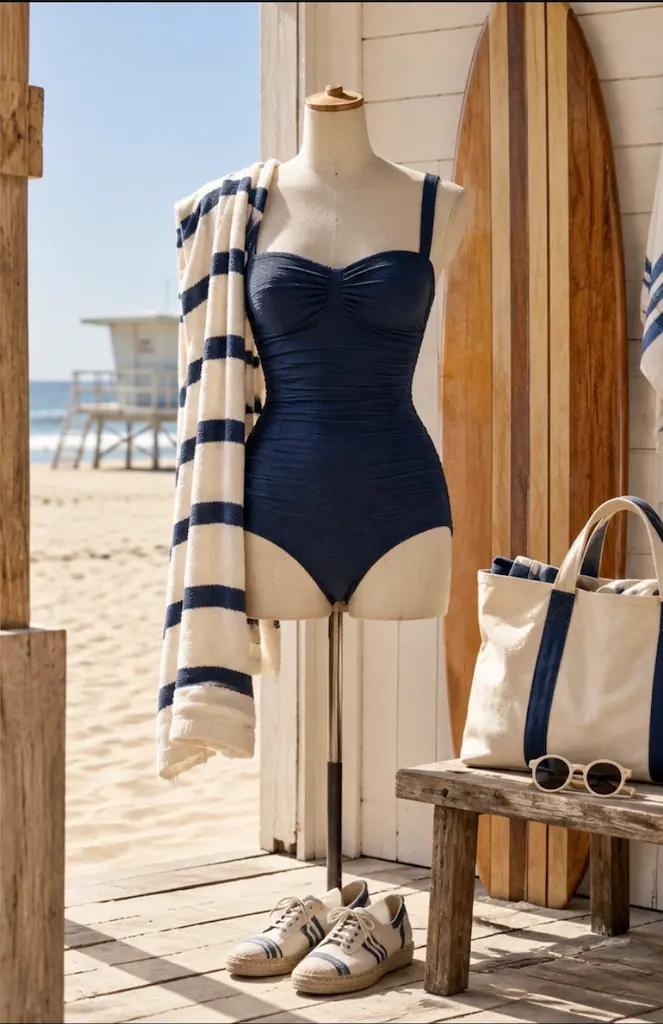
How Cinema Dressed Two Coasts
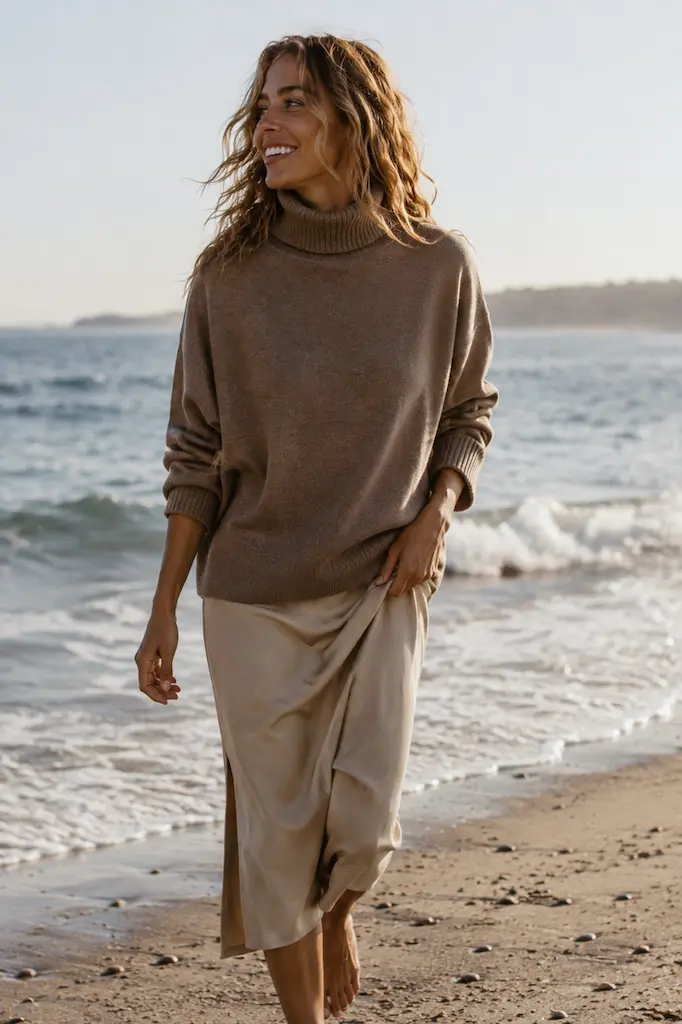
Start beside the water. In And God Created Woman in 1956, Pierre Balmain dressed Brigitte Bardot in linen shirtdresses, boat necklines and close-fitting skirts as she moved through Saint-Tropez looking as though formal dressing had simply become somebody else’s problem. Three years later, Sandra Dee arrived near Malibu in Gidget, where Rose Marie Reid supplied the swimsuits; the BYU archive describes the movie as helping introduce a specifically Southern Californian “sun and surf” world to cinema. This contrast is almost too perfect. Mediterranean leisure was languid, slightly rebellious and rather good at pretending there was nowhere to be. California leisure was athletic, cheerful and already carrying a surfboard. Yet both images were carefully constructed, and both became so familiar that fashion still sells versions of them as though the sea itself had designed the wardrobe.
The traffic between the two shores could also be remarkably literal. Jean Louis created Rita Hayworth’s famous black satin gown for the movie Gilda in 1946; fourteen years later, Piero Gherardi put Anita Ekberg into another unforgettable black evening dress in La Dolce Vita. Fashion histories have noted the visual lineage between the two, which makes the exchange particularly delicious: Hollywood created a language of screen glamour, Rome absorbed it, changed the accent and eventually sent it around the world as la dolce vita.
Sometimes the clothes were doing quieter work. In Antonioni’s Il deserto rosso, Gitt Magrini’s green coat helps separate Monica Vitti from the muted industrial world around her; in Hitchcock’s San Francisco-set Vertigo, Edith Head used Kim Novak’s rigid gray tailoring and softer alternate wardrobe to distinguish two identities. Novak later explained that the clothes even changed the way she carried herself, which is costume design accomplishing considerably more than deciding what matches the handbag.
The men were just as carefully manufactured. Marcello Mastroianni’s dark tailoring, hats and sunglasses became shorthand for sophisticated Italian masculinity, while Moss Mabry’s red jacket for James Dean in Rebel Without a Causebecame shorthand for California rebellion. Mabry later revealed that he made several jackets and fussed over the collar and pockets; “effortless,” it turns out, often requires quite a lot of effort backstage.
Why Fashion Keeps Returning to the Same Movie
By the end of the 1960s, the Mediterranean wardrobe became quieter still. André Courrèges dressed Romy Schneider in La Piscine, filmed at Ramatuelle, in deceptively simple swimsuits and streamlined clothes that allowed the Côte d’Azur, the villa and the bodies around the pool to do most of the talking. More than half a century later, those black and white swimsuits remain fashion references precisely because there is so little about them to date.
California later received an Italian lesson in the same kind of subtraction. In 1980, Giorgio Armani dressed Richard Gere for American Gigolo in Los Angeles, replacing the rigid suit with softer shoulders, lighter construction and fabric that seemed to move with the wearer rather than discipline him. The film helped introduce Armani’s relaxed tailoring to a much larger American audience, proving that a costume can leave the cinema, walk onto the street and eventually stop looking like a costume at all.
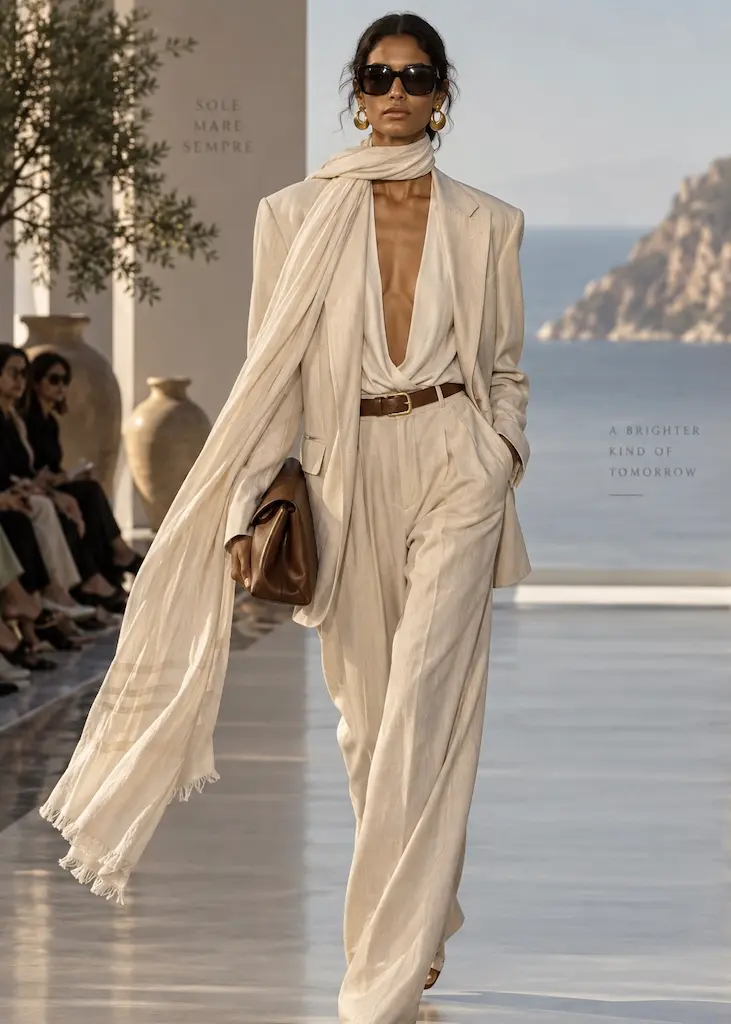
More than four decades later, Armani’s Fall/Winter 2026 runway makes the connection difficult to miss. The fluid tailoring that once helped define Richard Gere’s Hollywood leading man has not disappeared; it has simply changed who gets to wear it. Long coats, relaxed trousers and softly structured jackets now give women the same cinematic authority once reserved for the man in the suit. The glamour is familiar, but the casting has changed.
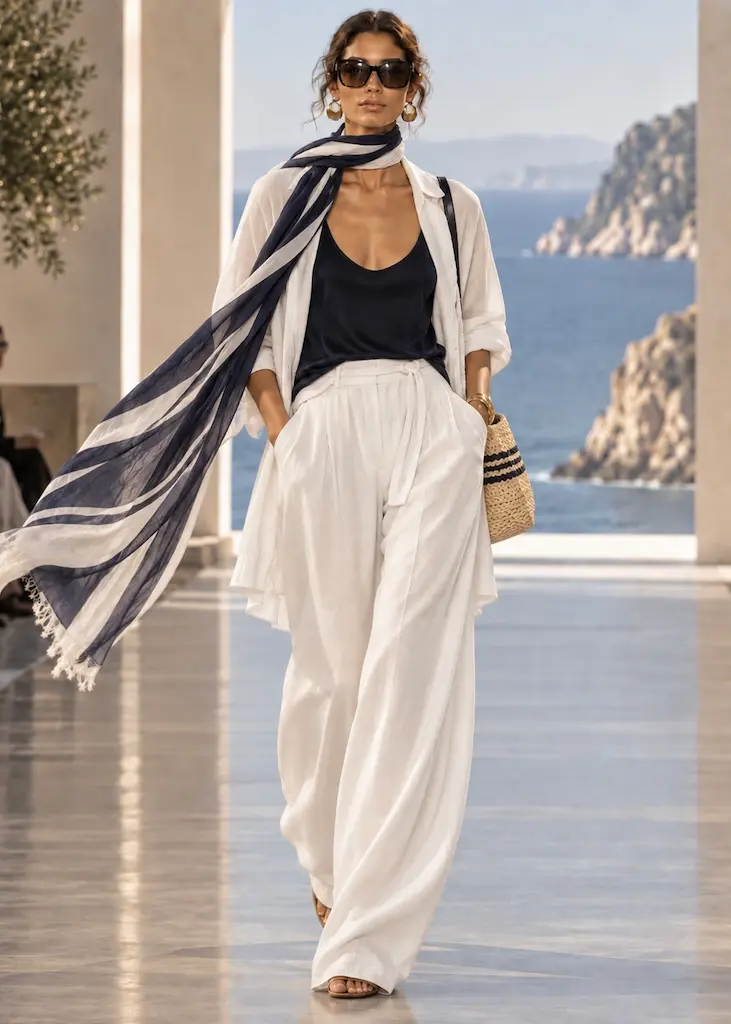
Which makes 2026’s return to scarves, fluid tailoring, draping and expressive accessories feel less like a resurrection than another turn of a very old wheel. Fashion is not necessarily copying Bardot, Schneider, Mastroianni or Gere; cultural memory rarely operates so neatly. But these films helped teach generations what Mediterranean ease and Californian cool were supposed to look like, and those visual ideas have been circulating ever since.
Maybe that is why the clothes of the past still work in the present. We are not only nostalgic for a swimsuit, a scarf, a beautifully loose suit or a red jacket; we remember the life attached to it—the pool in Saint-Tropez, Rome after dark, Malibu in the afternoon, Los Angeles with nowhere respectable to go. The stars made those worlds desirable, but behind many of them stood someone measuring hems, adjusting collars and quietly deciding what an entire coast might look like in our memory. The Mediterranean and California dressed cinema. Cinema, rather cleverly, dressed them back.
CONTINUE EXPLORING
Inspired by this story? The story continues. Here is your next read Whatever Happened to the High Heel? →