From Mediterranean Harvest Festivals to California’s Farmers’ Markets
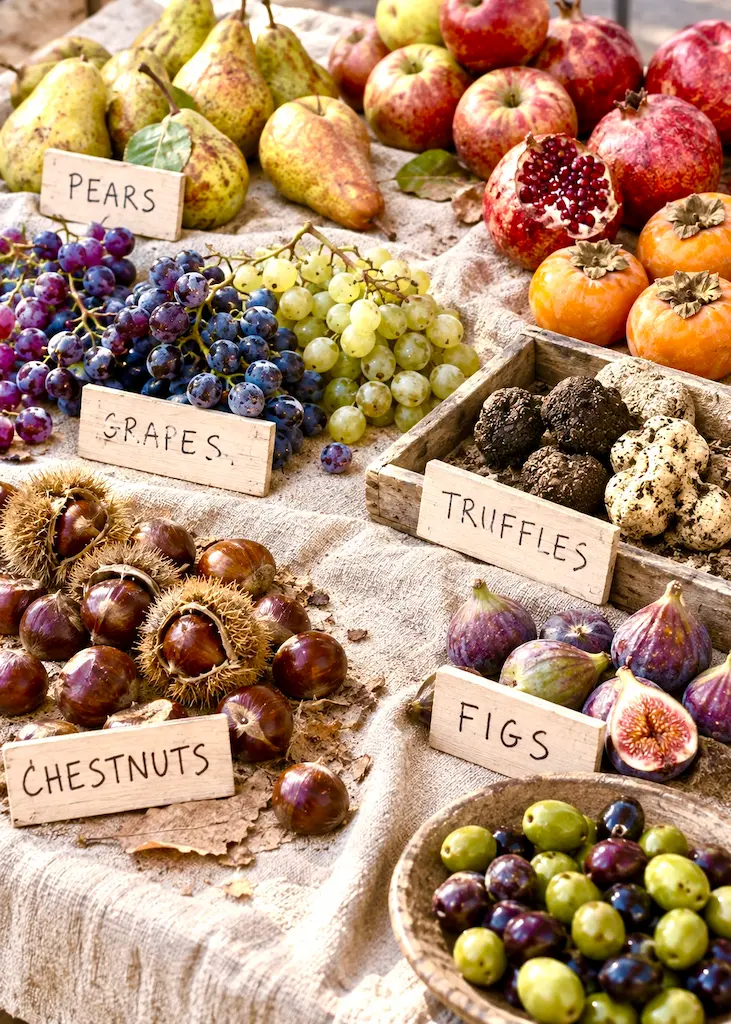
Long before autumn became a decorating theme, it was something people could taste. The season announced itself with apples dropping from branches, grapes arriving in wooden crates, chestnuts splitting their prickly cases and olives becoming ready for the press. There were no cinnamon-scented candles required to confirm that October had begun.
Modern life has made the seasons remarkably convenient and slightly confusing. Strawberries appear in winter, asparagus loses track of spring, and pumpkin spice arrives while much of California is still wearing sandals. The old agricultural calendar survives, however, in places where people still notice not merely what is available, but what has just arrived. Autumn becomes a sort of fashion show for fruits and vegetables, with less glamour but far more flavor.
THE MEDITERRANEAN TURNS THE HARVEST INTO A CELEBRATION
Italy does not have one flavor of autumn because every region—and frequently every town—has its own opinion. At a sagra—Italy’s version of a local harvest festival—an ingredient becomes the guest of honor while streets fill with market stalls, communal tables and music. For a few days, each town reorganizes itself around whatever the surrounding landscape has produced. There is enough civic pride to make even a simple apple appear politically important for the way it was grown.
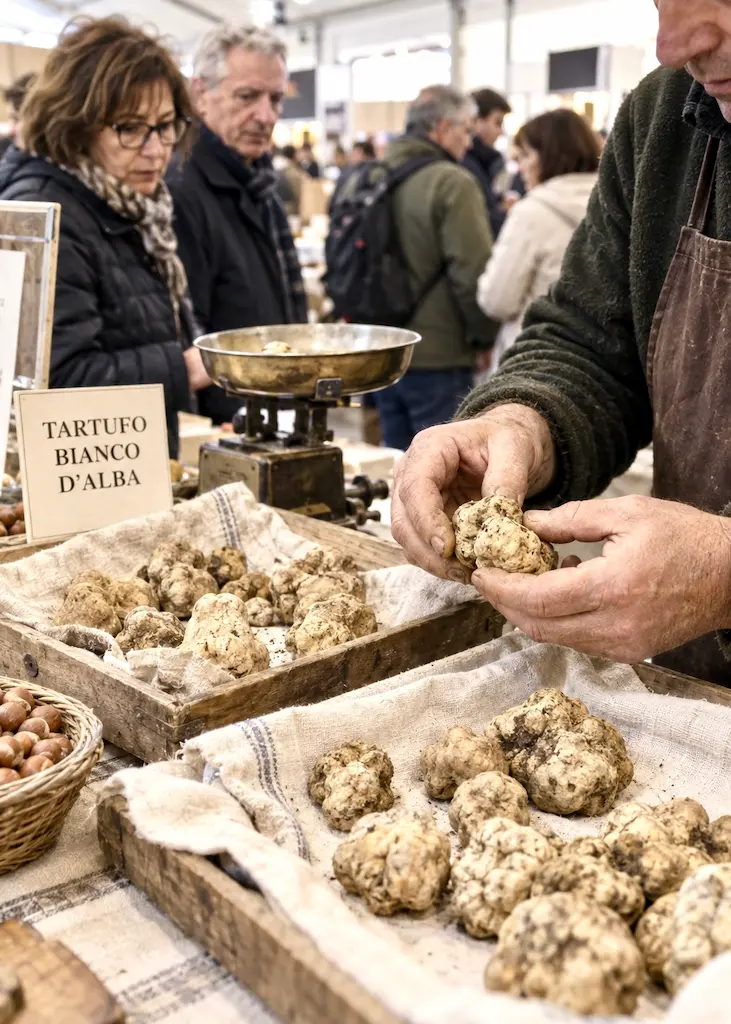
In Piedmont, the International Alba White Truffle Fair transforms an elusive fungus into “white gold,” complete with a world truffle market and cooking events. Trentino’s Pomaria celebrates the Val di Non apple harvest, while Tuscany’s autumn calendar includes chestnut festivals with tastings, street markets and historical reenactments. This, of course, is easier when every street looks like a postcard. Then Cremona devotes three November weekends to its Festa del Torrone, featuring giant constructions made from nougat and a reenactment of a fifteenth-century aristocratic wedding—because apparently simply eating the confection was not sufficiently festive.
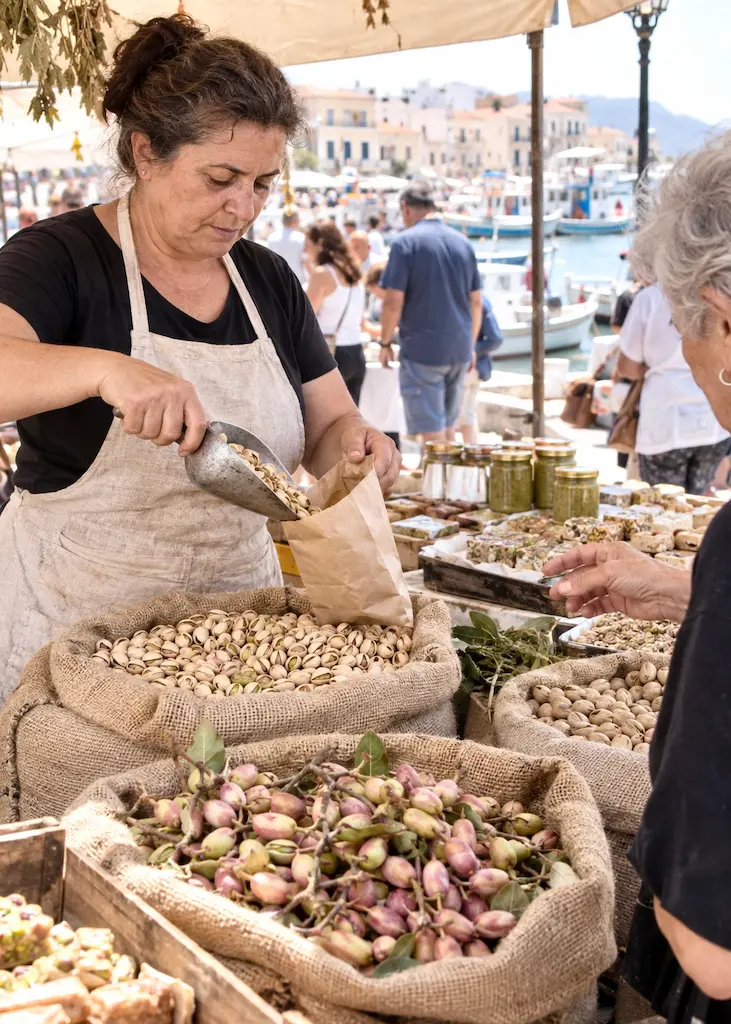
Italy is only one voice in a much larger Mediterranean chorus. On the Greek island of Aegina, September’s Fistiki Fest celebrates the island’s pistachio harvest, while Collobrières in Provence becomes the chestnut capital of the Var on three Sundays in October. Spain’s Consuegra stages its official Saffron Festival as the autumn crocuses bloom, and Croatia’s Istria stretches its White Truffle Days from September into November. So many different ingredients and languages, but the same conviction: a harvest is not complete until the surrounding town has organized a celebration and argued about the proper way to eat it.
CALIFORNIA BRINGS THE HARVEST TO MARKET
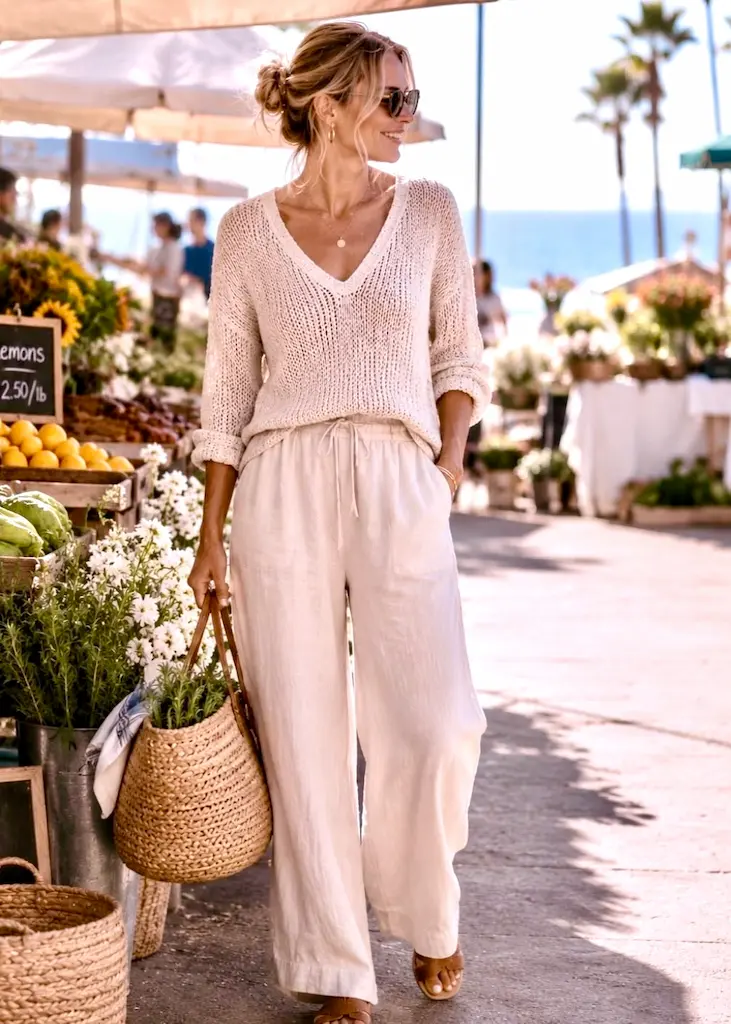
California expresses the same instinct with less pageantry and better canvas tote bags, from north to south. San Francisco’s Ferry Plaza Farmers Market has an especially appropriate origin story. It began in 1992 as a one-time “Harvest Market,” attracted more than 10,000 people, and became permanent the following year. Today, its seasonal tables—and smaller markets in California’s coastal communities—perform the work once done by the village square, connecting city dwellers to the farms, orchards and changing weather beyond the pavement.
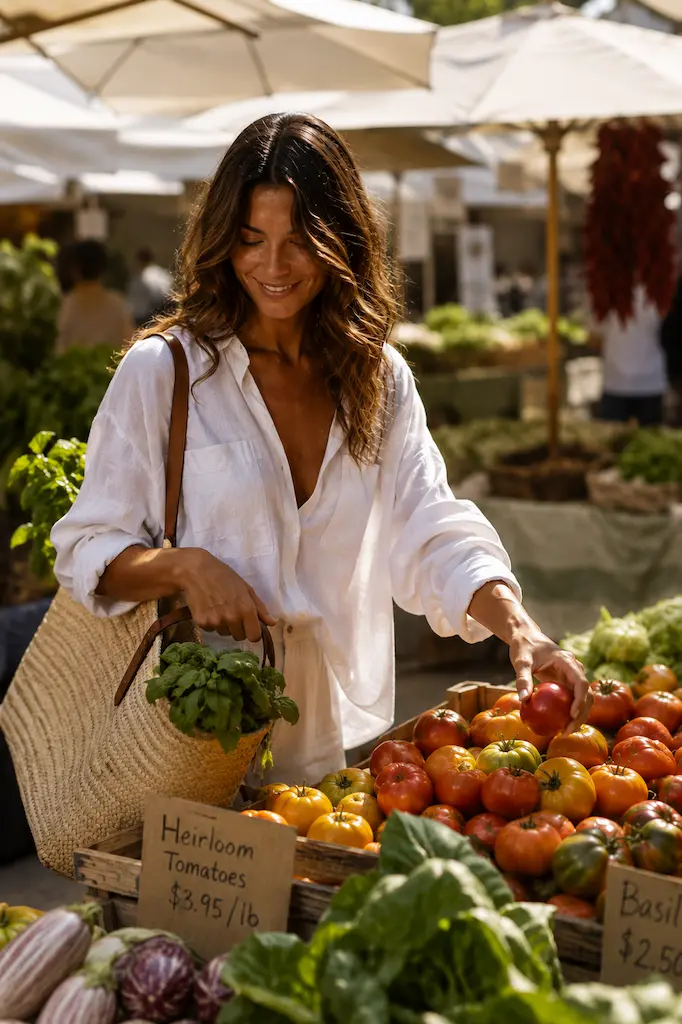
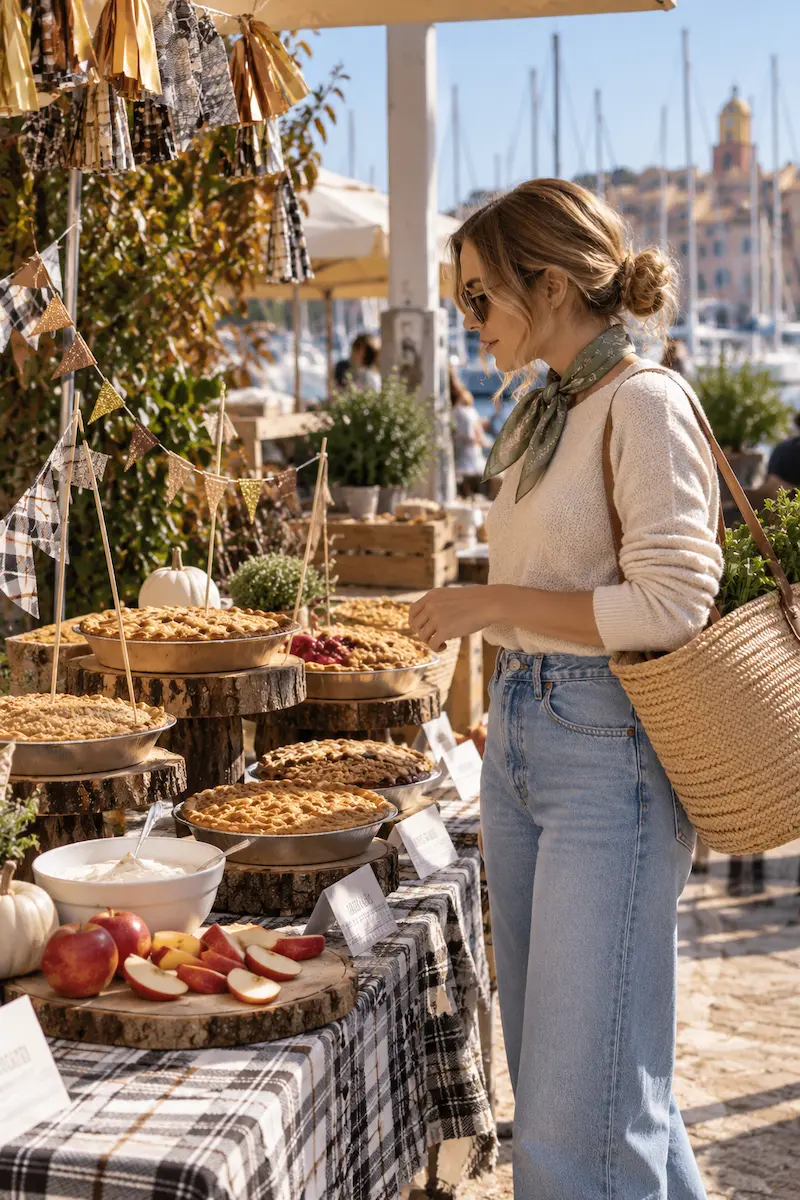
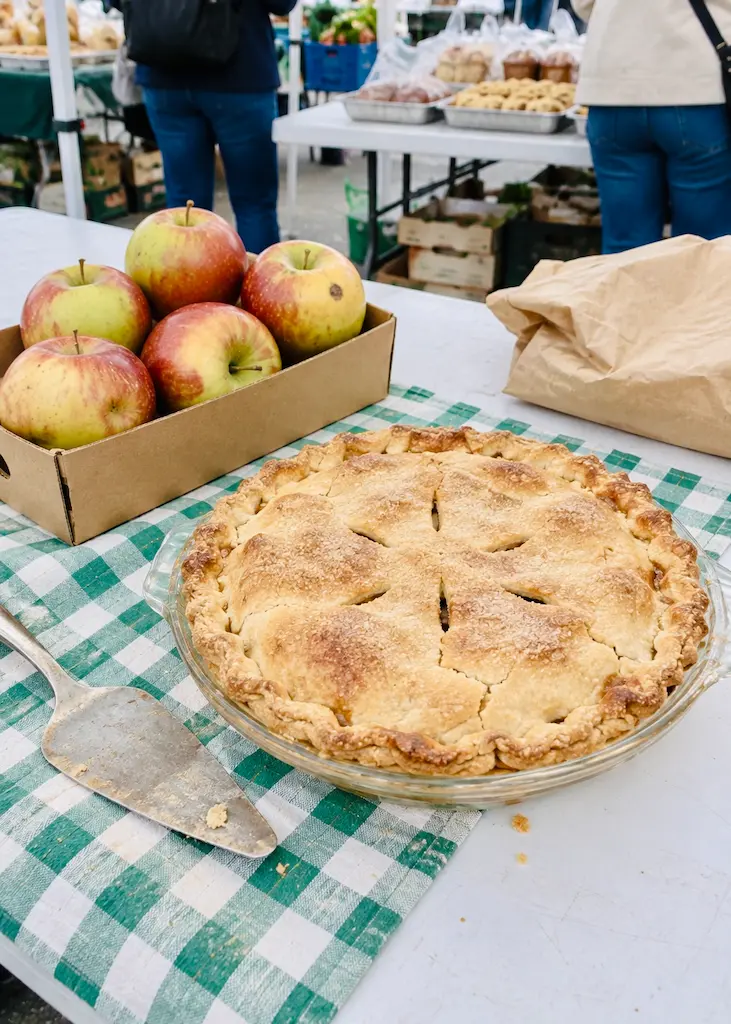
At the Santa Monica Farmers Market, founded in 1981, autumn arrives in the form of mottled pears, wine-dark grapes, pomegranates, persimmons and chefs inspecting produce with the seriousness usually reserved for art auctions. There may be no parade behind the apples, but there is considerable discussion about the variety. By November, many of those carefully debated varieties will meet the same fate: tucked beneath pastry and promoted to apple pies with nutty crusts or glazed tops, autumn’s unofficial dessert.
Farther south, the market becomes unmistakably coastal. The certified Cardiff Farmers Market gathers growers and small food makers every Saturday in Cardiff-by-the-Sea, while San Diego’s Little Italy Mercato fills the downtown neighborhood with more than 200 vendors. The first feels like a local Saturday ritual; the second borrows both the name and civic scale of a Mediterranean market. California may not organize a medieval procession for a pear, but San Diego gives the harvest an Italian name and most of a city street.
TWO SHORES, TWO EXPRESSIONS
In autumn, the Mediterranean gives the ingredient a festival, while California gives it a fashion show with beautifully arranged stalls—and expects you to bring your own canvas bag. One closes the street; the other temporarily converts a parking lot into somewhere people willingly spend a weekend morning discussing persimmons. Eventually, everyone seems to agree that autumn tastes best once the apples become pie.
Yet beneath the stylistic differences is the same exchange. A farmer places the season on a table, and the public gathers around it. The chestnut in Provence and the pomegranate in Santa Monica are not simply things to purchase; they are small announcements from the landscape, confirming that the year has moved forward.
THE DISAPPEARING PLEASURE OF WAITING
Eating seasonally once required no philosophy because there was very little choice in the matter. You ate figs when the figs were ripe, new olive oil after the pressing and apples after they had been lifted from the tree. Anticipation was built into the menu.
The supermarket removed much of that waiting, which is useful but not always pleasurable. Yet let’s not be fooled: peaches simply do not taste like peaches unless they are in season. A fruit that never disappears can never properly return, and abundance without interruption eventually begins to taste like sameness. Harvest festivals and farmers’ markets restore the small drama of the first apple, the first persimmon and the first bottle of cloudy new oil.
This is what autumn actually tastes like: not one manufactured flavor, but a procession of brief arrivals. The Mediterranean announces them with banners, music and the occasional monumental piece of nougat; California lays them across linen-covered tables beside the Pacific. On both shores, the season is still there—waiting for us to stop manufacturing its appearance and recognize its real colors and flavors. Welcome to autumn.