Why Surf Culture and the Runway Don’t Care About Wrinkles

There was a time when leaving the house in a wrinkled shirt meant you had either overslept or failed some minor test of adulthood. Clothes were expected to be pressed. Collars behaved. Trousers knew where their crease belonged. Looking polished required equipment, and the iron was part of the ritual. Then the rules started loosening. The high heels became optional, sneakers entered places they once would have been escorted out of, and somewhere along the way the ironing board began spending suspicious amounts of time folded behind a closet door.
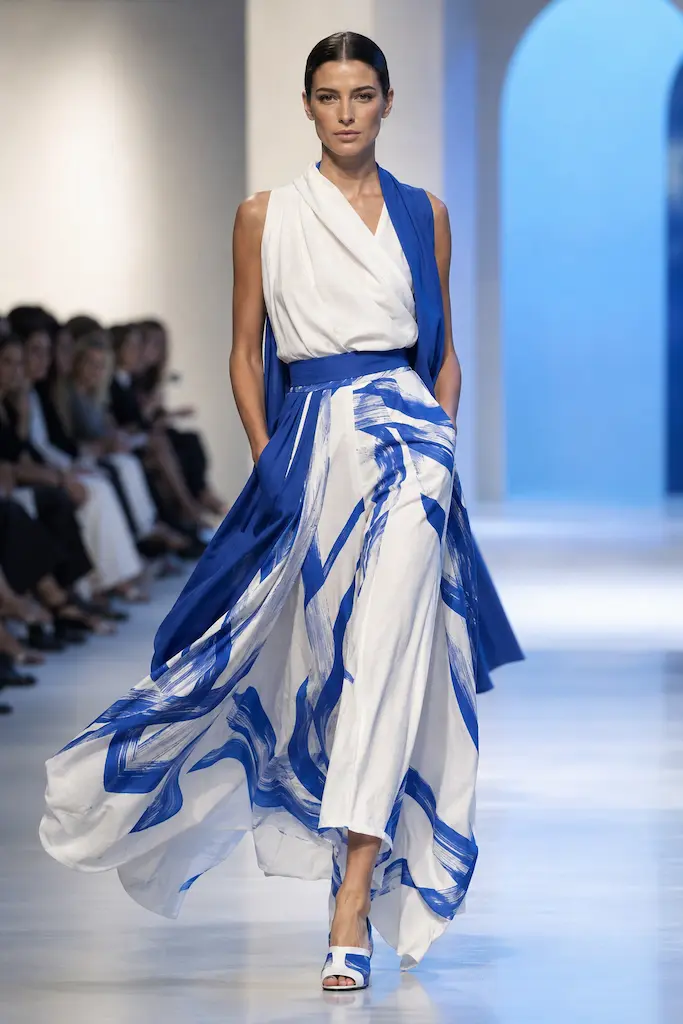
Now fashion, with impeccable timing, has decided that wrinkles are interesting. Recent collections from Prada, Dior, Miu Miu and Diesel have treated crumpling, creasing and rumpling not as problems to correct but as part of the clothes themselves. Shirts look slept in, skirts appear crushed, coats carry folds that once would have sent someone sprinting for the steamer. After generations spent teaching us how to remove every crease, designers are carefully putting them back.

There is something wonderfully absurd about this. Fashion is spending considerable creative energy producing the exact effect many of us achieve by leaving a shirt in the laundry basket overnight. But the wrinkle is doing more than saving electricity. It belongs to a much larger change in what we consider polished, because the old equation of elegance with immaculate control has been weakening for years.
The California coast had a lot to do with that. Not California as a whole, and certainly not because everyone suddenly stopped caring what they looked like. It was the beach and surf culture—the washed T-shirts, soft cotton, denim, canvas, loose layers, clothes that moved easily between beach, car, café and street—that helped make slightly undone dressing feel normal. A little rumpling was not a fashion statement. It was simply what happened when clothes were expected to keep up with real life. That distinction matters. The California coast did not invent the wrinkle. It helped make looking slightly imperfect feel acceptable.
The Mediterranean contributes something different. Mediterranean dressing has never necessarily shared California’s indifference to pressing. In Italy, Greece, Spain, France and elsewhere, looking neat and properly dressed has long mattered socially, even in hot weather. A linen shirt may be breezy, but that does not mean nobody wanted it ironed before dinner. What the Mediterranean did give us, however, are the fabrics that make imperfection beautiful: linen, airy cotton, soft summer tailoring, loose shirts and natural materials that breathe, crease and move because that is exactly what they are supposed to do.

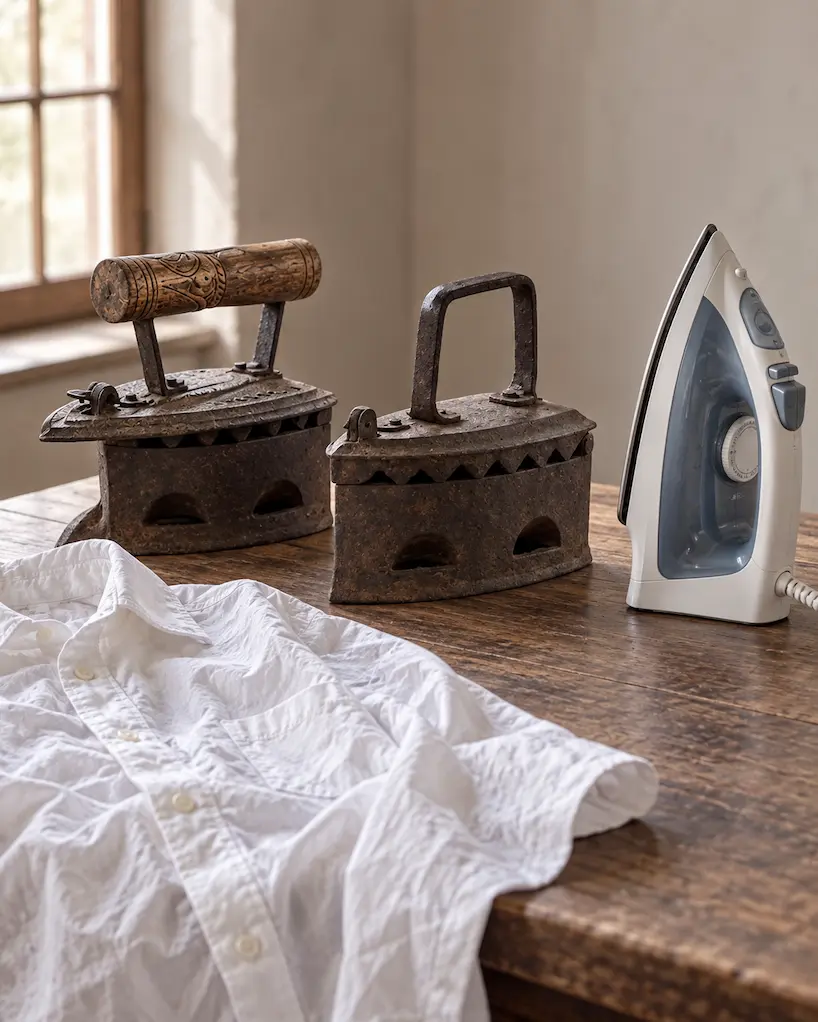
That is where the Caliterranean story gets interesting. The Mediterranean gave us the fabric. California gave us the attitude. Which makes the history particularly amusing. Humans have been trying to flatten fabric for more than two thousand years; evidence of early ironing practices in Asia reaches back to antiquity, when heated metal vessels were used to smooth cloth. From there came increasingly elaborate irons, presses, heated plates and eventually the household appliance that generations were taught belonged somewhere between the washing machine and basic personal responsibility.
We became very good at fighting fabric’s natural desire to crease. Cotton was starched, collars were pressed, trousers acquired knife-sharp lines and linen—poor linen—was expected to behave as though it were not linen at all. Then we carried those ideas into language: crisp sounded competent, pressed sounded respectable, while rumpled suggested that life had somehow got the better of you.
Perhaps that is what has really changed. The wrinkle is no longer automatically read as failure; increasingly, it can look relaxed, expensive, tactile and human. Michaël Bonzom, creative director at Paris trend agency NellyRodi, has connected deliberate imperfection with a broader fatigue toward conformity and overly polished imagery. That idea feels particularly relevant now. We live surrounded by images that can be corrected until practically nothing accidental remains: skin smoothed, skies intensified, rooms tidied, clothes perfected, crumbs banished and inconvenient evidence of ordinary existence politely removed. Against that background, a crease begins to look almost rebellious—not because it is dramatic, but because nobody bothered to erase it.

And maybe that is why the fashion wrinkle feels less like a trend than a mood. Imperfection has started to acquire character again.
The Mediterranean figured this out long before anyone needed a runway explanation. Linen worn through a hot afternoon was never going to look at dinner exactly as it did when it left the wardrobe, and that was partly its charm. California arrived at much the same conclusion by another route: clothes should move, breathe and survive a coffee run, a car ride, lunch outside and whatever happens afterward without requiring an emergency meeting with a steam iron.
That does not mean elegance has disappeared. Suits, in fact, are very much back in fashion magazines, proving that fashion enjoys contradicting itself almost as much as it enjoys announcing that something has returned. But today’s tailoring is frequently softer, roomier and less interested in making the wearer look as though they have been professionally folded.

Maybe we have simply separated polish from perfection. A jacket can be beautifully cut without being rigid; a linen shirt can be elegant while carrying the memory of an elbow; a dress can move rather than remain photographically pristine. Clothes are supposed to accompany a life, and life has an inconvenient habit of leaving marks.
Which raises a slightly larger question: why have wrinkles bothered us so much in the first place? We dislike them in fabric and have spent fortunes trying to erase them from skin, despite the fact that both are often simply records of movement. Fabric wrinkles because we sat, walked, reached, travelled and lived in it; faces acquire character for much the same reason.
A perfectly smooth shirt has never made it through lunch by the sea. A perfectly smooth face has never spent decades laughing, squinting into sunlight and reacting to the world around it. Perhaps wrinkles were never evidence that something had gone wrong; perhaps they were evidence that something had actually happened.
Fashion will change its mind again, of course. It always does. Next year someone may announce the return of razor-sharp creases and sell us a beautifully designed steamer to achieve them, but convincing an entire generation to unfold the ironing board every morning may be the harder revival.
For now, the suit can come back. The iron appears to be a dying breed—and the wrinkle, finally, gets to stay.
CONTINUE EXPLORING
Inspired by this story? Continue your journey with How Movies Shaped Coastal Style →