What the 2026 yacht shows revealed about the way we may soon be living at home
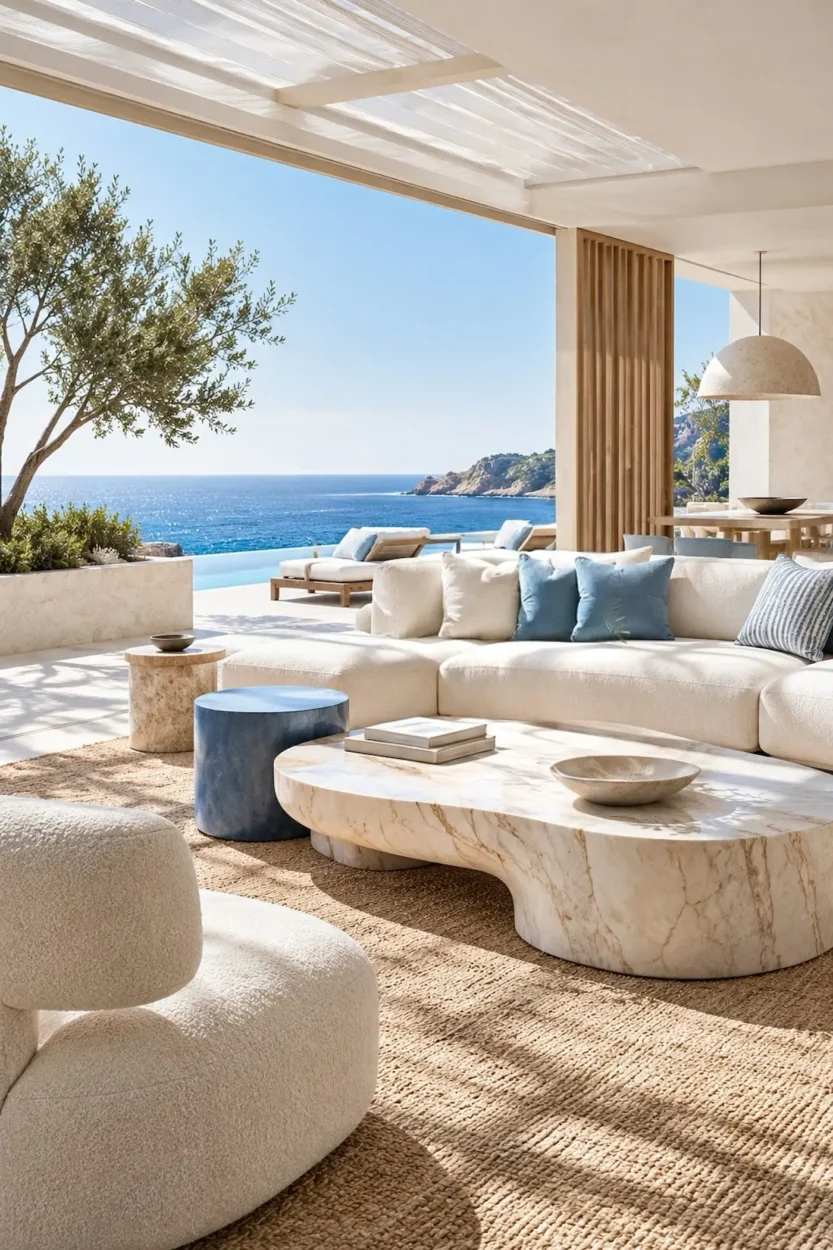
Whether a superyacht has seven suites, two pools or a garage for another, smaller boat is fascinating primarily to the few thousand billionaires on the planet. For the rest of us, something much more useful happened at this year’s yacht shows. Cannes and Monaco gathered designers who work across furniture, homes and yachts, and suddenly the marina began to resemble an unusually expensive design district—one where ideas about color, furniture, space and decoration were being tested on water before many of us considered them for home.
Yacht is essentially a coastal home subjected to unreasonable demands: limited space, constant light, water, movement and the expectation that every square inch should earn its keep. At the 2026 Monaco Yacht Show alone, around 120 superyachts gathered in Port Hercule, alongside hundreds of designers, builders and specialists.

COLOR — THE COAST IS MORE THAN BLUE
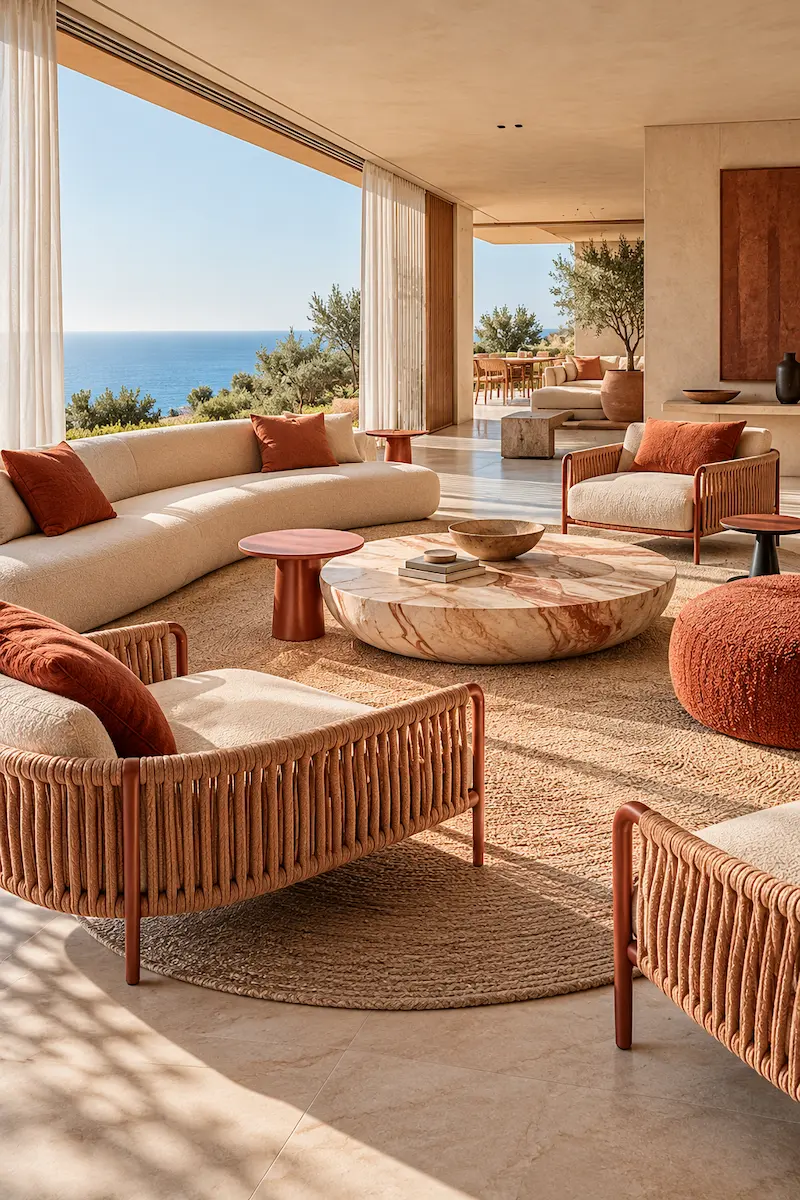
At the show, designer Paola Lenti did something surprisingly radical for an industry surrounded by blue water: it looked toward land. For the Upper Deck Lounge, sand, clay and vegetation replaced the expected marine palette, specifically to create something closer to the intimacy of a home. The company also introduced new pieces designed by yacht designer Espen Øino, making the traffic between residential furniture and yachting quite literal.
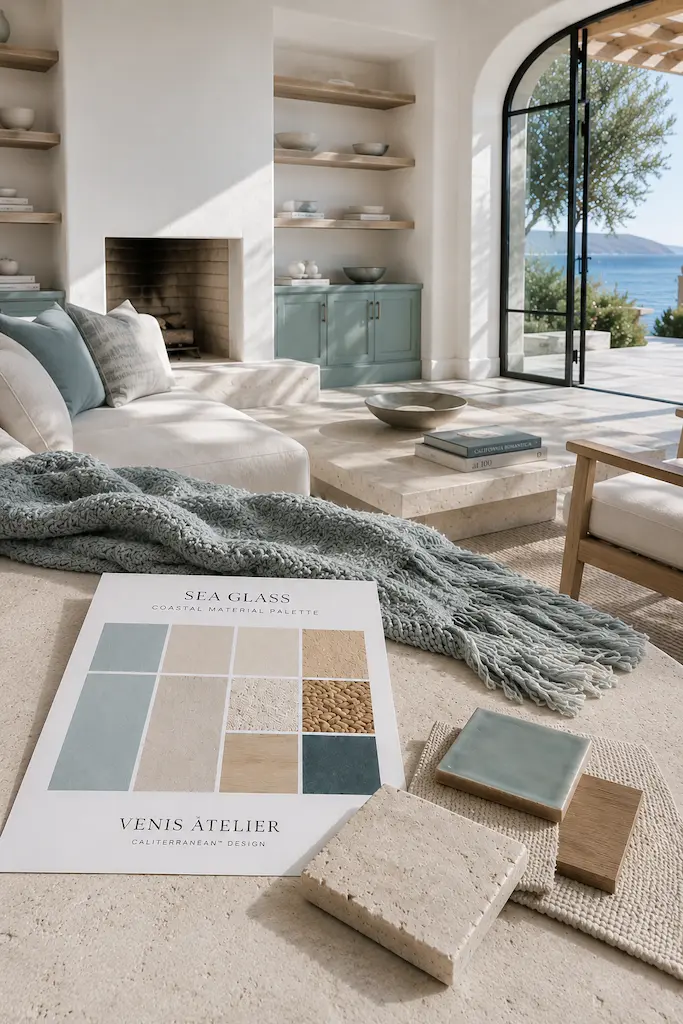
The useful idea for a coastal house is not that terracotta has replaced navy. It is that coastal color no longer needs to come exclusively from the sea. In California that might mean dry grasses, sandstone, fog and chaparral; around the Mediterranean, limestone, olive, clay and sun-faded plaster. Blue may keep its job—it simply no longer gets the entire department.
FORM — FURNITURE BECOMES SCULPTURE
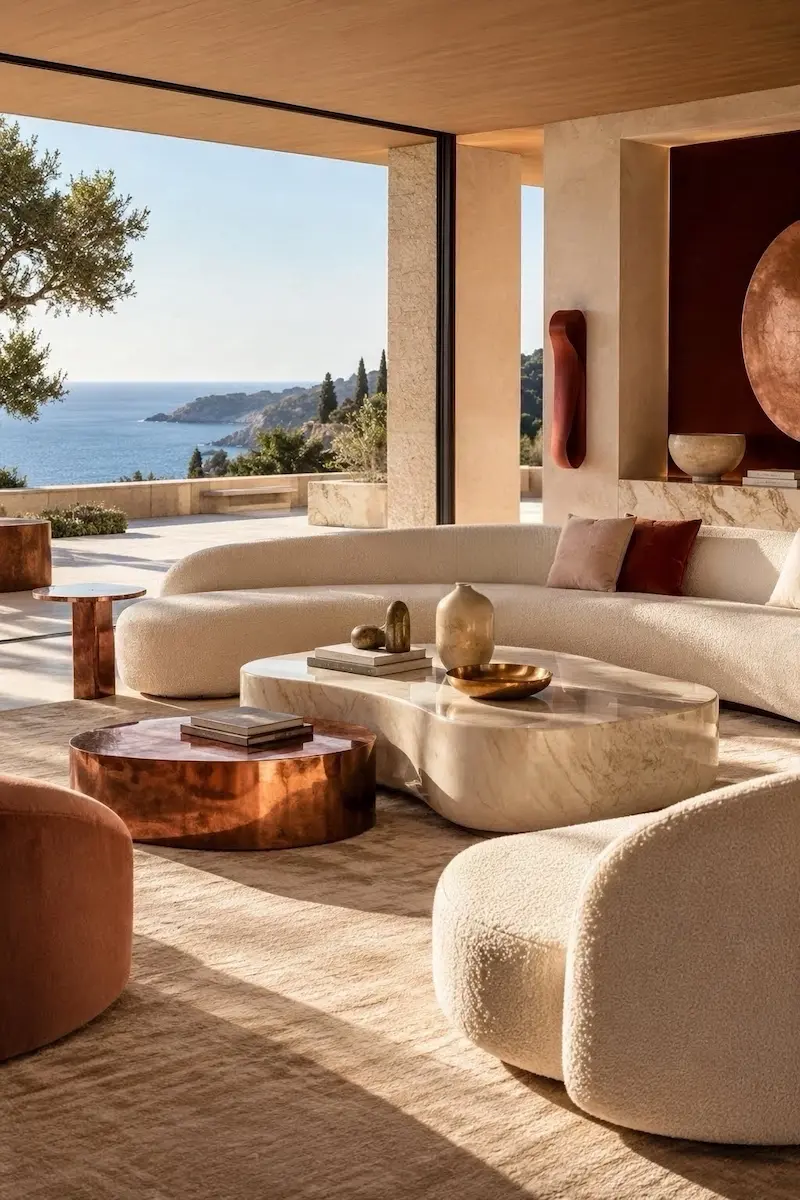
At Monaco, Rossinavi presented HEED in its entirety for the first time, with interiors by Achille Salvagni Architetti. Salvagni is important to our story because his practice crosses architecture, residential interiors, furniture and yachts. On HEED, curved forms and collectible-looking furniture sit among bleached woods, marble and flashes of copper, rose and deep red—a room that could quite happily step ashore without changing “clothes”.
For the home, the interesting shift is away from buying a matching “coastal furniture set” and toward letting a few strong forms define the room. A curved sofa, an unusual table or a sculptural cabinet can carry more personality than another dozen carefully coordinated accessories. Coastal ease does not require furniture to become visually anonymous.
SPACE — THE WALL BECOMES OPTIONAL
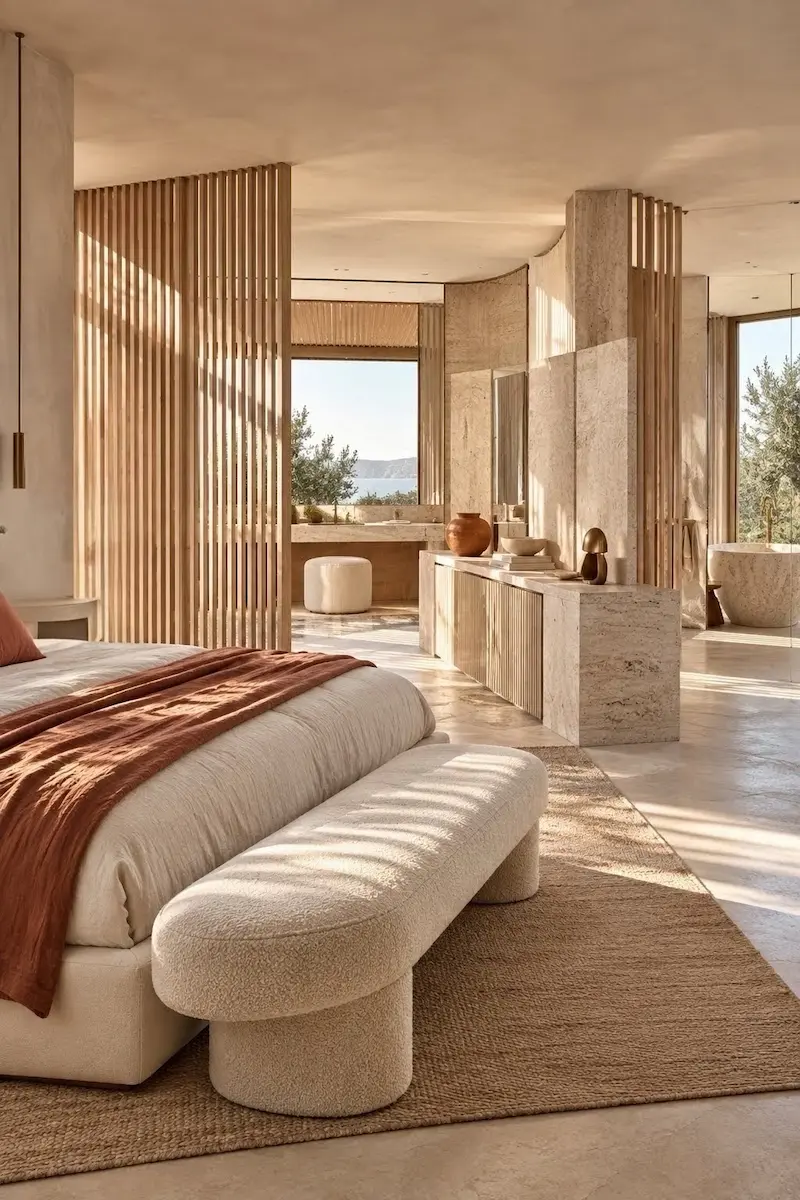
The most revealing project may be Pulina Exclusive Interiors’ Romeo 55. Alessandro Pulina says the concept deliberately began not with traditional yacht references but with the atmosphere of a Mediterranean coastal residence; the owner’s suite uses dramatic height, glazing and spatial flow to create what the project describes as a private waterfront residence. In other words, while we’re looking at yachts for ideas to bring home, yacht designers are already looking at homes.
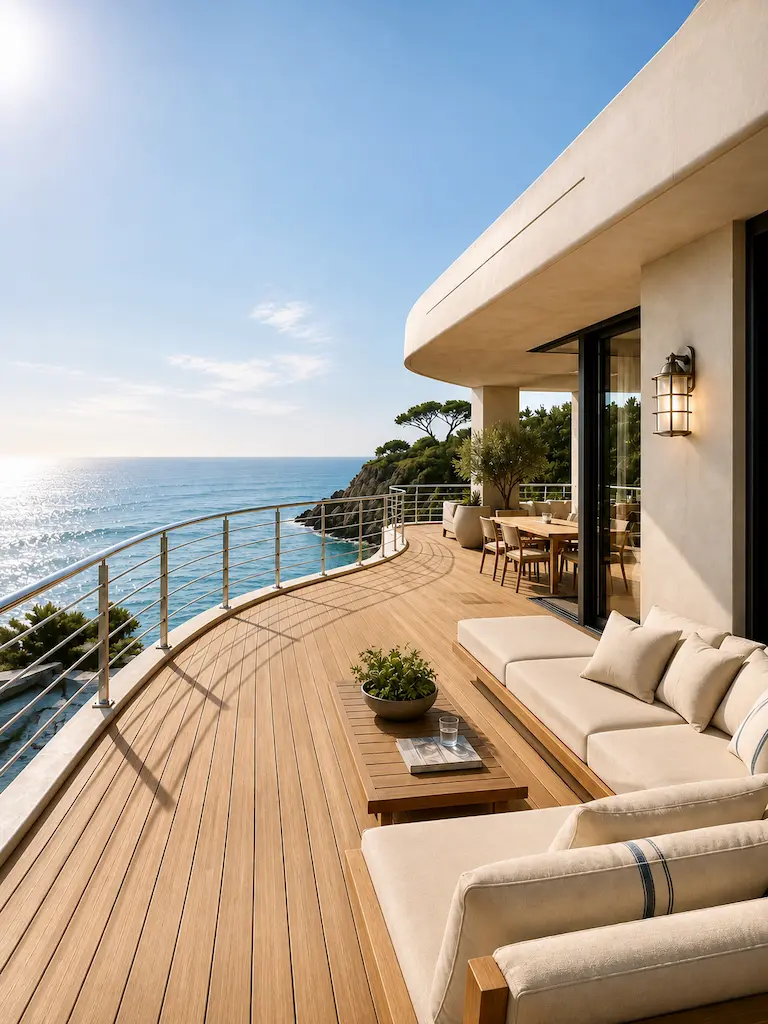
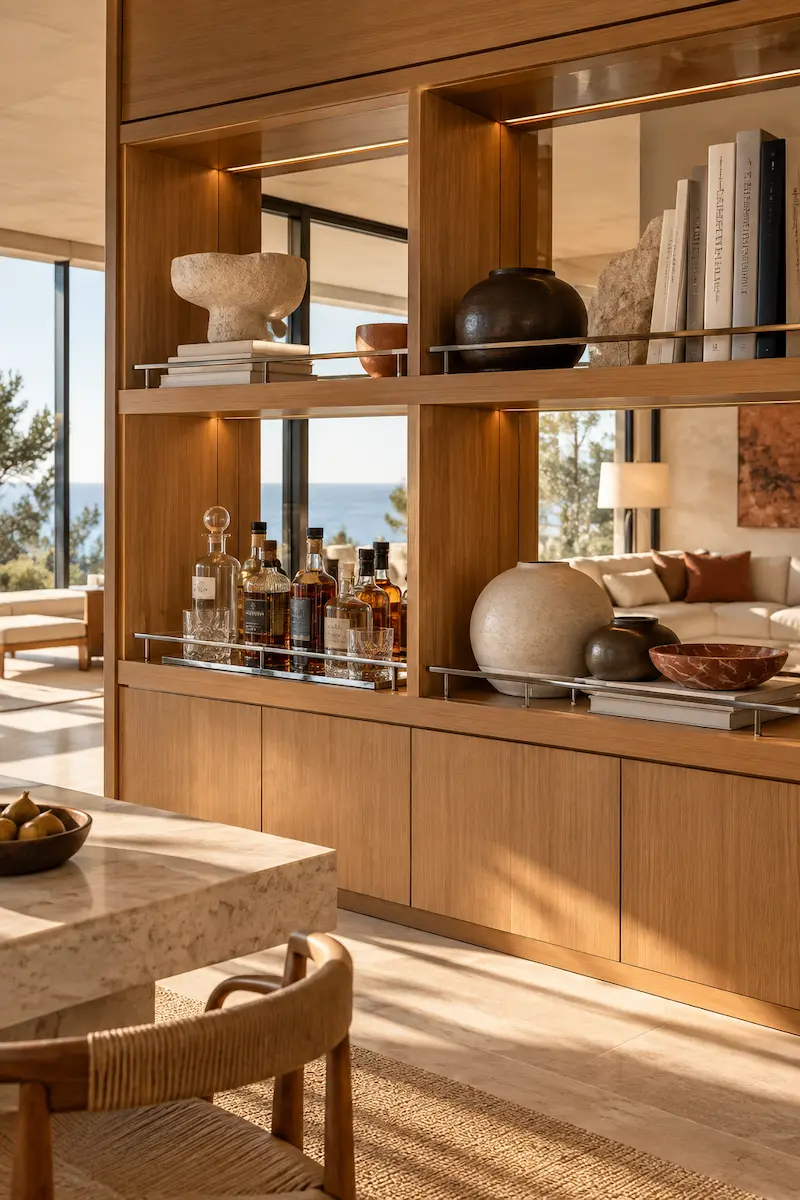
That gives us something more interesting than another disappearing glass wall. Coastal homes can borrow the yacht’s habit of creating zones rather than boxes: screens instead of complete partitions, cabinetry that helps define a room, changes in material that signal another function, and filtered boundaries that preserve light. You don’t need an ocean outside—or 55 metres of yacht—to question whether every activity deserves four walls and a door.
PERSONALITY — THE PERFECT ROOM GETS POSSESSIONS
At both Cannes and Monaco, Roberta Mari placed Vicode ceramics, masks, books and sculptural objects inside Sunseeker environments. At the show, Vicode explicitly described these pieces not as accessories added at the end, but as elements that establish proportion, rhythm and a more human scale within highly engineered interiors.
There is a lesson here for the coastal home after years of immaculate beige restraint. The answer isn’t clutter, nor is it filling a shelf because an empty shelf apparently constitutes an emergency. It is choosing fewer objects with enough character, craft or memory to deserve their space. A handmade ceramic, an odd sculpture or something brought home from a journey can accomplish what another coordinated cushion never will.
THE MOST INTERESTING THING AT SEA MAY BE THE IDEA
That is what these marinas really showcase. Luxury isn’t simply the yacht itself; it is the amount of thought squeezed into it. When space is precious and expectations are absurdly high, designers have to consider how color, furniture, light and objects actually make us want to live.
For the rest of us on land, that thinking travels remarkably well. Take color from the landscape rather than a prescribed coastal palette. Let furniture have personality, divide space without automatically closing it, and keep objects because they mean something—not because an empty shelf looked lonely.
That may be the most useful thing to bring home from Monaco and Cannes. You don’t need to borrow the yacht. Borrow the ideas. They work just as well in a California beach house or a Mediterranean apartment—and, conveniently, require neither a marina nor several million dollars parked in one.
CONTINUE EXPLORING
Inspired by this story? Continue your journey with When Weaving Became Architecture →