Why the Riviera Never Stopped Wearing Navy
Most people think nautical style began with sailors. In many ways, it did. The origins of the look can be traced to working boats that crossed the Mediterranean and Atlantic coastlines for centuries. Fishermen needed practical clothing that could withstand salt, wind, and changing weather. Navy became the color of choice not because it was fashionable, but because it was durable. White reflected the sun. Stripes were easy to distinguish against the sea. Lightweight knits provided warmth when the evening breeze arrived.
From Sailors to the Runway
What began as functional clothing slowly transformed into a style synonymous with leisure, travel, and the romance of the sea. What makes nautical style remarkable is not simply its longevity, but the number of designers who have returned to it again and again. Coco Chanel helped popularize Breton-inspired striped tops in women’s fashion during the early twentieth century. What had once been a sailor’s uniform suddenly felt modern, relaxed, and elegant. A few decades later, Jean Paul Gaultier made Breton stripes one of his signatures, proving that a simple nautical motif could become instantly recognizable around the world.
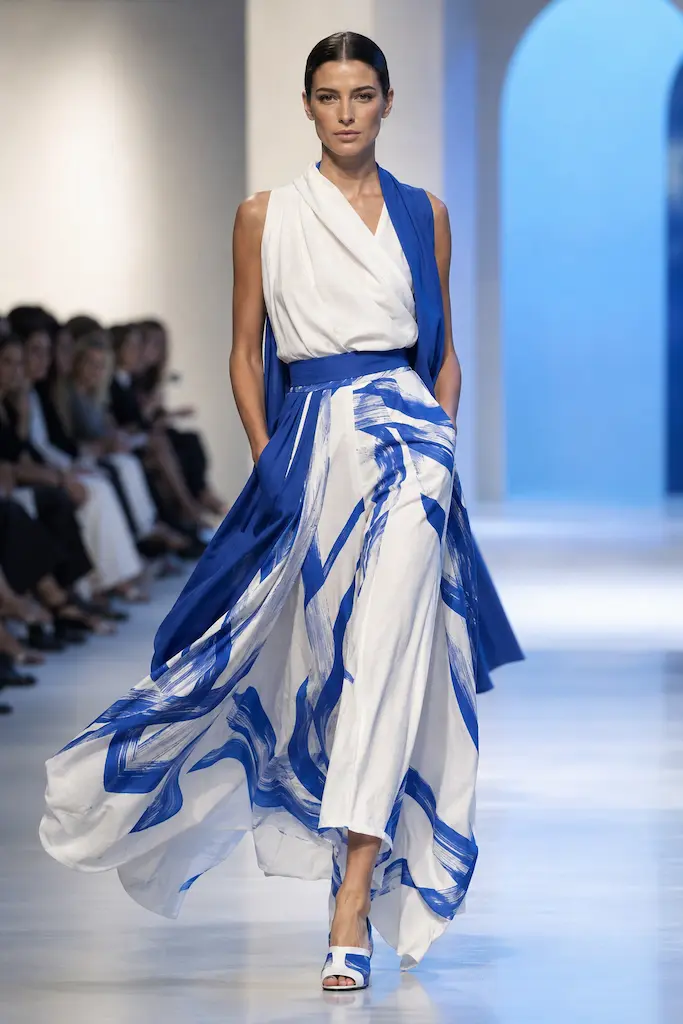
Ralph Lauren approached nautical style through an American coastal lens, pairing navy blazers, white trousers, cable-knit sweaters, and sailing-inspired details with the relaxed sophistication of life near the water. Designers such as Giorgio Armani embraced softer interpretations, using lightweight fabrics, relaxed tailoring, and muted coastal colors that felt perfectly at home along the Italian Riviera.
Even today, nautical influences continue to appear in collections from houses such as Tommy Hilfiger, which frequently revisits sailing culture, maritime colors, and classic American coastal style. What is remarkable is that while fashion constantly changes, the core elements remain largely untouched. Navy. White. Stripes. Linen. Rope textures. Woven accessories. Pieces originally designed for life near the sea continue to feel relevant generation after generation.
Fashion trends have come and gone since then, yet nautical style remains remarkably unchanged. Part of its appeal is its simplicity. The color palette is timeless. Navy, white, cream, and touches of gold feel as relevant today as they did decades ago. The silhouettes are comfortable without appearing careless, polished without feeling overly formal.
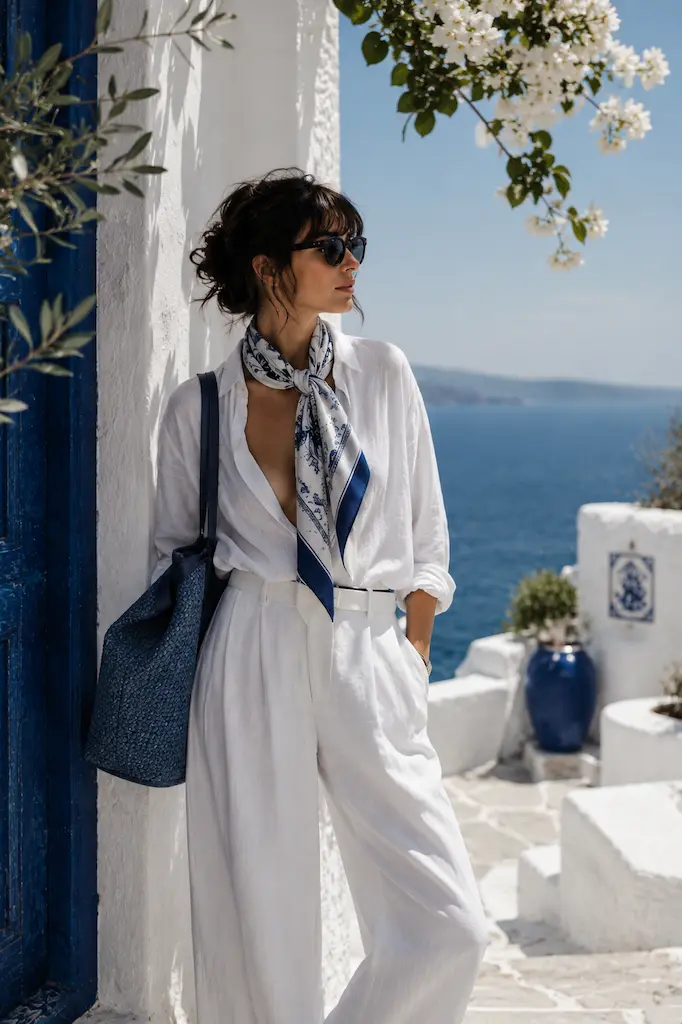
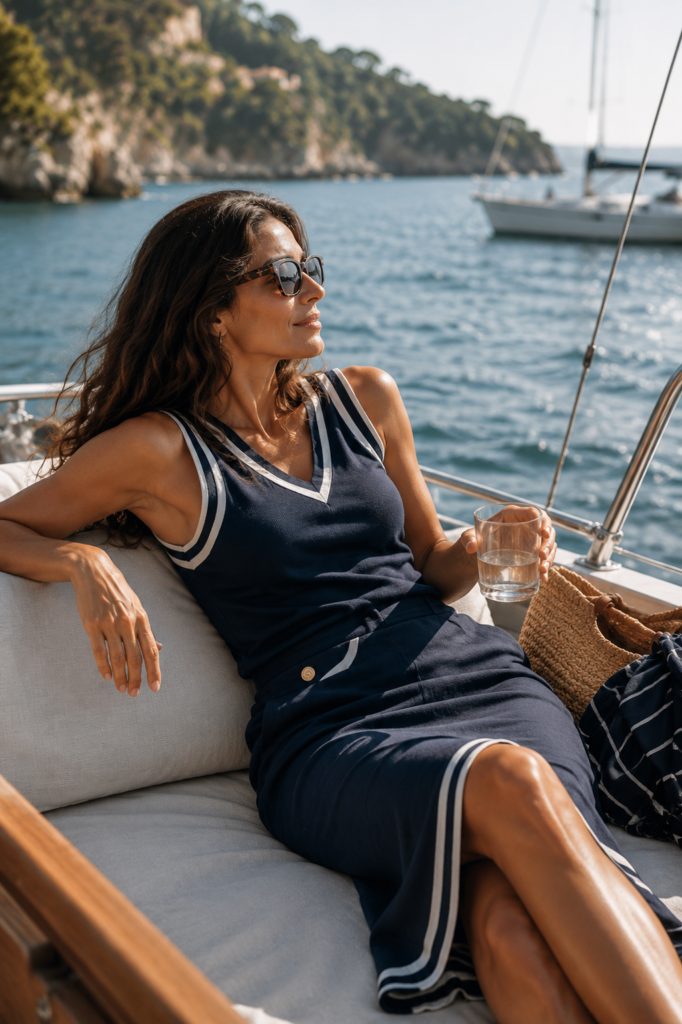
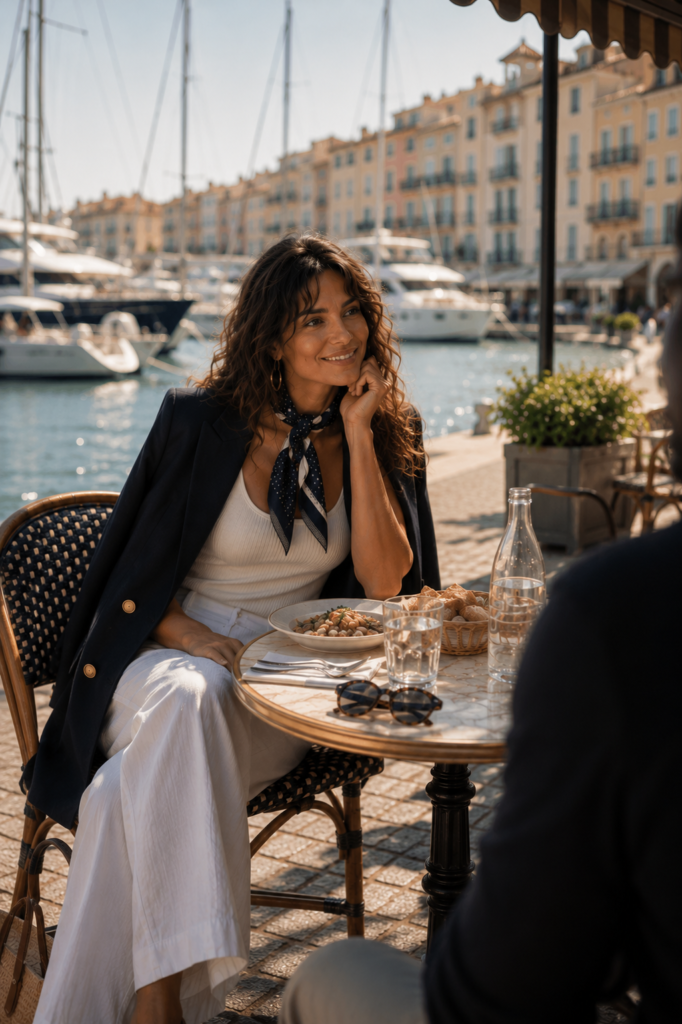
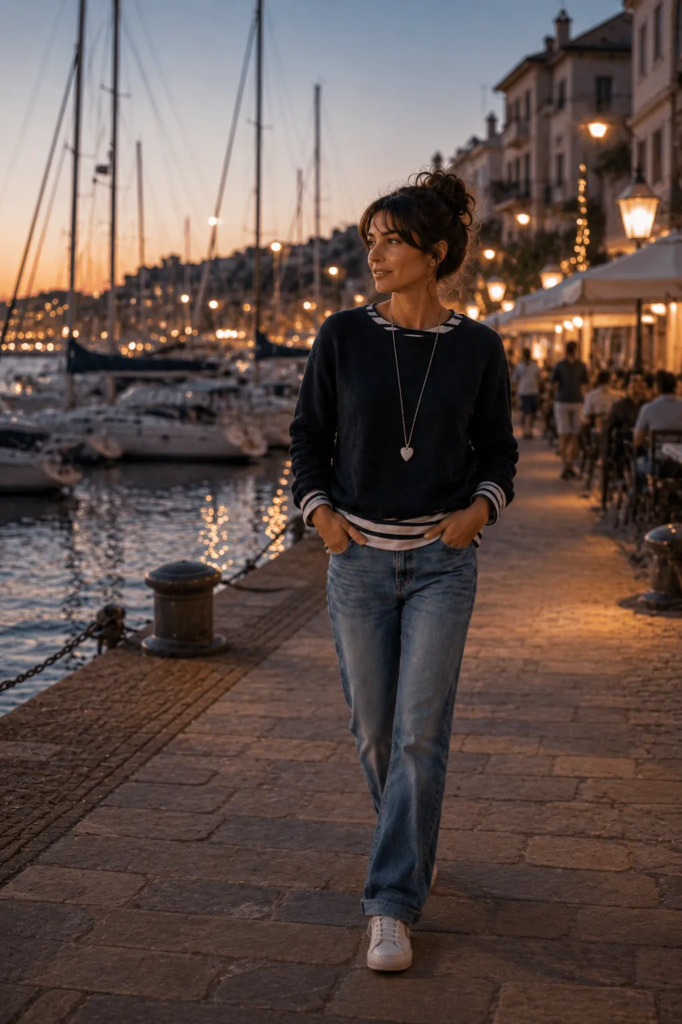
More importantly, nautical style carries an atmosphere. A striped sweater tossed over the shoulders after a harbor lunch. A navy dress worn from a yacht deck to dinner. White linen trousers paired with a silk scarf fluttering in the sea breeze. The appeal is not simply the clothing itself. It is what the clothing suggests. A slower day. A harbor somewhere nearby. A table reserved by the water. The sound of halyards tapping against sailboat masts. Sunlight reflecting across a marina at the end of the afternoon.
Whether the setting is Portofino, Saint-Tropez, Mallorca, Newport Beach, or Santa Barbara, the feeling remains surprisingly similar. Sun. Sea. And effortless elegance.
Designer’s Note
A timeless Nautical Mediterranean wardrobe does not require dozens of pieces. In fact, the strongest versions of the style rely on a small collection of classics that work together season after season.
- Start with a navy foundation. A navy knit dress, tailored blazer, or lightweight sweater instantly creates a sense of coastal elegance without feeling overly themed. Add white as a companion color. White linen trousers, crisp shorts, or a simple button-down shirt bring brightness and contrast while reflecting the relaxed sophistication found throughout the Mediterranean.
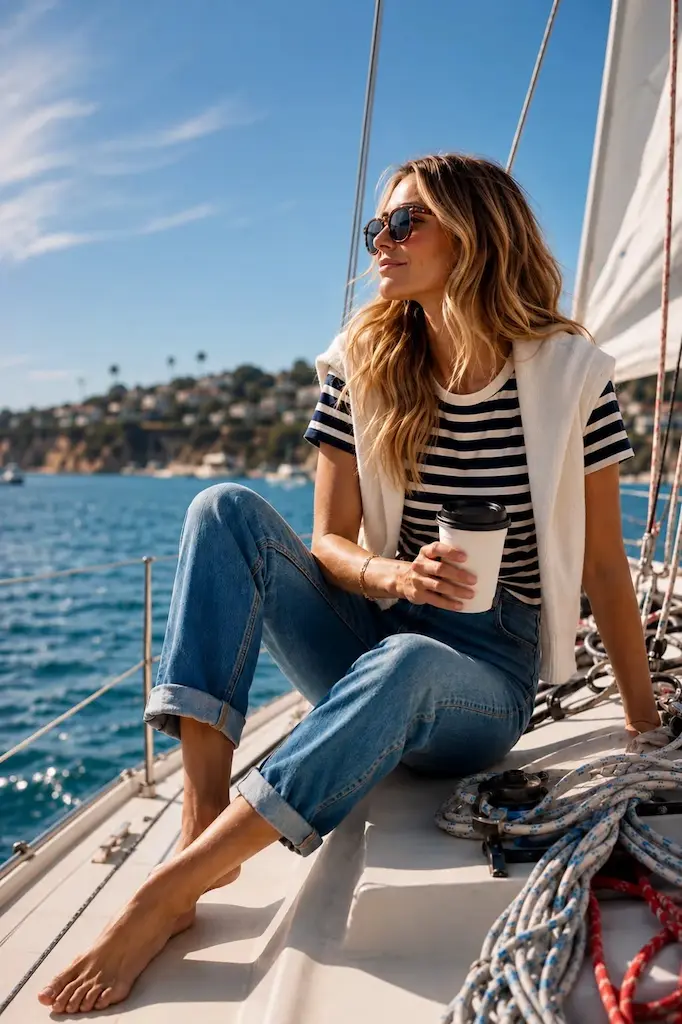
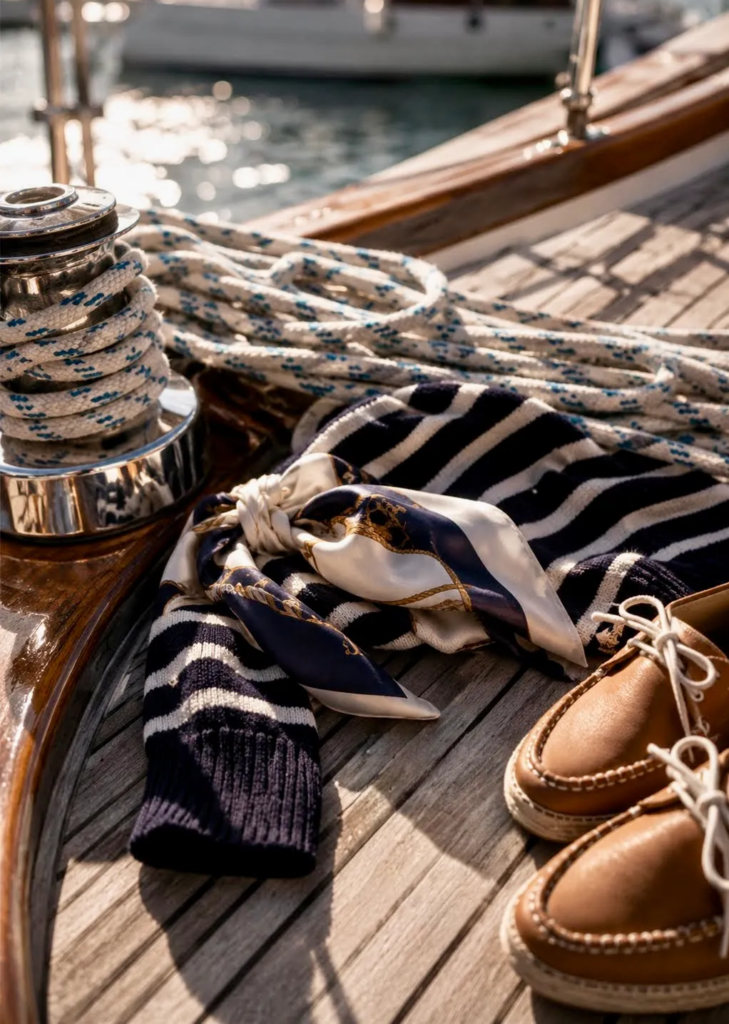
- A Breton striped sweater remains one of the most recognizable nautical pieces, but it works best when treated as an accent rather than the centerpiece of every outfit. A single striped layer can often say more than an entire wardrobe built around nautical references.
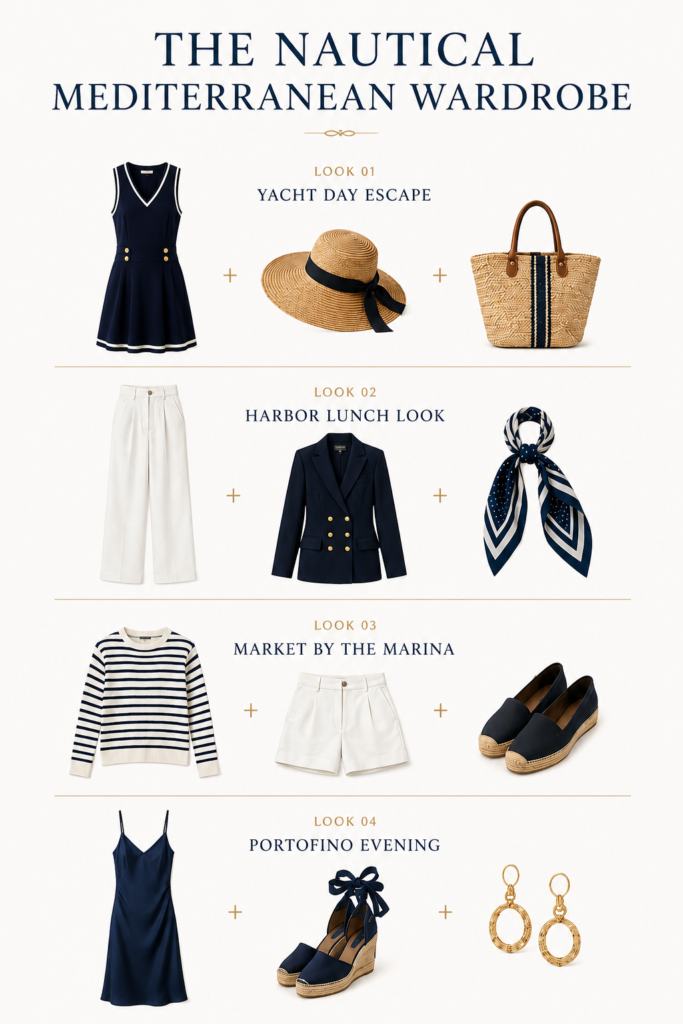
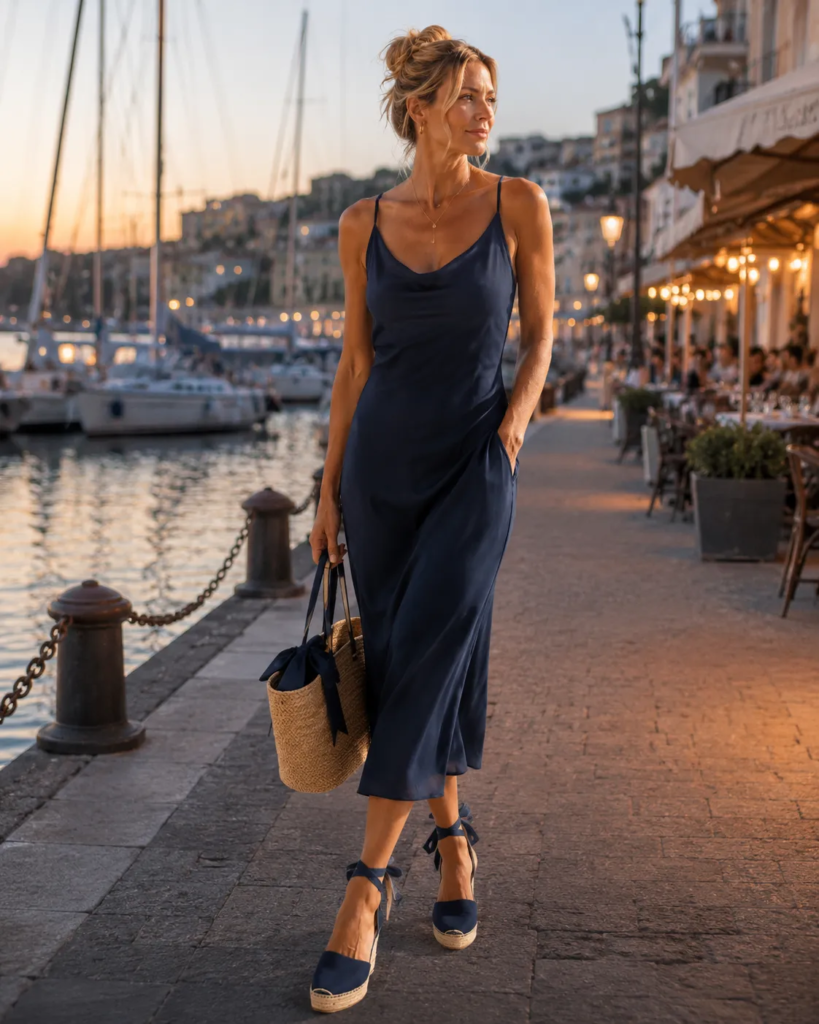
- Silk scarves are another timeless addition. Tied around the neck, woven through a tote handle, or wrapped around a ponytail, they introduce movement and Riviera character without overwhelming the look.
- For accessories, choose woven textures inspired by coastal markets and harbor towns. Straw hats, raffia totes, espadrilles, and natural materials feel authentic to a lifestyle shaped by sun, sea, and long afternoons outdoors.
Some favorite combinations include:
• Navy knit dress + oversized straw hat + woven tote
• White linen trousers + navy blazer + silk scarf
• Breton striped sweater + white denim + espadrilles
• Navy midi skirt + cream knit + gold jewelry
• White linen shirt + navy shorts + market basket
The secret to Nautical Mediterranean style is restraint. The goal is not to look like a sailor. The goal is to capture the effortless elegance that has existed along Mediterranean harbors for generations. When in doubt, choose fewer nautical references and better materials. Linen, cotton, knitwear, raffia, and navy will always outlast trends.

CONTINUE EXPLORING
Inspired by this story? Continue your journey with The Color of Passion Never Goes Out of Style →