When Baskets, Totes and Messenger Bags Quit Their Jobs for the Seaside

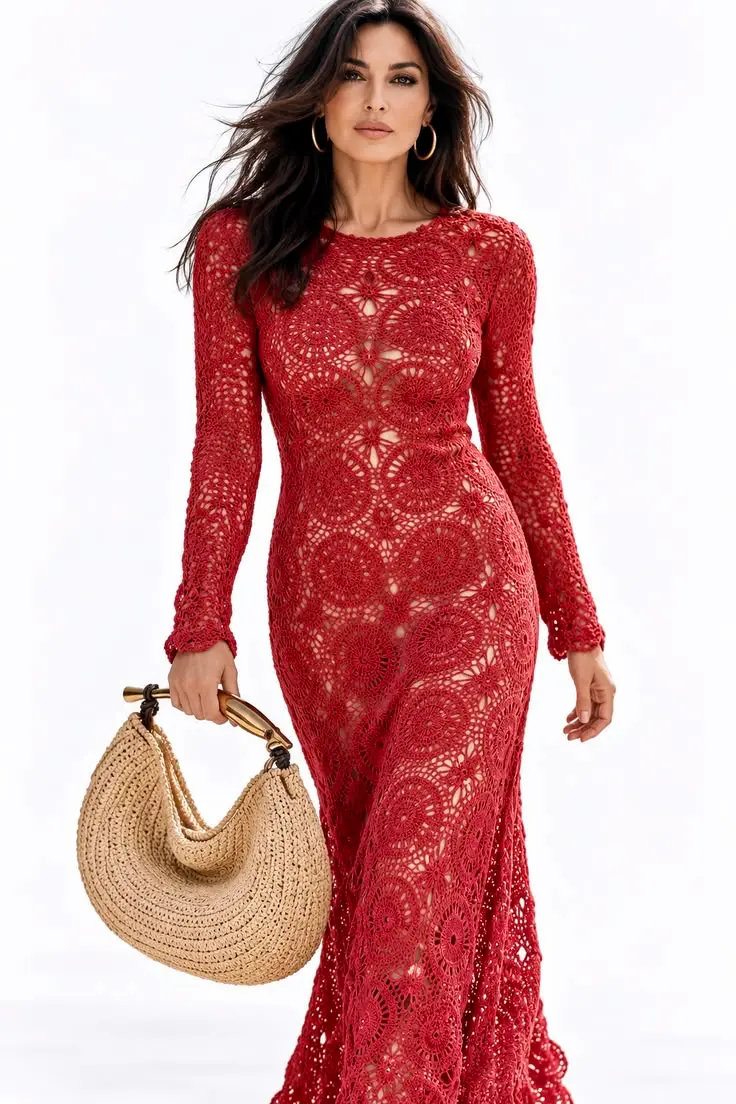
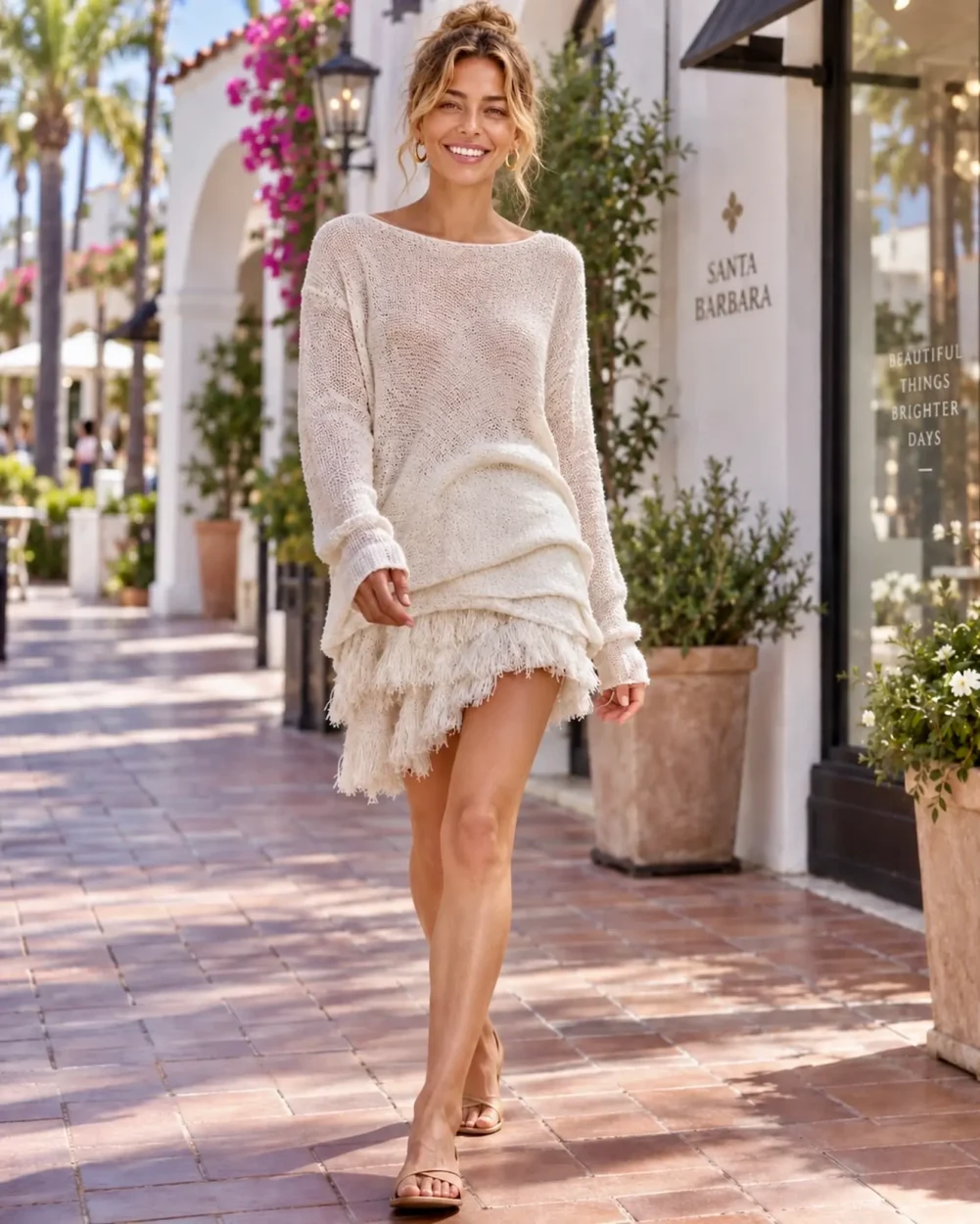
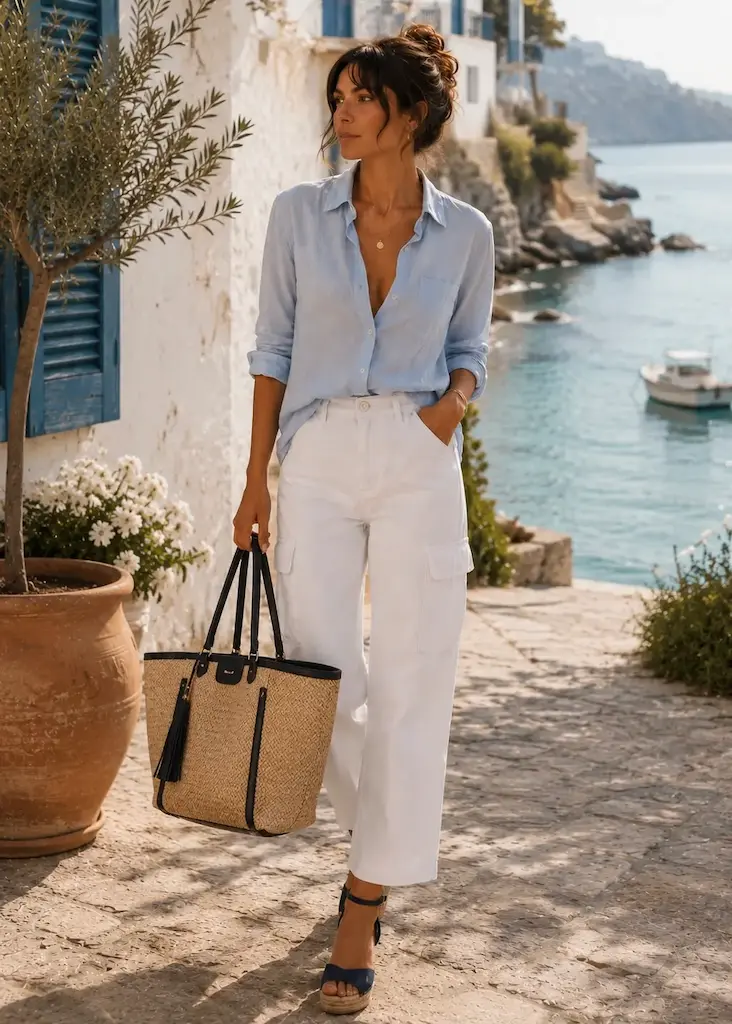
Fashion has a peculiar habit of falling in love with things that were never intended to be fashionable. Every few years, someone announces the future of shopping working bags. There are the paper bags. The plastic bags. Fold-up nylon bags that disappear into your handbag. Designer canvas totes that somehow become collectibles. Meanwhile, the woven basket quietly carries on, wondering what all the fuss is about. The basket, after all, was supposed to carry food. The tote carried whatever needed carrying. The messenger bag carried mail or somebody else’s work. None of them were waiting around to become an accessory. And yet put these objects beside a Breton striped shirt, linen trousers and a pair of espadrilles and something curious happens. They suddenly look less like equipment and more like the vocabulary of coastal style. The bags didn’t change first. The life around them did. The coast has always had that talent for making ordinary things look as though they were stylish all along.
The Basket Leaves the Market
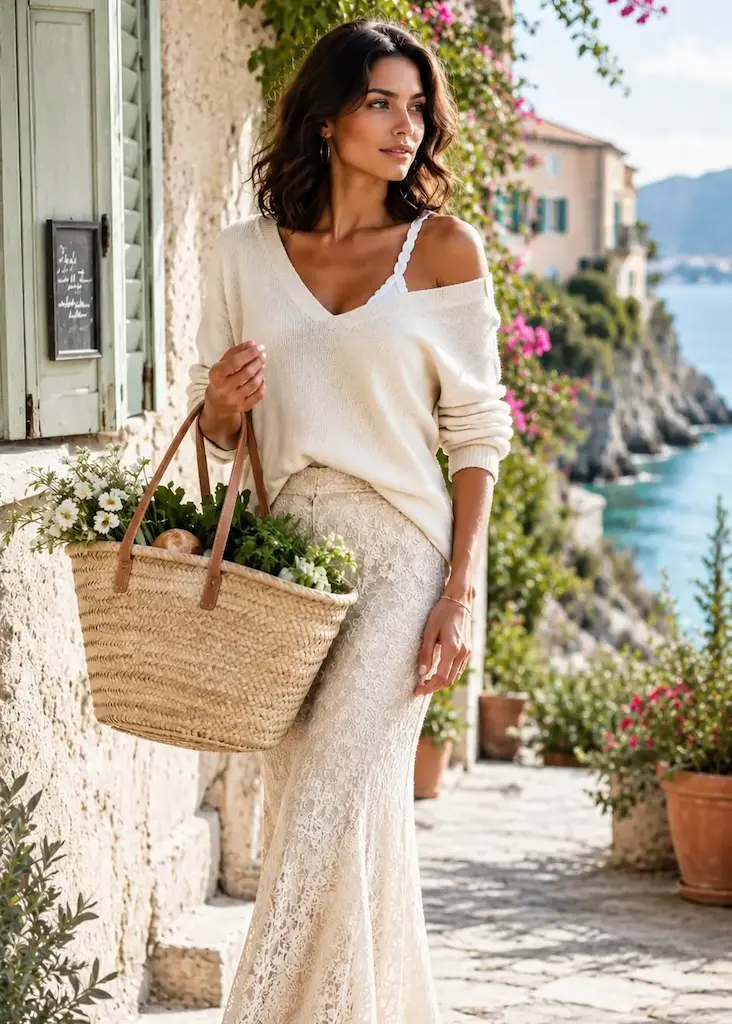
The basket had a perfectly good life before fashion discovered it. Around the Mediterranean, it carried produce, bread, flowers and whatever else needed to make the journey from market to home. That practicality suited coastal life well, because the market was not simply somewhere to shop but part of the daily rhythm of walking, eating and gathering. Then resort culture arrived and the same basket began appearing beside summer dresses, sandals and swimsuits. Nothing particularly revolutionary happened to the object. The vegetables came out and the sunglasses went in.
Jane Birkin understood the possibilities better than most. She carried her wicker basket everywhere—from ordinary days in jeans to Cannes—while Brigitte Bardot carried hers through Saint-Tropez. Neither woman treated the basket as a precious accessory, which was precisely why it looked so good. It suggested that one might have stopped at the market before lunch, wandered toward the beach afterward and never thought to change bags in between. Fashion eventually gave that ease a name: effortless style.
Designers have been trying to improve on the idea ever since. Chanel has sent wicker onto the runway; Loewe helped turn the woven basket into a contemporary luxury staple; Prada, Miu Miu and Jacquemus have all played with its scale, shape and identity. Some are exceptional examples of craftsmanship, but the basket remains inconveniently democratic. A beautifully made market version can look every bit as convincing beside a white cotton dress. Fashion can add a logo and a considerable price tag, but let’s be honest… a basket is still rather stubbornly a basket.
Coastal dressing has little patience for accessories that can only perform one social function. The basket can go from farmers’ market to café to beach without looking misplaced at any of them. It is the perfect object for Caliterranean living. It moves easily between the things coastal dressing asks of it: market, café, town and beach. It doesn’t need changing for each setting, and it usually looks better once it has stopped looking new. Some things need constant innovation. A basket simply needed two handles. The Mediterranean didn’t turn the basket into fashion by making it more sophisticated. It made practicality look desirable.
The Tote Goes to the Beach
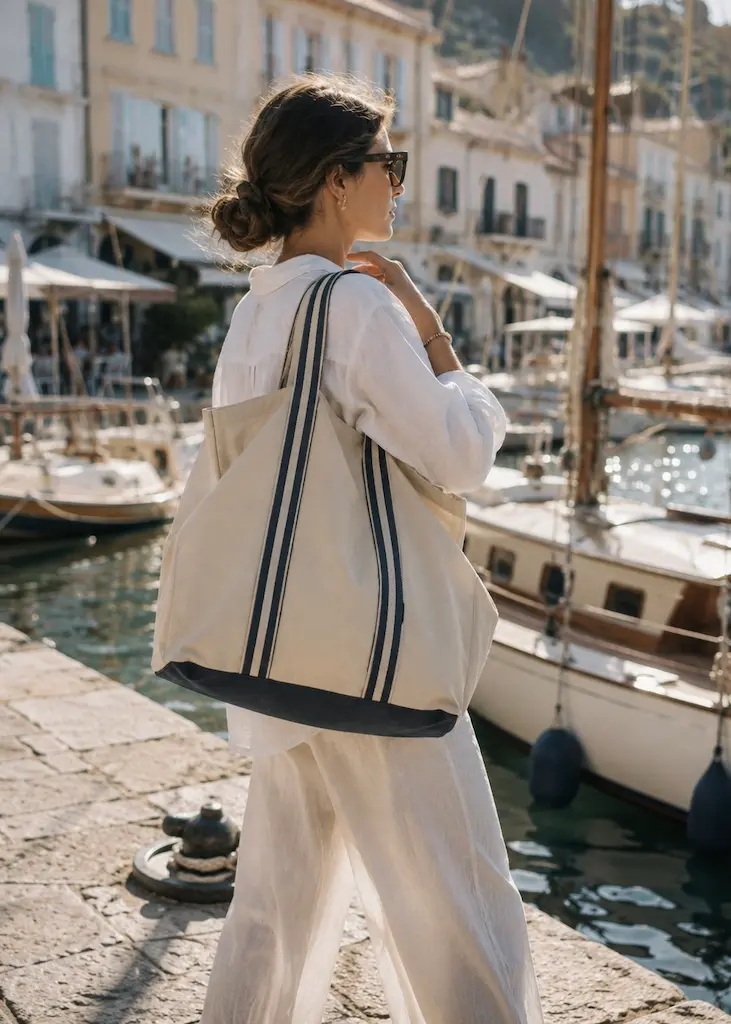
If the basket belongs to the market, the tote belongs to the day that refuses to tell you exactly where it is going. It is essentially an open container with handles, which sounds unimpressive until you need to carry a towel, book, water, sunscreen, sweater and the collection of objects that mysteriously accompanies even the simplest trip to the beach. A conventional handbag suddenly seems rather under-qualified. The tote succeeds because it expects life to be slightly messy.
The great American example is L.L.Bean’s Boat and Tote, which began in 1944 as a heavy canvas carrier for blocks of ice. Its later association with boating, New England summers and preppy dressing transformed industrial practicality into an aesthetic. Carolyn Bessette-Kennedy and Gwyneth Paltrow carried it; later generations personalized it, rediscovered it and made its reassuringly basic canvas construction fashionable again. The ice disappeared. The handles survived.
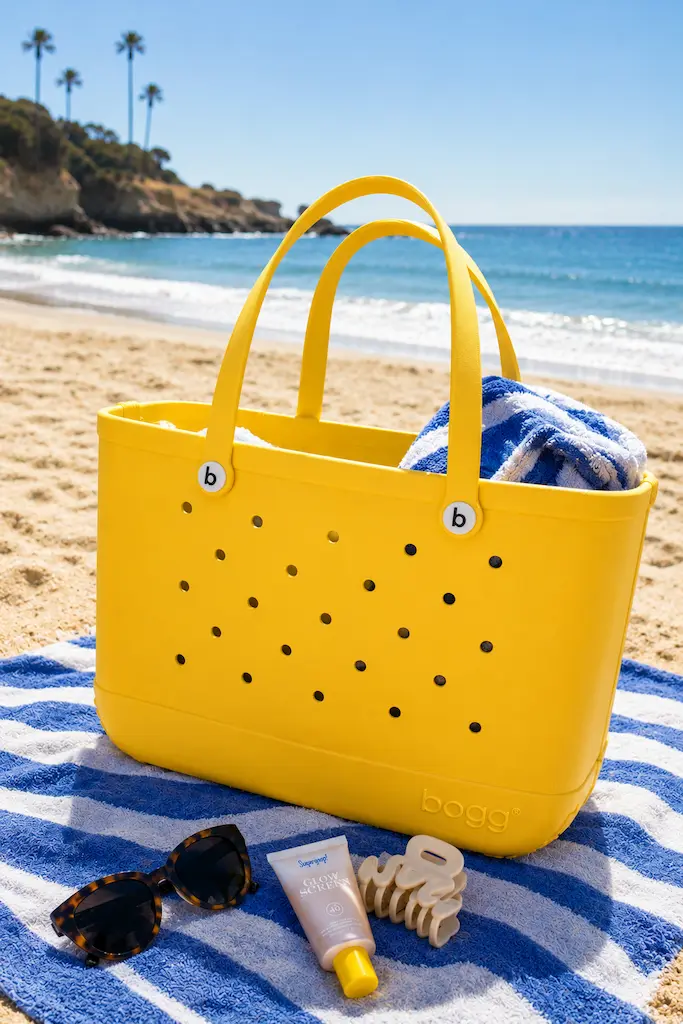
That uncomplicated design has since given fashion plenty to work with. Tibi exaggerated the L.L.Bean classic for the runway, while contemporary labels continue to reinterpret canvas totes in increasingly polished ways. At the beach, Bogg took the same carry-everything philosophy in another direction, using washable molded material designed to tolerate water and sand. One looks at home beside a striped sweater on a sailboat; the other can practically be hosed down after the children get hold of it. Coastal life has room for both.
And now the tote is becoming even more playful. Reed Krakoff’s accessories work for Gap takes familiar American materials such as denim and fleece and turns them into bags, including “hoodie” totes. It is an amusing evolution of an object that has never been particularly concerned about what qualifies as handbag material. Canvas carried ice. Molded material carries wet swimsuits. Fleece can apparently carry everything else. The tote’s greatest fashion achievement may be convincing us that almost anything looks stylish once you attach two handles.

The Messenger Keeps Moving
The messenger bag presents a different coastal story. It wasn’t born at the beach and there is no reason to pretend otherwise. Its appeal came from movement. Bags used by workers and later bicycle couriers were designed to sit across the body, leave the hands free and keep their contents accessible while somebody was actually going somewhere. The shape followed the job. Style came considerably later.
Bicycle culture gave the messenger its attitude. In cities including San Francisco, the working bag moved naturally from couriers into everyday casual wardrobes, helped by companies such as Timbuk2. Its practicality suited a distinctly Californian way of dressing: informal, mobile and largely uninterested in carrying something simply because convention said one should. Fashion houses eventually adopted the crossbody messenger silhouette too, refining its materials and proportions. Once again, fashion discovered that people with actual jobs had already solved most of the difficult design problems.
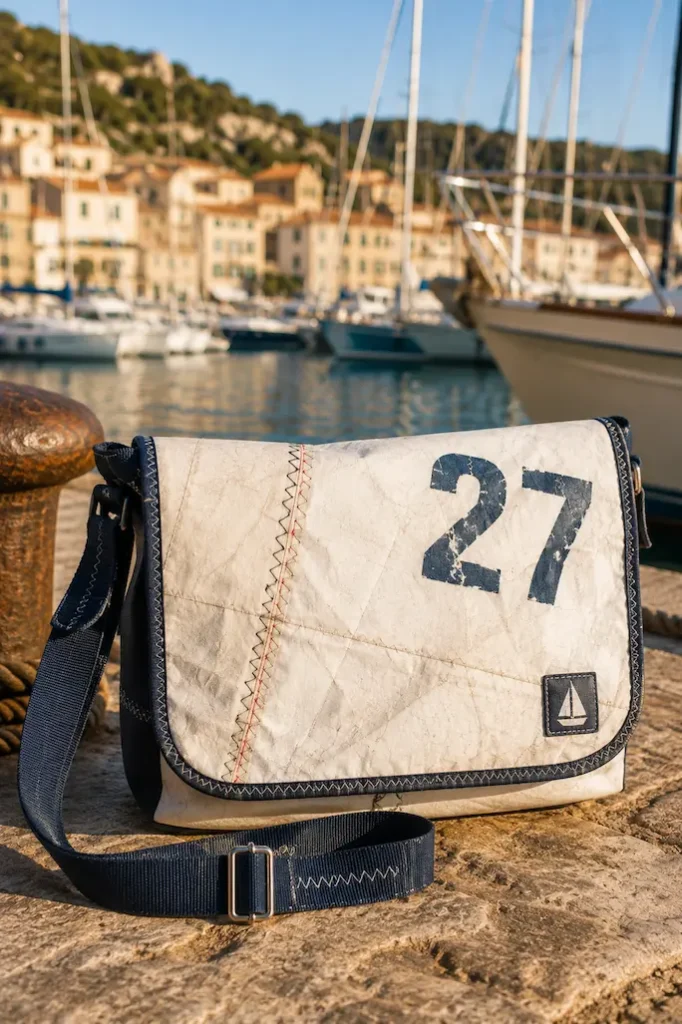
But the messenger’s best coastal career change may come from the material itself. Designers on both Mediterranean and Californian shores now work with retired sails, transforming material that once moved across the water into bags designed to move with a person. Old stitching, numbers, creases and traces of the sail’s former life can remain visible rather than being polished away. A conventional bag can be made to look nautical. A messenger bag made from a retired sail has something better than nautical styling: a past. There is something wonderfully circular about it. The sail spent years being pulled by wind, carrying a boat from one place to another. Eventually it comes down from the mast, gets cut and stitched, receives a strap and starts traveling again. It no longer moves the boat; now it moves with you. Apparently even a retired sail isn’t quite ready to sit still.
The Coast Gave Them Their Second Job
The basket, tote and messenger did not become coastal icons because someone decided that coastal people needed three fashionable bags. They became useful first. The basket suited a life organized around markets, walking and gathering. The tote could absorb everything required for boats, beaches and weekends. The messenger kept up with people who wanted their hands free and their belongings moving with them. And contemporary designers found a particularly fitting way to keep that sense of movement alive by giving retired sails another journey. Coastal life gave each ordinary object a second reason to exist. Fashion noticed afterward.
That distinction may explain why all three have survived so many trends. Their appeal isn’t dependent on a particular season because their shapes still solve the same problems they solved before anyone considered them stylish. They can be refined, exaggerated, branded and occasionally priced at a level that makes putting an actual tomato inside feel mildly irresponsible, but their usefulness stubbornly remains.
Maybe that is one of the secrets of coastal style itself. Mediterranean and California coastal dressing have always been particularly good at taking things made for real life—workwear, sailing clothes, market baskets, canvas, rope, sandals—and loosening them into something desirable. The coast rarely needs an object to become more precious. It simply gives it a different setting. Fashion may have given the basket, tote and messenger their elevated status. The coast gave them their attitude. But thankfully, after all that reinvention, they remain extremely good at their original assignment: carry things. Preferably toward the sea.
CONTINUE EXPLORING
Inspired by this story? Here is your next read Why Coastal Towns Never Stopped Wearing Breton Stripes →