How Sea Glass, Navy, Turquoise and Denim Found Their Way to the Coast
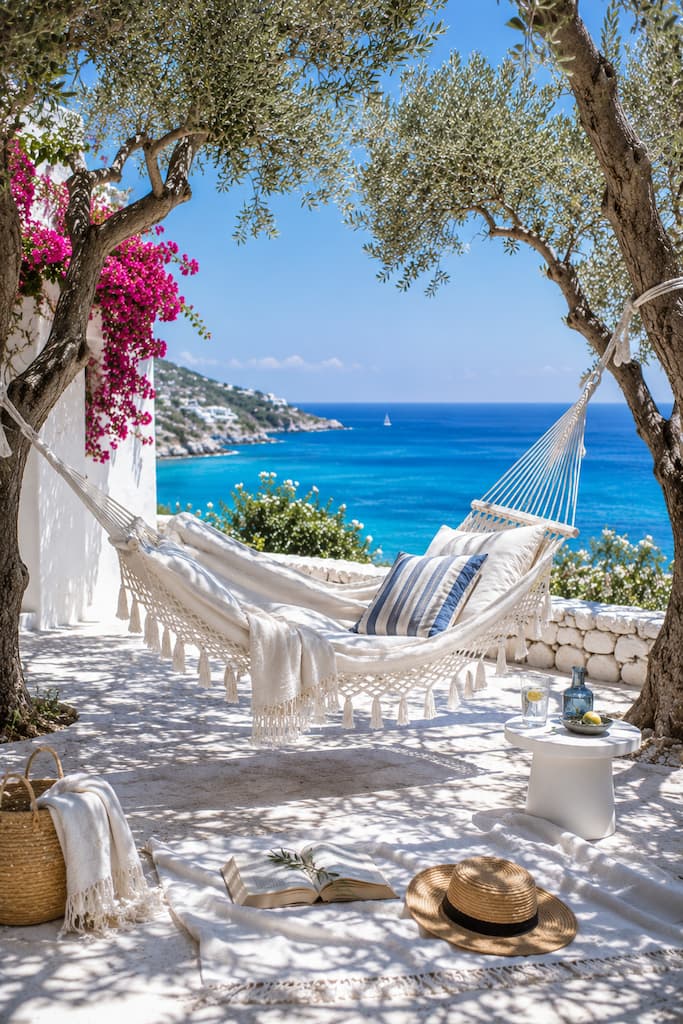
Spend enough time near the coast and blue begins to look less like a color choice and more like local infrastructure. It is overhead, underfoot and parked outside the café. It appears in faded shirts, fishing boats, ceramic plates, painted doors, old glass, striped awnings and denim that has been washed so many times it has practically developed a biography. California has it. Mallorca has it. Greece, southern France and coastal Spain certainly have it. The sea may have started the association, but it cannot take all the credit.
The four blues we now think of as unmistakably coastal—sea glass, navy, turquoise and denim—did not arrive there through the same story at all. One was altered by water, one was formalized through maritime dress, one traveled through centuries of ceramics and decorative craft, and one began as hard-working cloth before becoming perhaps the most democratic blue in the wardrobe. The coast did not invent them; it collected them.
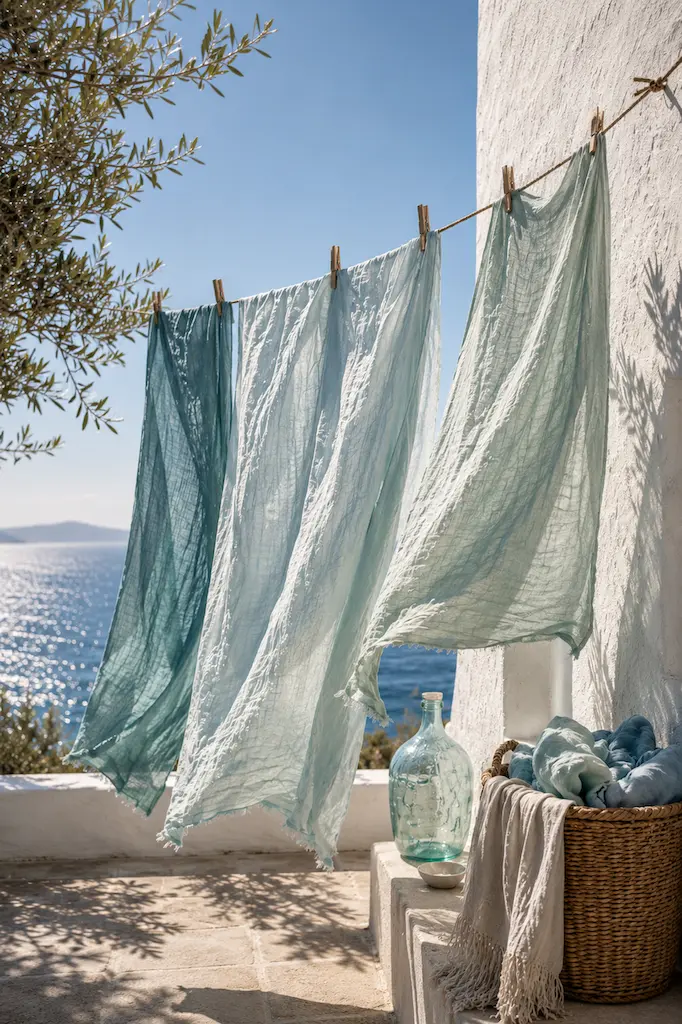
Sea Glass Blue: The Color Made by Damage
Sea glass has excellent public relations. Today it sits in bowls on coffee tables and inspires paint colors with names suggesting restorative weekends. Its actual history is considerably less glamorous: it is discarded glass that has spent years being knocked around by water, sand and stone, which is, admittedly, quite an effective finishing process.
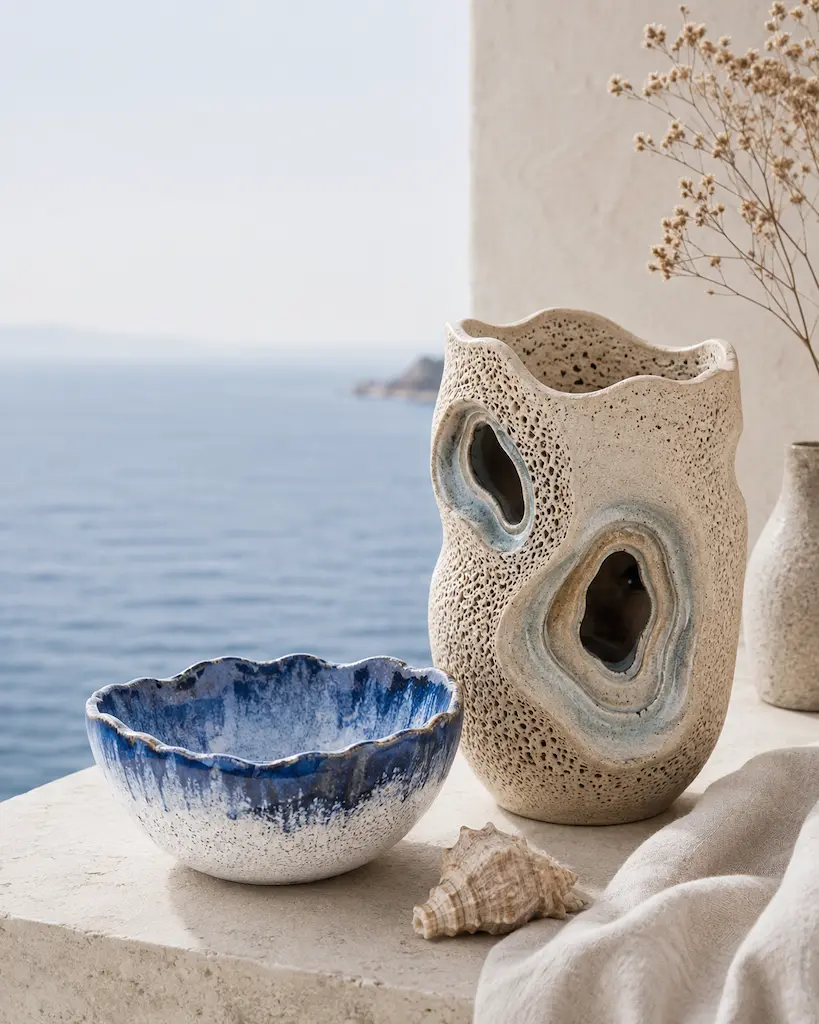
Wave action abrades sharp edges and gradually frosts the surface, turning once-glossy bottles and fragments into the softened pieces people collect along shorelines. Their colors often reveal something about the objects they once were: clear containers becoming milky white, old bottles appearing green or aqua, darker glass retaining deeper shades. What makes sea-glass blue particularly coastal is not simply its color but its lack of perfection. Against white plaster it can appear distinctly blue; against sand, almost green. Wet it and the color deepens again.
That ambiguity explains why the shade translates so easily into interiors. Pale blue-green glass, washed textiles and softly glazed surfaces do not imitate the ocean literally; they behave more like things the ocean has altered. A room filled with anchors and miniature boats tells you it is coastal. Sea-glass blue can manage the assignment without the props.
Navy Blue: When Blue Became Serious
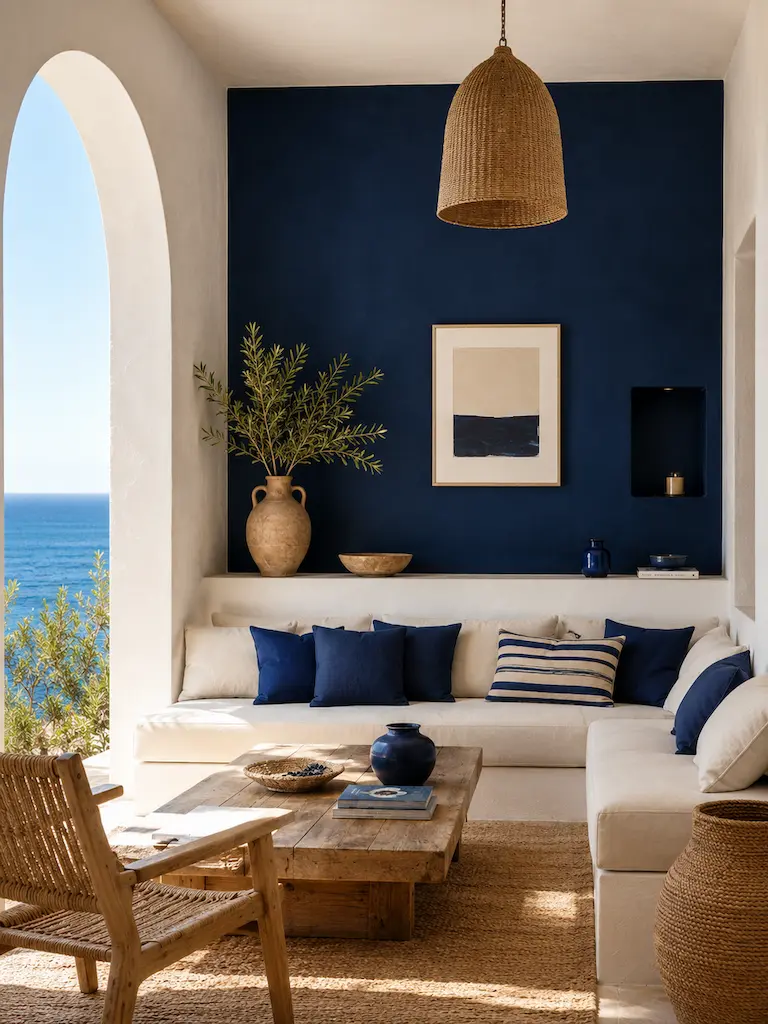
Sea-glass blue looks as though it has spent the afternoon doing very little. Navy looks like it has somewhere to be. Its maritime association is much more direct. Dark blue became strongly identified with European naval dress during the eighteenth century and eventually gave us the color name itself. The connection endured because dark blue was practical, formal and visually authoritative—a useful combination when your workplace happened to be a ship.
From uniform came a broader coastal vocabulary: pea coats, sailor trousers, striped knits, yachting jackets and eventually the enormous category of clothing described as “nautical,” whether or not its wearer had any intention of going near a boat. Navy’s great trick is that it carries maritime history without behaving like costume. A navy sweater with white trousers can refer quietly to sailing, while navy upholstery gives a pale room structure. Against weathered wood, rope, canvas or white cotton, it provides exactly the contrast that lighter coastal colors often need.
It is probably the least romantic of the four blues, and that is partly why it works so well. The sea is not exclusively turquoise water photographed at 4 p.m. in August. It also contains harbors, uniforms, working boats, night crossings and weather forecasts nobody particularly likes. Navy remembers that part.

Turquoise: When Blue Became Craft
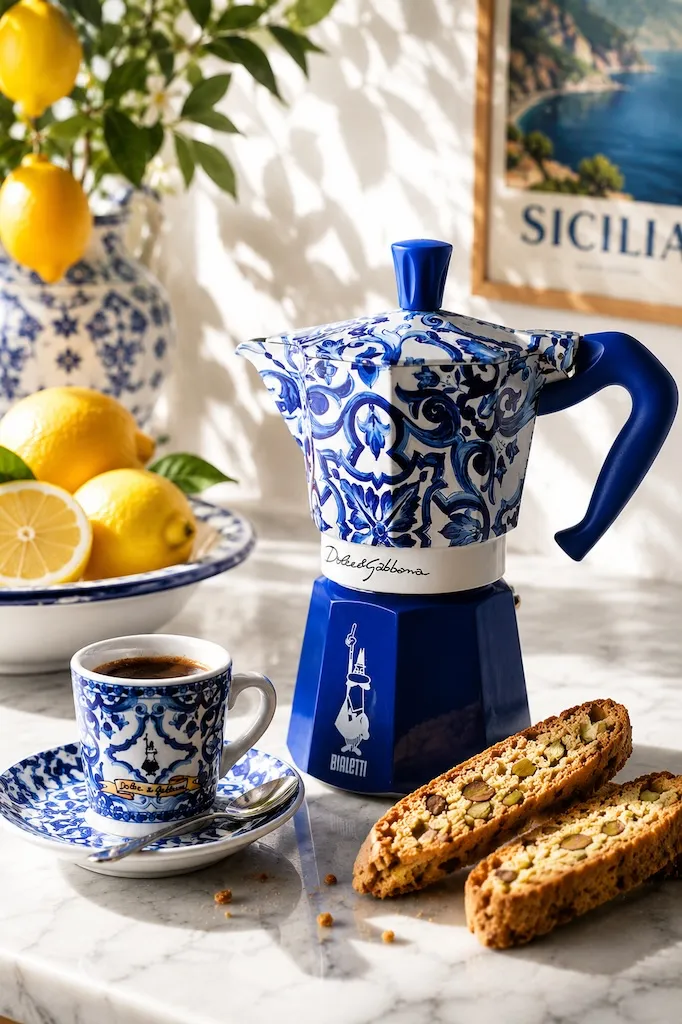
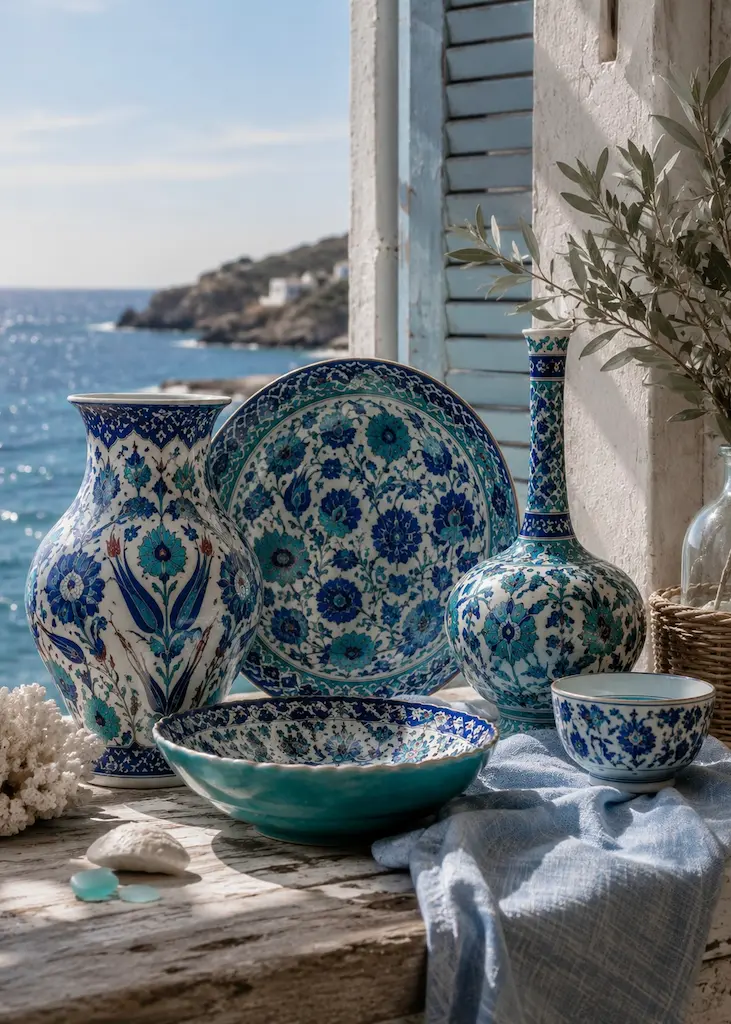
Turquoise occupies completely different territory. Long before it became shorthand for “vacation,” blue and turquoise glazes had substantial histories in ceramics across the eastern Mediterranean and neighboring regions. Ottoman İznik pottery, for example, developed magnificent combinations of cobalt blue and turquoise centuries ago; surviving sixteenth-century pieces make our contemporary obsession with blue tableware look rather late to the meeting.
That history matters because turquoise entered coastal environments not only through nature but through things people made. Glazed ceramics intensify color in a way fabric cannot. Sunlight hits the surface and bounces back. Water does something similar. Put turquoise pottery, tile or painted wood beside brilliant coastal light and suddenly architecture begins borrowing tricks from the sea.
This is why turquoise can feel convincing on a ceramic bowl, a painted shutter or a decorative tile while becoming rather aggressive when applied indiscriminately to an entire room. There is turquoise, and then there is an interior apparently sponsored by a swimming pool. Mediterranean craft traditions understood the value of the white surrounding the blue. The color becomes stronger because it has somewhere to stop.
California picked up that lesson easily. Spanish and Mexican architectural influences, tile traditions and the state’s own fierce sunlight gave saturated blues a natural second home. Yet the best use is rarely about recreating a specific Mediterranean look. It is about understanding contrast: deep color against pale walls, glazed surfaces against rough ones, cool blue against warm earth. Turquoise does not make a place coastal; light does most of the work.
Denim Blue: The Blue That Went to Work
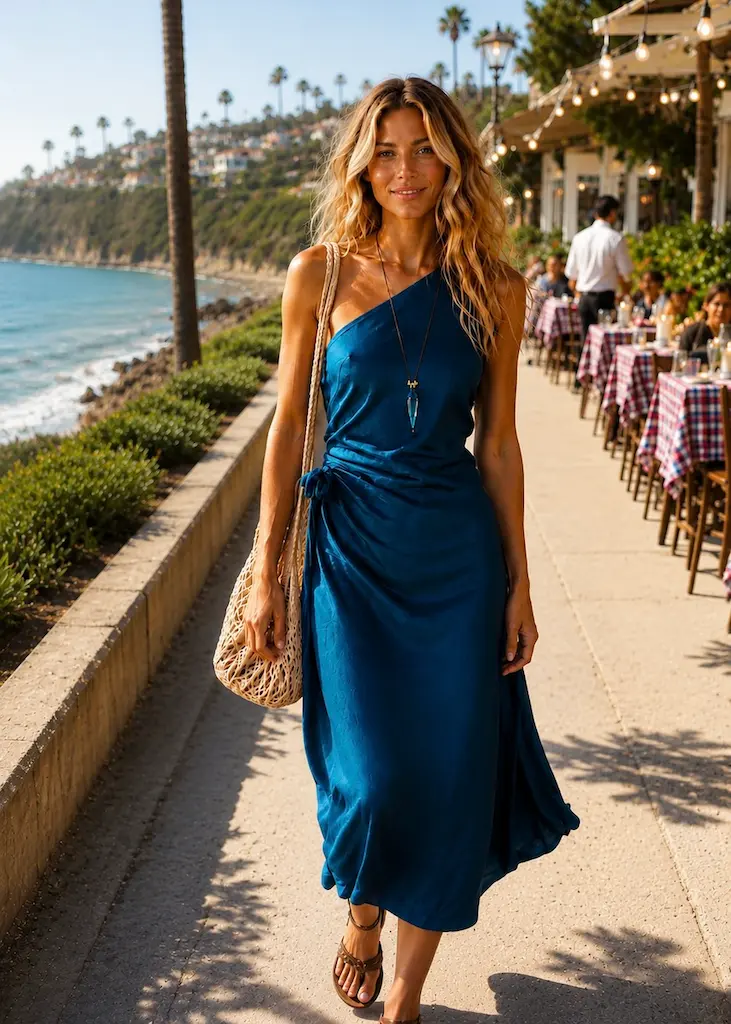
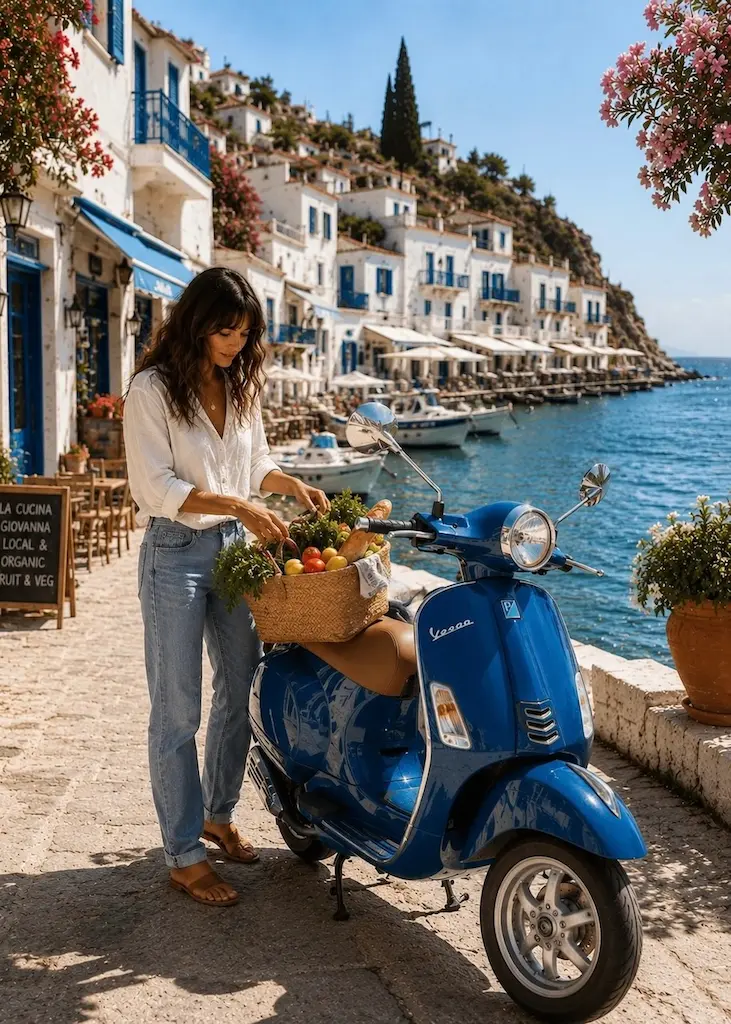
And then there is denim, which arrived at coastal life without asking anyone’s permission. Unlike navy’s naval associations or turquoise’s decorative history, denim blue became familiar because it was useful. Nineteenth-century work trousers made in San Francisco helped establish indigo-dyed denim as durable American workwear; Levi Strauss and Jacob Davis patented their riveted trousers in 1873, and early versions were made in both indigo denim and brown duck cloth.
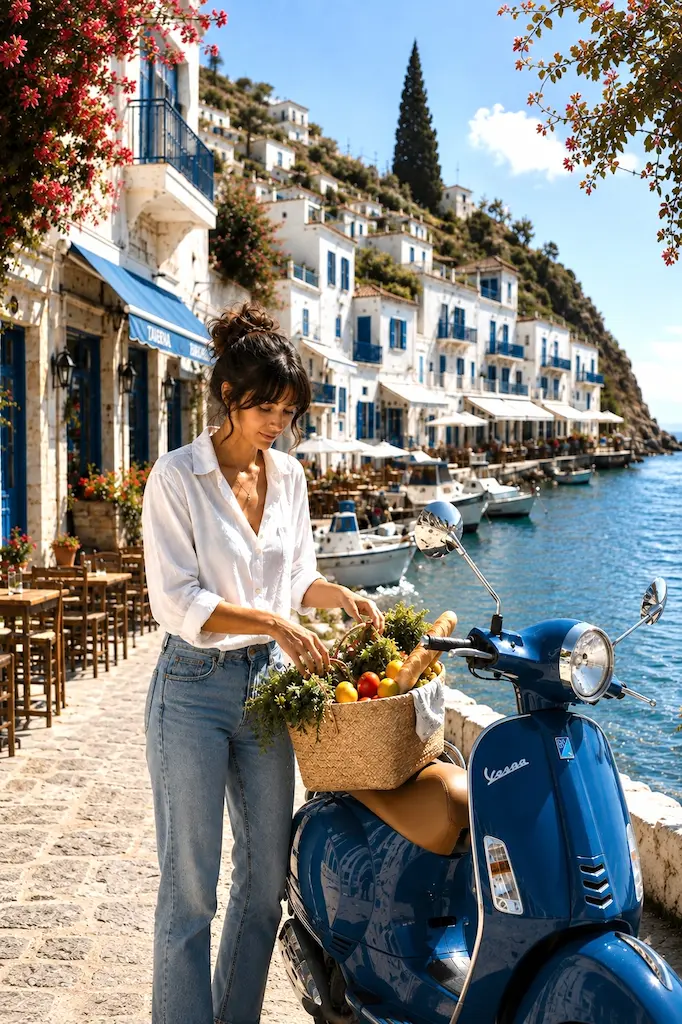
The blue version won rather spectacularly. Denim migrated from labor into leisure, youth culture and fashion, but California remained central to its mythology. It suited a culture increasingly associated with outdoor work, cars, ranches, beaches and informal dressing. By the twentieth century, jeans had managed the rare fashion achievement of being worn by workers, rebels, movie stars, teenagers, designers and people merely attempting to buy groceries.
Few fabrics have enjoyed such social mobility, and unlike pristine navy, denim improves through deterioration. Indigo fades at knees, seams and pockets. Sunlight changes it. Washing changes it. Wear records itself visibly in the cloth. In that sense denim has something unexpected in common with sea glass: both become more interesting after their original surfaces have been disturbed.
Perhaps that is why denim looks particularly convincing near the coast. Coastal life is rather unforgiving toward anything requiring perfect preservation. Salt, sunlight, sand and wind are not known for respecting a garment’s resale value. Denim can cope.
Four Blues, Four Different Stories
Put these blues beside one another and the phrase “coastal palette” suddenly becomes more interesting. Sea glass gives us blue altered by nature. Navy gives us blue shaped by maritime utility and uniform. Turquoise gives us blue transformed through ceramics, glaze and architecture. Denim gives us blue made ordinary through work and wear. Their histories barely resemble one another, yet coastal environments make them feel related because they share the same accomplices: strong light, pale surfaces, water, natural materials and repeated exposure to weather.
That is also why the palette travels so easily between the Mediterranean and California. It does not require the two places to be culturally identical. California did not need to copy a Greek island, and Mallorca did not somehow anticipate a pair of San Francisco jeans. Different histories simply arrived at compatible visual conclusions.
The interesting part of coastal style has never been reproducing a prescribed list of colors anyway. Once something becomes a formula—white wall, blue cushion, striped towel, obligatory bowl of lemons—the sea has probably left the conversation and the merchandising department has arrived. The real palette is less obedient. Navy can be nearly black. Denim can fade toward powder. Turquoise can shift green. Sea glass can barely be blue at all. Put any of them beneath different weather, beside different materials or under evening light and the color changes again.
That is why blue has remained so persistent along both shores. There is no single coastal blue; there are hundreds. We simply needed four to begin the story.
CONTINUE EXPLORING
Inspired by this story? Continue your journey with Caliterranean Style – One Scarf, Two Coasts →