What Comes After Mediterranean Blue and California Rattan?
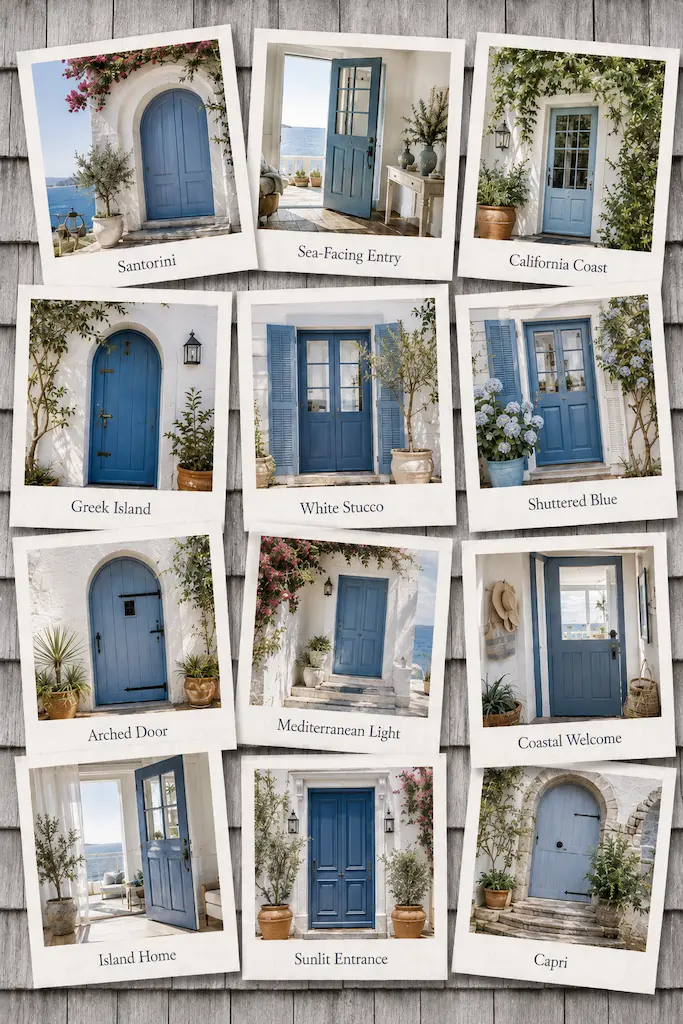
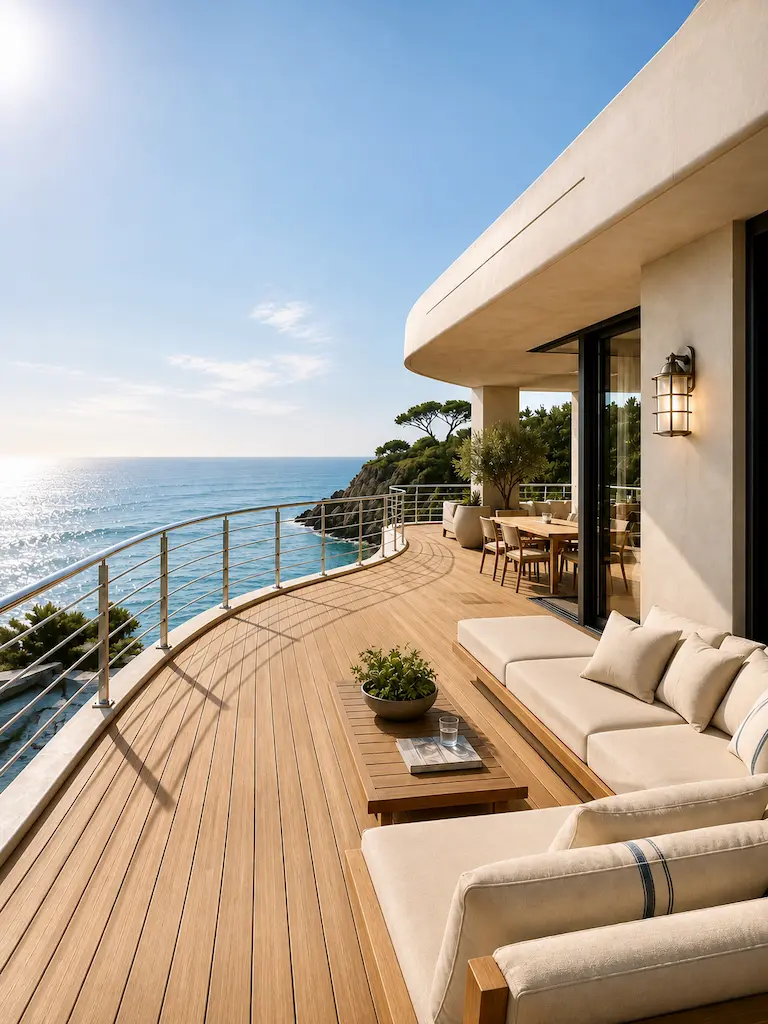
For years, regional interiors have been easy to identify because they came with a costume. Mediterranean meant plaster, terracotta, blue, arches and rustic wood; California meant linen, pale oak, rattan and effortless indoor-outdoor living. But some of the most interesting contemporary homes in both places are beginning to rely less on those visual shortcuts and more on something harder to fake: material, climate, craft, light, landscape and local building traditions.
That does not mean regional design is disappearing. Quite the opposite. It may be becoming more rooted precisely because it is becoming less obvious—less interested in looking like our idea of a place and more interested in responding to the place itself.
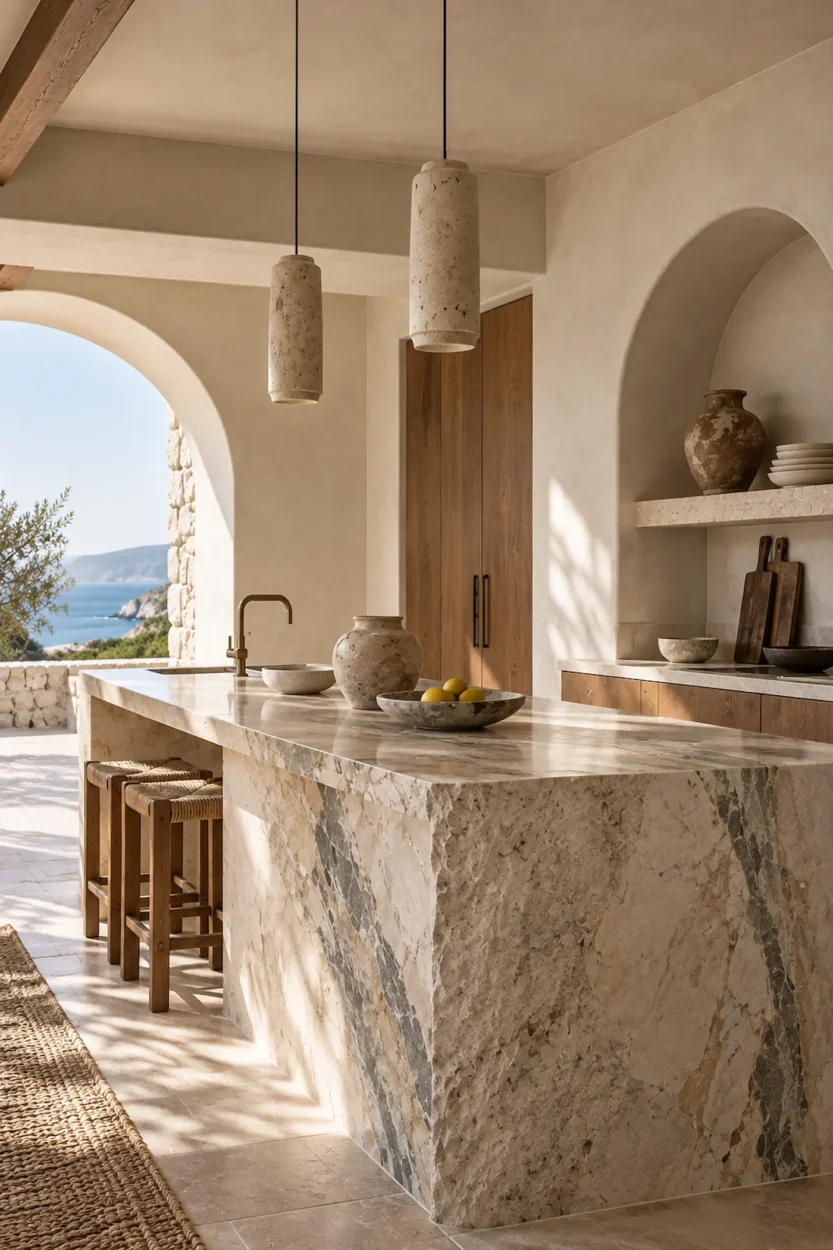
Paris Design Week 2026 gave us the spark for the question. Jonathan Stene and Elena Alexopoulos presented Paris–Athens, a furniture collection that feels connected to Greece while doing remarkably little to announce it. Greek Cipollino marble introduces sweeping blue-green veins, bringing color into the room without relying on the familiar Mediterranean palette. Red travertine brings the color of sun-warmed earth, and walnut, stainless steel and hand-cast pewter sharpen the palette. Mediterranean light and Greek landscape are present, but there is no obligatory cobalt stripe, amphora or conveniently placed olive branch. Greece, for once, does not need to introduce itself.
That is what makes the collection interesting beyond the furniture itself. Greece is expressed through material, proportion, light and making, rather than through the familiar symbols we have learned to recognize as “Greek.” Once we noticed that, the larger pattern became difficult to ignore: across contemporary Mediterranean and California design, the cliché is not necessarily vanishing, but some of the best work is learning to live without it.
Material Is Becoming the Decoration
One of the clearest signals came from In Materia, a material-focused installation curated by Elizabeth Leriche for Maison&Objet, Paris’s major international interiors and design fair, held in September 2026. Hammered metal, irregular wood grain, crackled ceramics and blown glass were chosen precisely because their surfaces preserve evidence of their origins and making. The material does not sit quietly beneath the design; its veining, fissures and imperfections become the design.
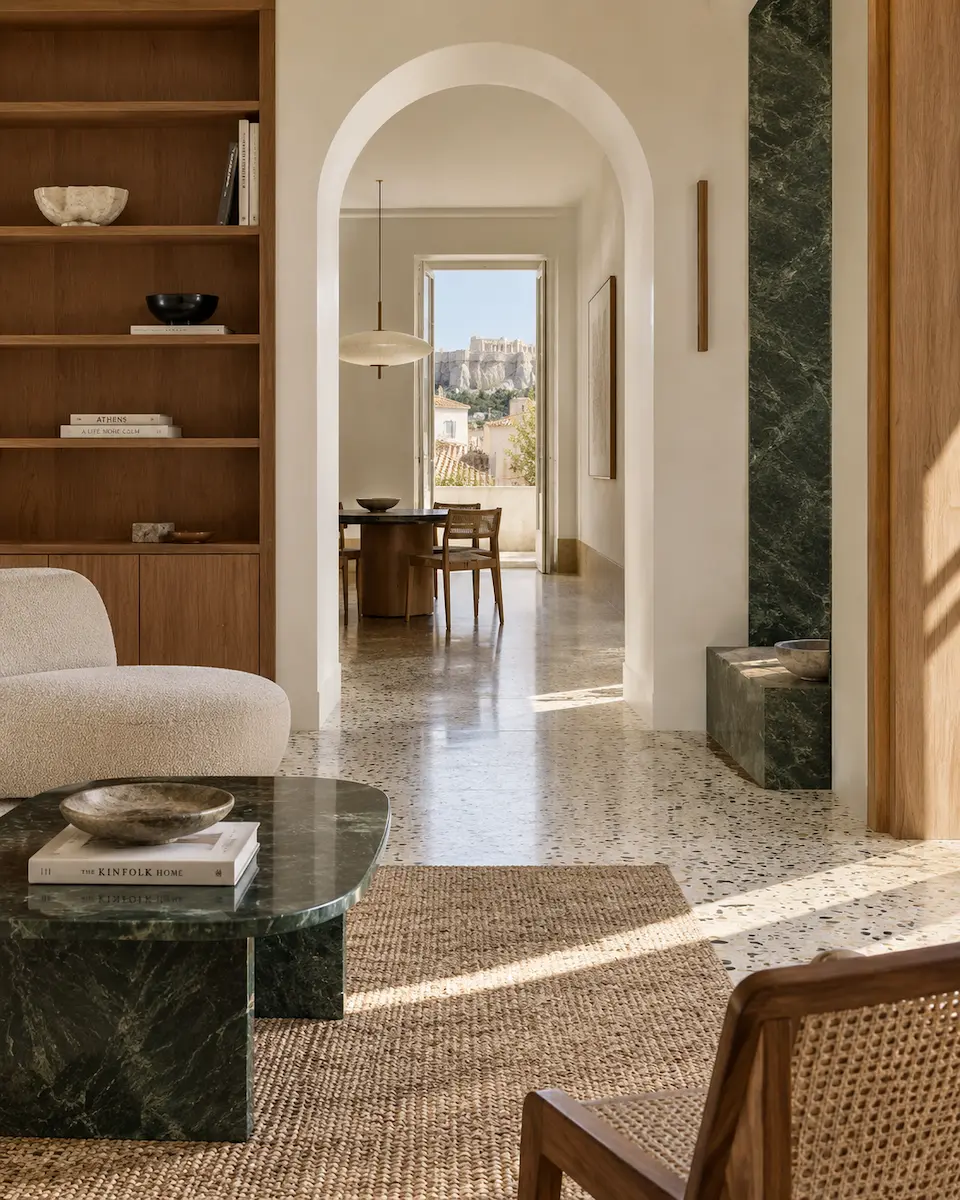
That same thinking appears in contemporary Mediterranean interiors. In Athens, architecture studio Local Local took a different approach while renovating a listed 19th-century townhouse in the historic Plaka neighborhood beneath the Acropolis. Terrazzo associated with Athenian interiors, green marble from Tinos and bespoke carpentry reconnect the home to its setting without turning it into a historical replica. The regional character comes from what the interior is made of and how those materials are handled, not from decorative objects added later to signal “Greece.”
Natural No Longer Means Rustic
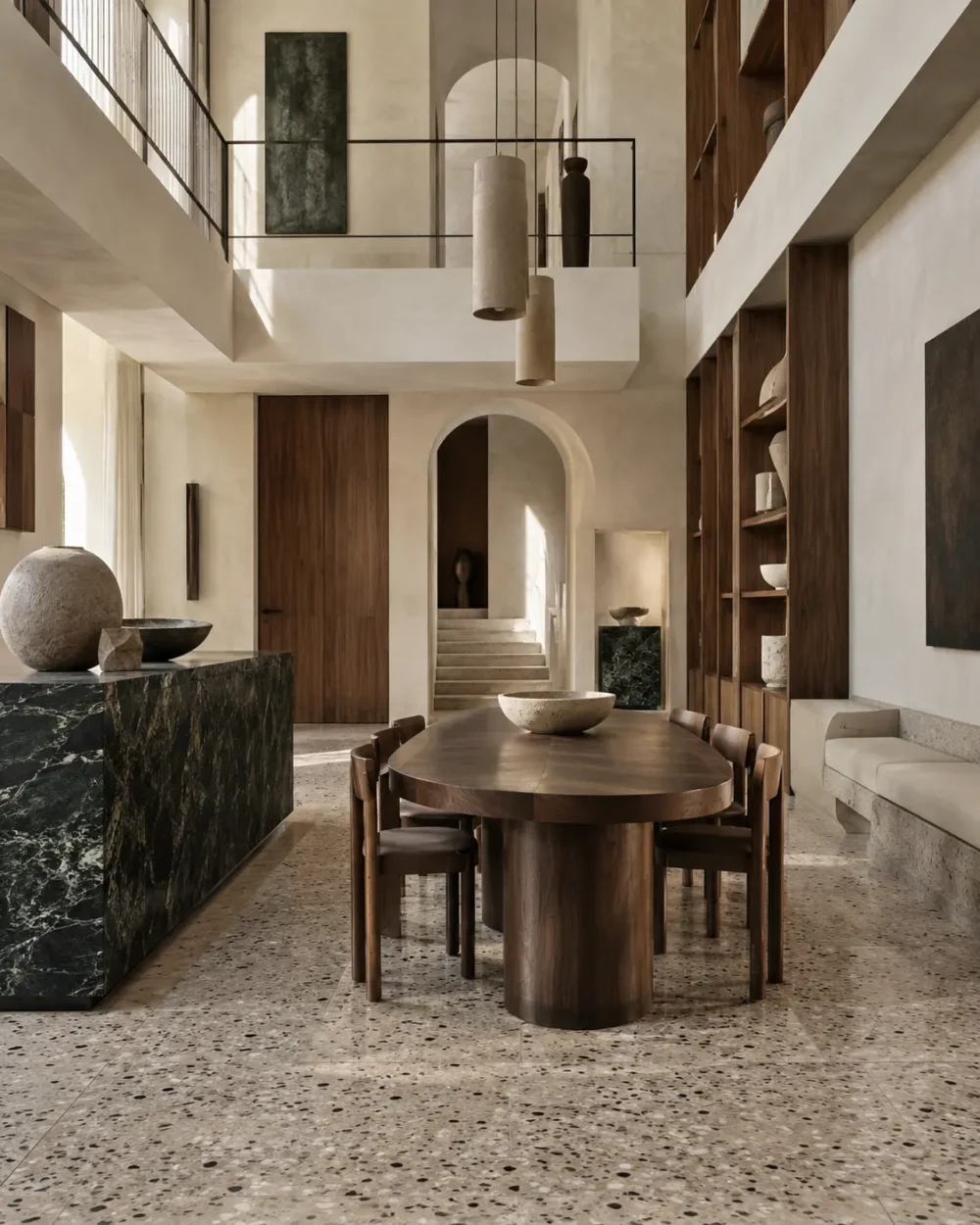
For a surprisingly long time, “natural materials” seemed to require an accompanying vocabulary of weathered timber, baskets and something deliberately imperfect leaning against a wall. Contemporary designers appear increasingly unwilling to accept the arrangement. In Paris–Athens, marble meets stainless steel and pewter; the geological and industrial sit side by side without either trying to soften the other.
That contrast matters. Stone can be ancient without the room looking old, and wood can retain its grain without becoming farmhouse decoration. Natural materials are being handled with sharper geometry, cleaner junctions and contemporary metals, allowing age and precision to occupy the same room. Rusticity is no longer the admission price for nature.
Craft Is Moving Back Toward the Center
Local Local’s Plaka House offers another clue. A local carpenter produced bookshelves, radiator covers, skirting and other bespoke joinery derived from classical forms but adapted for modern use, while the Tinos-marble fireplace provides a contemporary focal point without disguising its Greek material heritage. Craft here is not a charming accessory brought in once the room is finished. It has become part of the interior’s vocabulary.
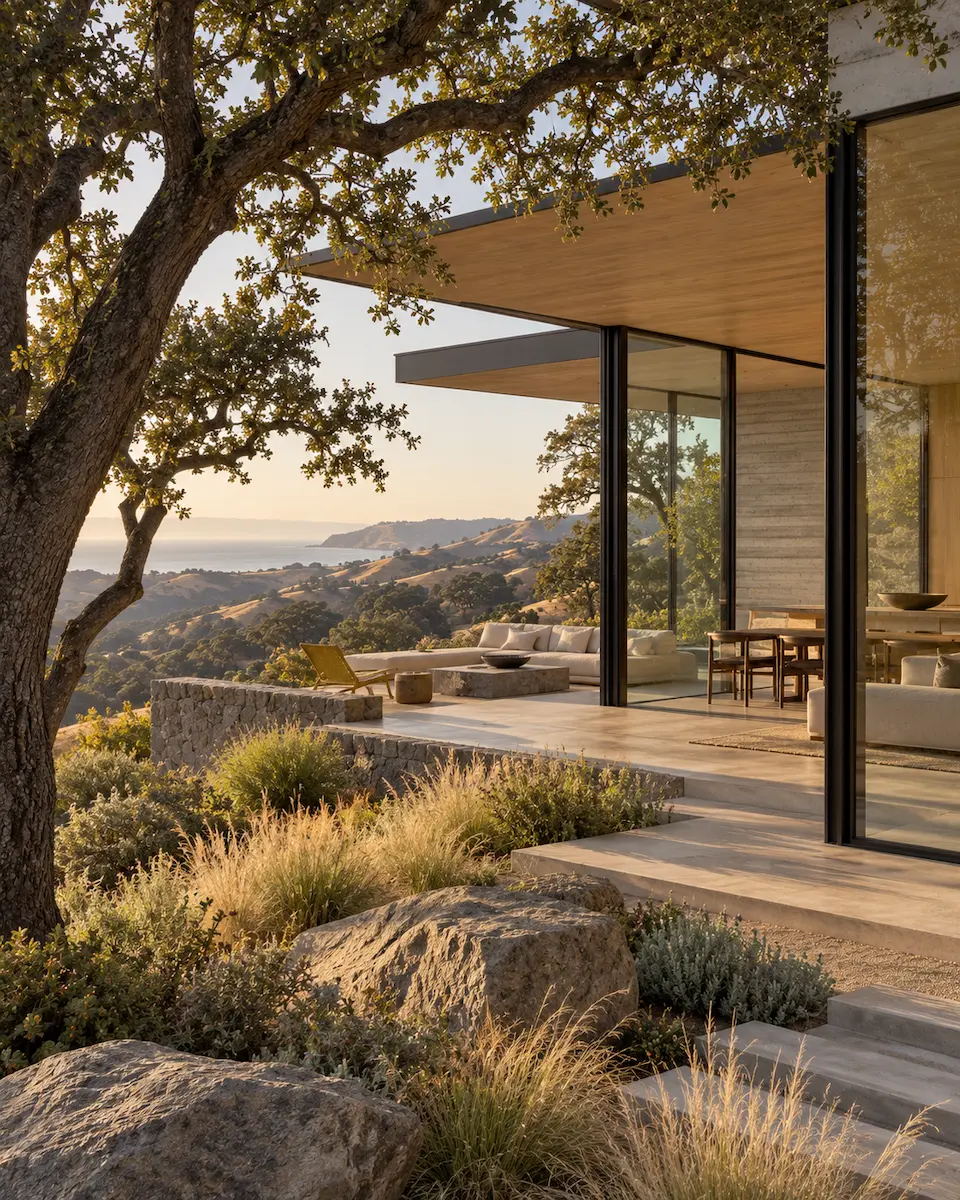
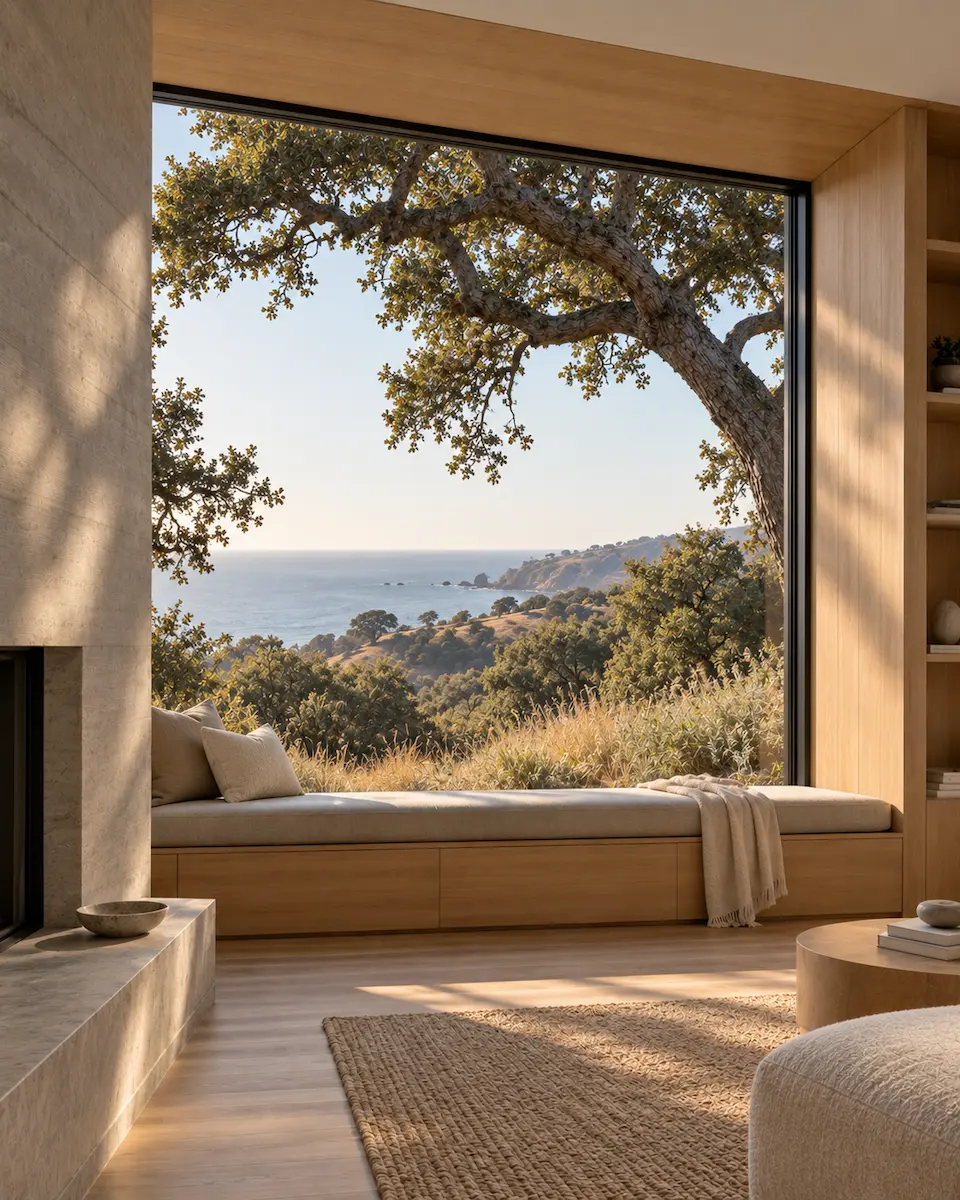
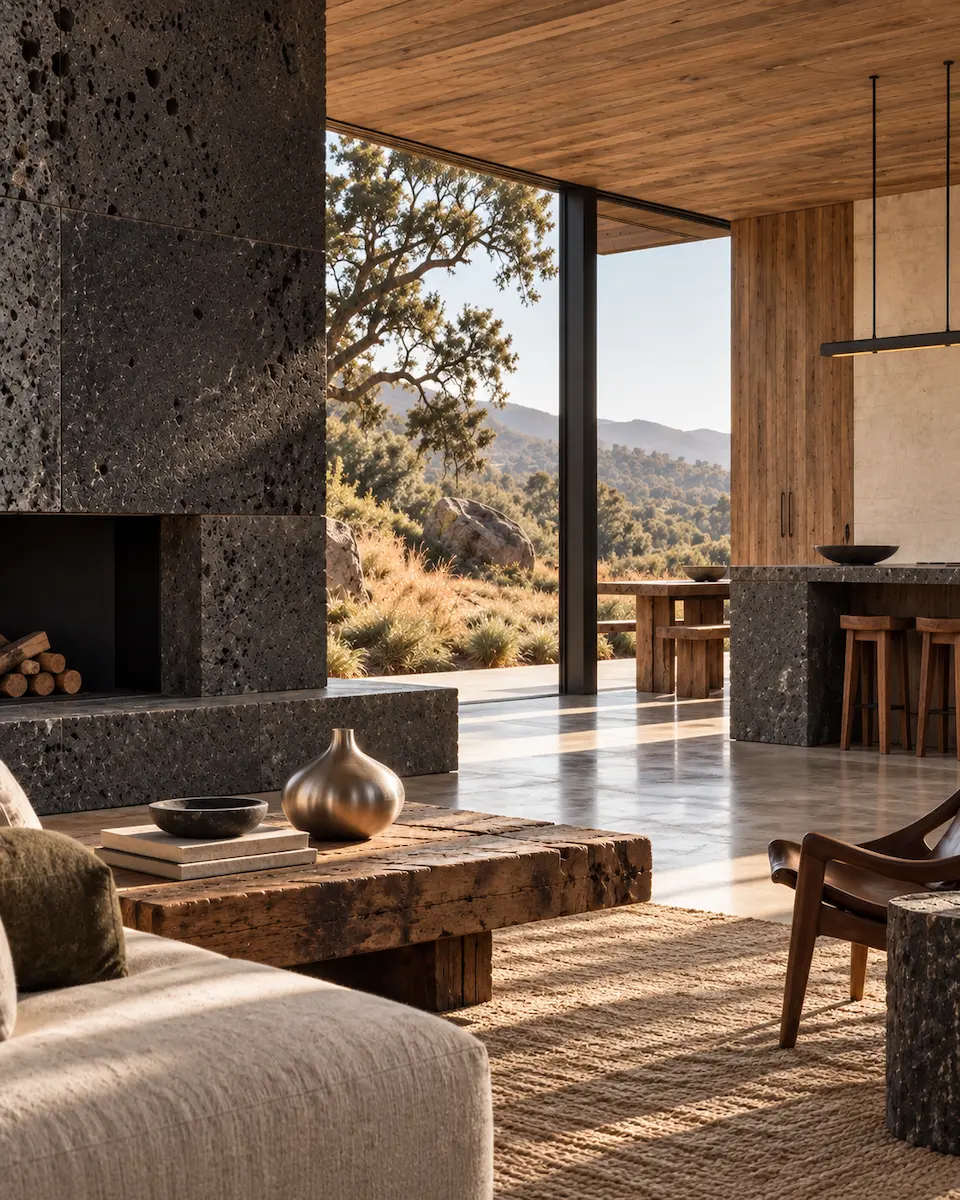
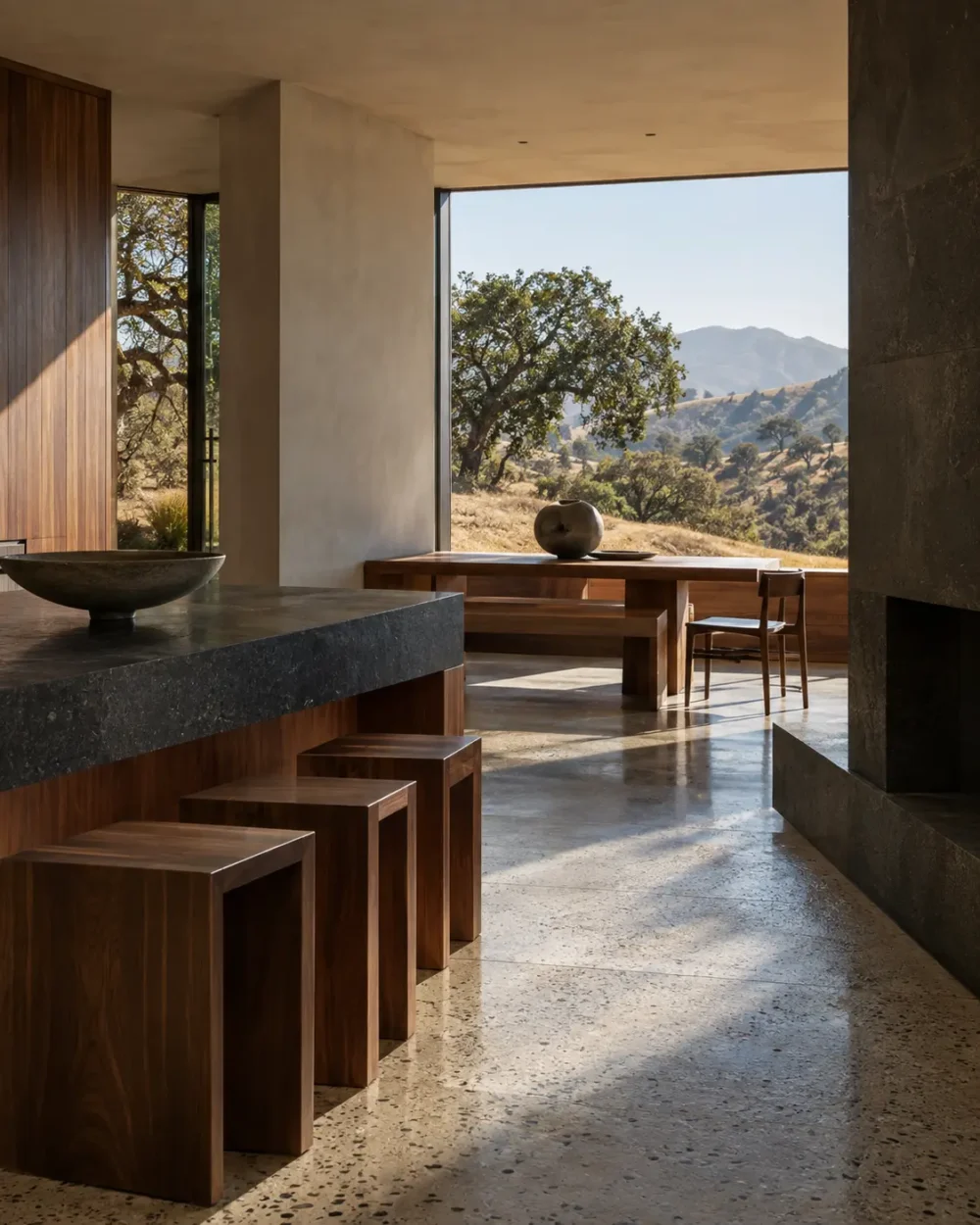
California offers a different version of the same idea. In Northern California, Aidlin Darling Design created a small pavilion for music and meditation that was recognized by American Institute of Architects (AIA) California in 2026. Instead of giving the building a decorative “California” look, the architects let the site do the work: local basalt, fir and cedar, salvaged lumber, shade, water and the surrounding landscape all shaped the design.
The result is regional without relying on the usual shorthand. The materials are meant to weather and patina rather than stay pristine, so the building gradually feels more connected to its setting over time. Here, craftsmanship is not added as a finishing touch; it is built into the way the architecture belongs to the place.
Furniture Is Becoming Architecture in Miniature
Stene and Alexopoulos make perhaps the clearest case for the fourth shift. Their Paris–Athens pieces are conceived not as autonomous objects placed into an already completed interior, but as elements capable of defining the space around them. Furniture can establish mass, rhythm, circulation and proportion—the sorts of jobs we normally assign to architecture.
The idea is hardly new. Mediterranean houses have long contained built-in benches, niches, platforms and storage, and California modernism developed its own love affair with furniture integrated into architecture. What feels current is the recovery of that relationship after years in which furniture became the final shopping layer: architecture first, objects afterward. Suddenly the table is not there simply because the room needed one; it has been promoted to structural cast member.
Regional Identity No Longer Needs the Costume
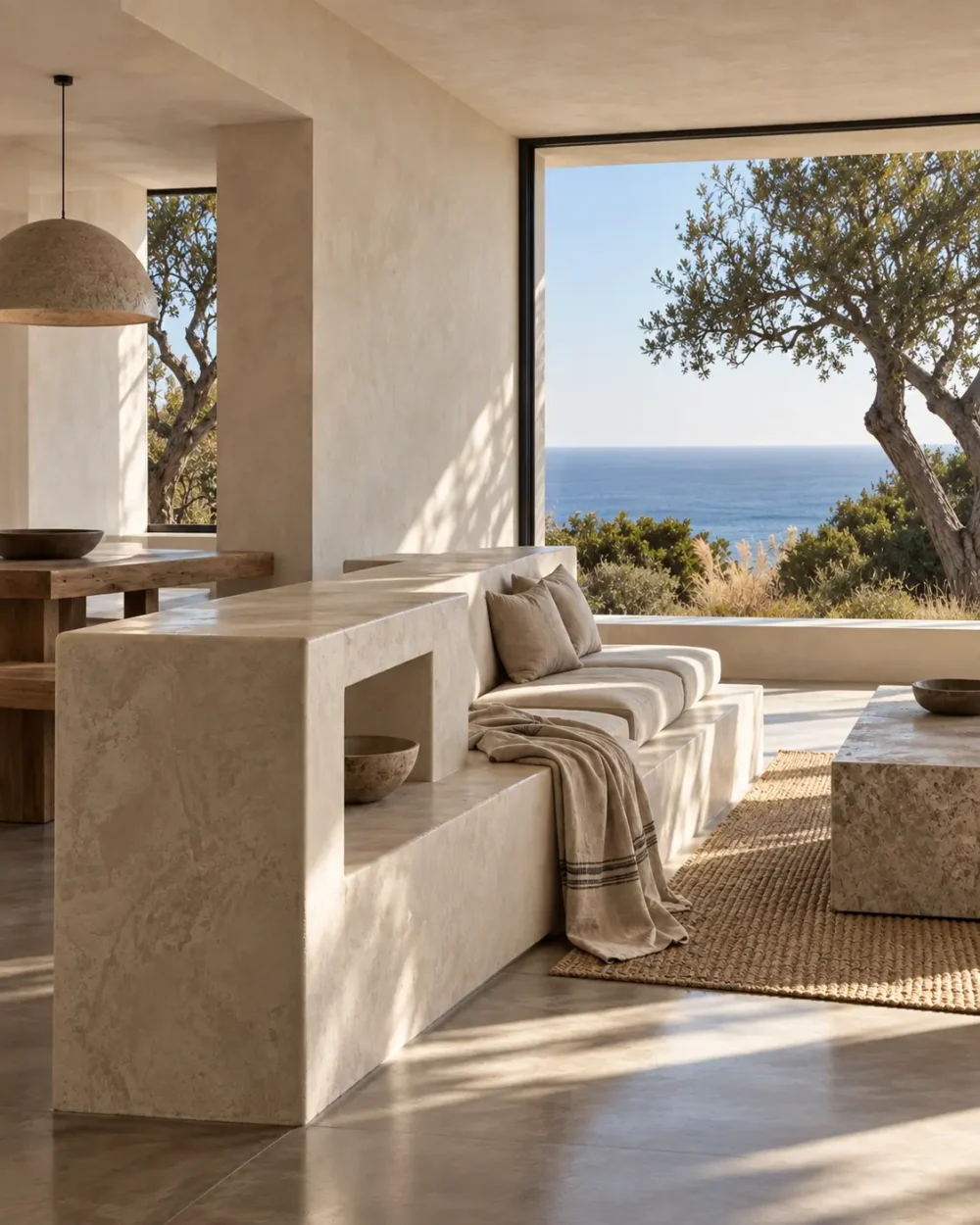
On Mykonos, K-Studio’s 2026 Anamesa draws its character from Cycladic light, wind, stone, and the knowledge of local craftspeople. There is no need to assemble the familiar Greek postcard. The architecture already knows where it is.
California reaches a similar conclusion through a different landscape. In Aidlin Darling Design’s Northern California pavilion, basalt, timber, shade, and water respond to the surrounding environment rather than to an established coastal aesthetic. The materials belong to the site, not to a decorating formula.
Perhaps that is the real shift. Mediterranean design does not stop being Mediterranean when the blue disappears, any more than California loses its identity without a rattan chair. The most interesting homes are no longer trying so hard to look like somewhere. They are beginning to belong there.