How One Sea Became a Region, a Diet, a Style—and a Way of Life
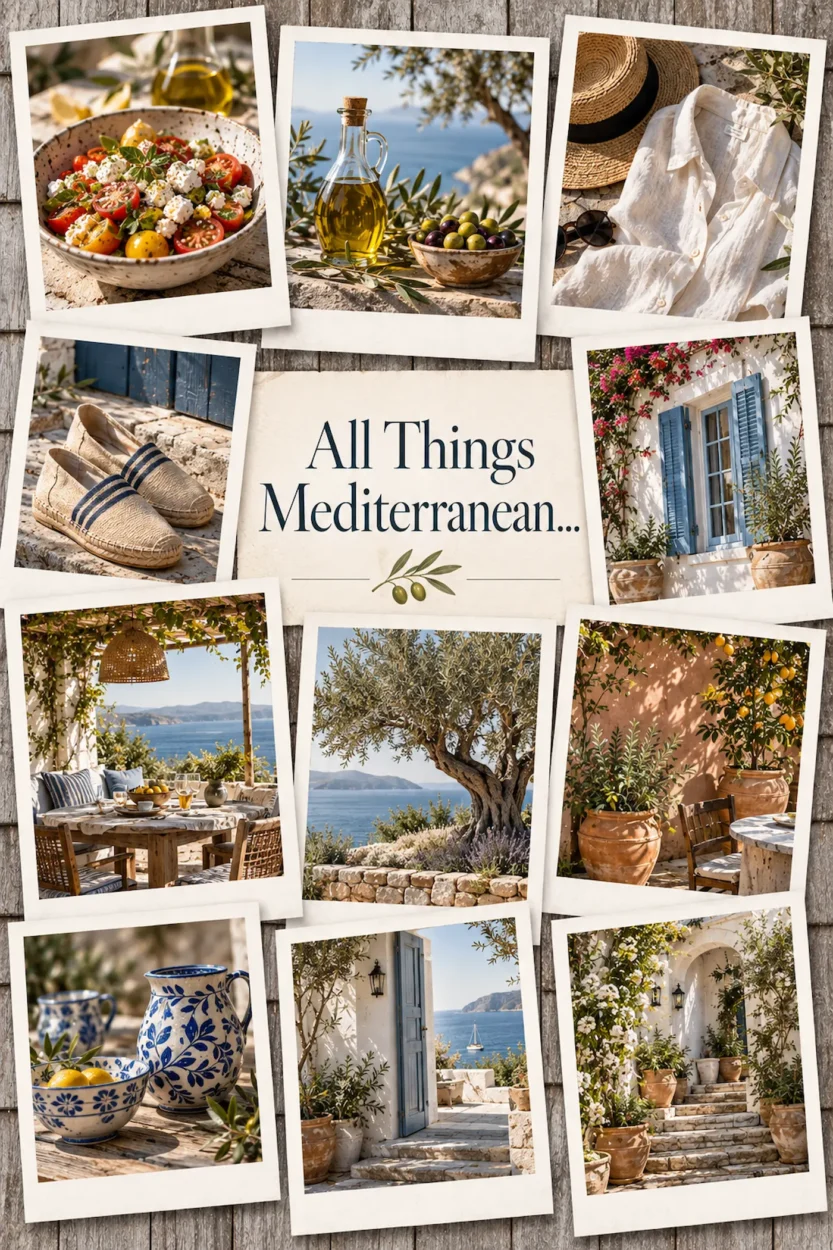
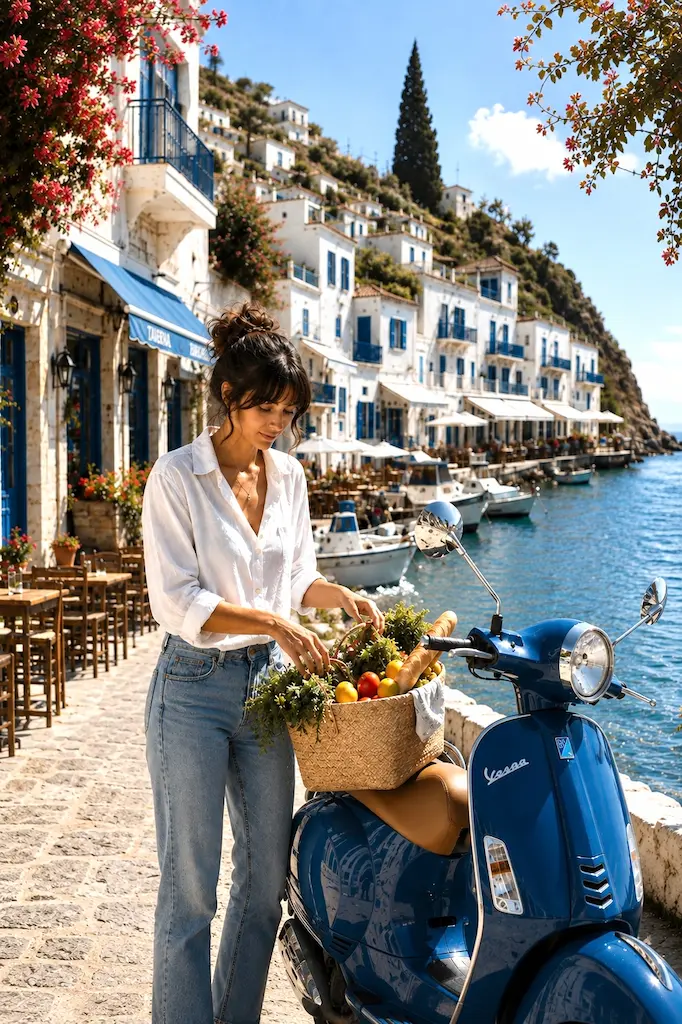
We use the word Mediterranean with remarkable confidence. A bowl of tomatoes with feta is Mediterranean. A white plaster house with blue shutters is Mediterranean. Olive oil and olives are Mediterranean. Linen trousers and espadrilles are Mediterranean. Apparently, if something involves sunshine, terracotta and a suspiciously beautiful lunch, the Mediterranean has claimed it.
California may be especially guilty. We build Mediterranean style houses in Santa Barbara, plant Mediterranean gardens in Los Angeles, order Mediterranean falafels and salads in San Diego and describe an entire approach to indoor-outdoor living as Mediterranean. The strange thing is that much of it does feel perfectly at home here in California. A tiled courtyard, an olive tree, a shaded terrace and a plate of grilled vegetables somehow make as much visual sense against the California coast as they do beside a European one.
So what exactly are we borrowing? Because the Mediterranean is not a country, a nationality or even one culture. Spain is not Greece. Greece is not Morocco. Morocco is not Italy, and Italy alone can barely agree with itself from one region to the next. A Cycladic house, Provençal farmhouse, Lebanese courtyard and Moroccan riad do not share an interior designer, however much Pinterest occasionally suggests otherwise. Yet we know what we mean when we say something feels Mediterranean. That contradiction is precisely what makes the word interesting.
What Does Mediterranean Actually Mean?
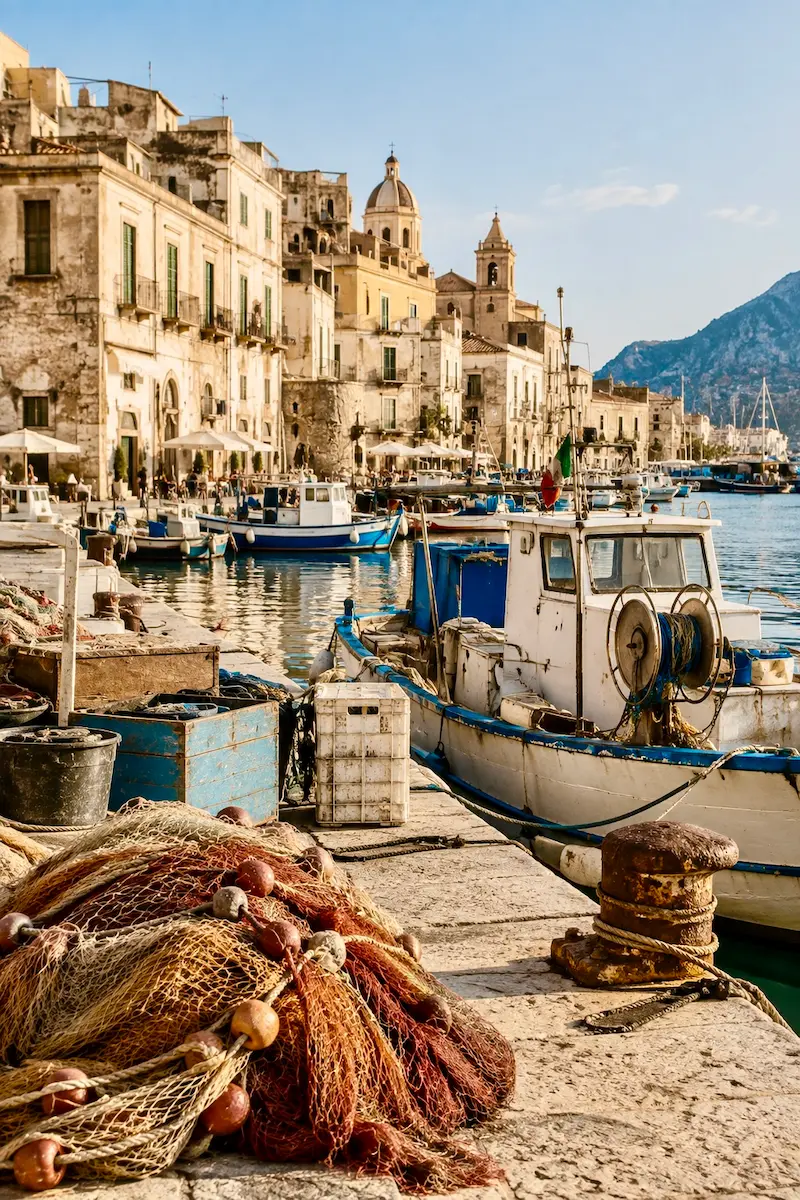
The Mediterranean begins, rather unromantically, as geography. Its name comes through Latin from the idea of a sea in the middle of lands: Europe above it, Africa below it and Asia to the east. What looks on a modern map like a boundary spent much of history behaving more like a road, carrying people, goods, ingredients, beliefs, techniques and ideas from shore to shore.
That distinction changes everything. The Mediterranean did not produce one civilization neatly radiating outward from a center; it produced civilizations constantly encountering one another across water. Phoenician traders, Greeks, Romans, Arabs, Venetians, Ottomans and countless others moved through overlapping worlds, leaving behind words, foods, buildings, plants and technologies that rarely respected the borders we later drew around them.
This is why trying to decide whether one ingredient, pattern or habit is “truly Mediterranean” can become entertainingly complicated. Foods migrated. Techniques migrated. People certainly migrated. The sea created differences, but it also created exchange, and after several thousand years the cultural family tree begins to resemble something drawn by an enthusiastic child with far too many crayons.
The useful definition, then, is not that Mediterranean cultures are the same. They are emphatically not. It is that they developed in prolonged conversation with one another while responding to some remarkably similar physical conditions. And this is where California unexpectedly enters the story.
Much of California has what scientists actually call a Mediterranean climate: generally dry summers and wetter winters. It is an unusual climate pattern found in only a handful of regions around the world, including the Mediterranean Basin, California, central Chile, parts of South Africa and southwestern Australia. California is not metaphorically Mediterranean in this respect; climatically, the connection is real. That shared rhythm of rain and drought helps explain why the Mediterranean can feel strangely familiar to a Californian before anything has been styled at all. The light, the dry hills, the aromatic shrubs, the long rainless summer, the desire for shade rather than enclosure — these are environmental cousins.
Before California borrowed Mediterranean aesthetics, it was already living with a related set of problems.
Why Mediterranean Architecture Looks the Way It Does
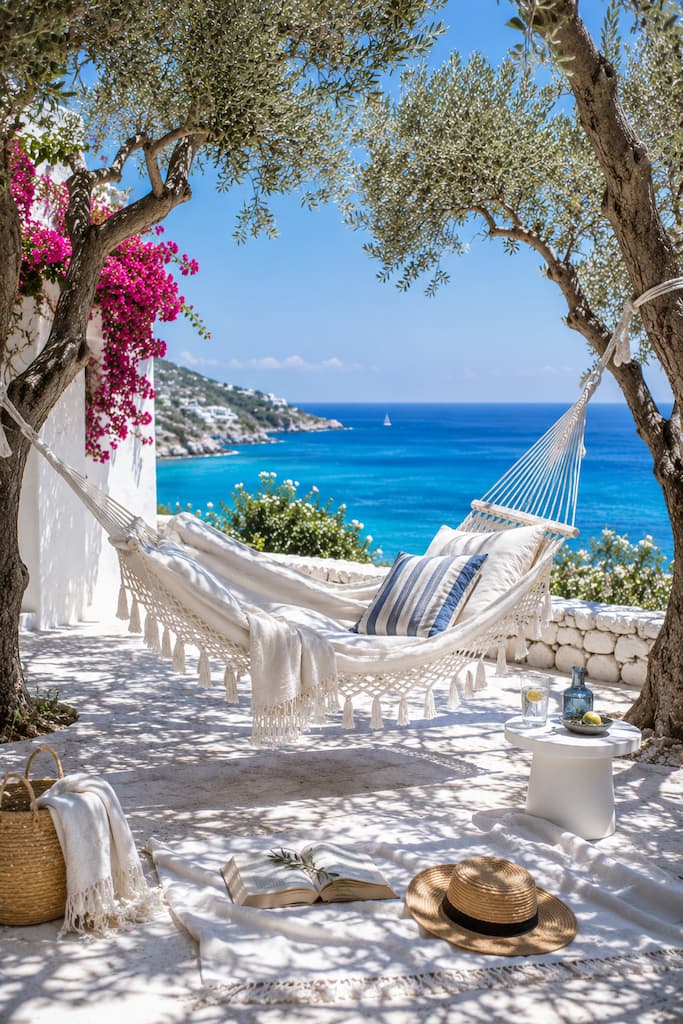
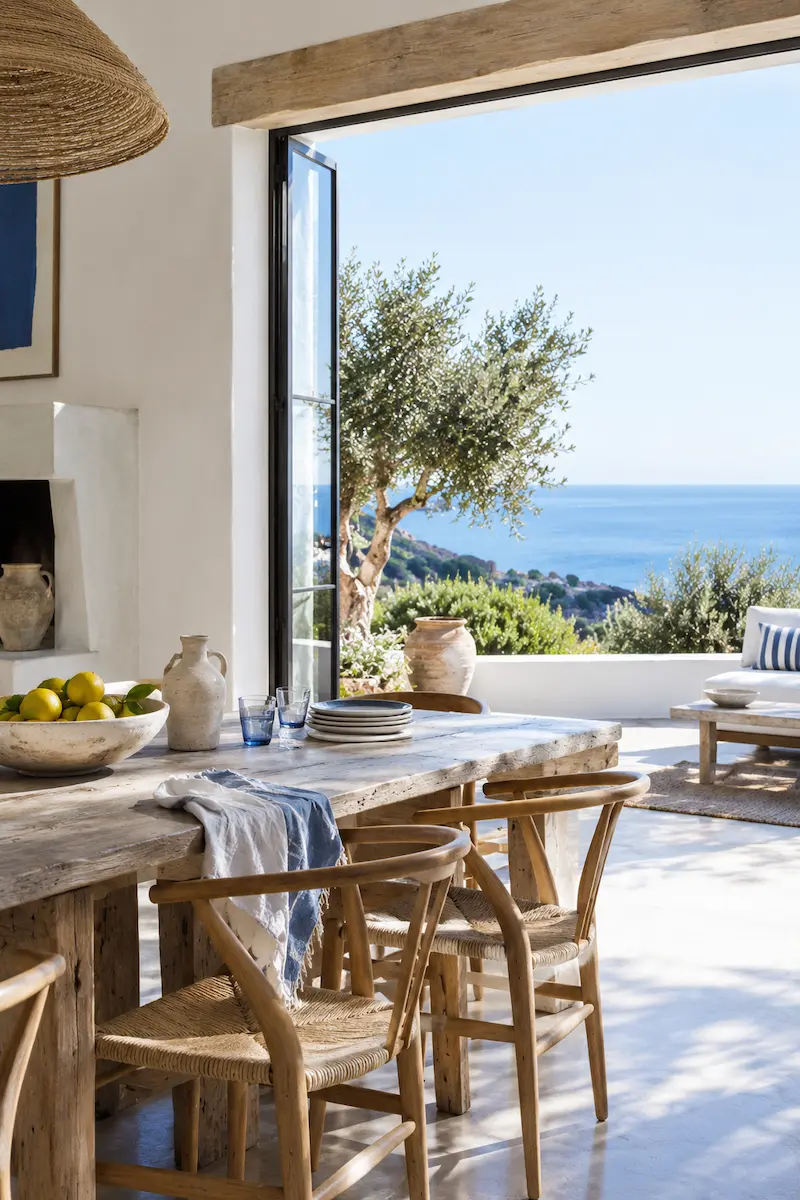
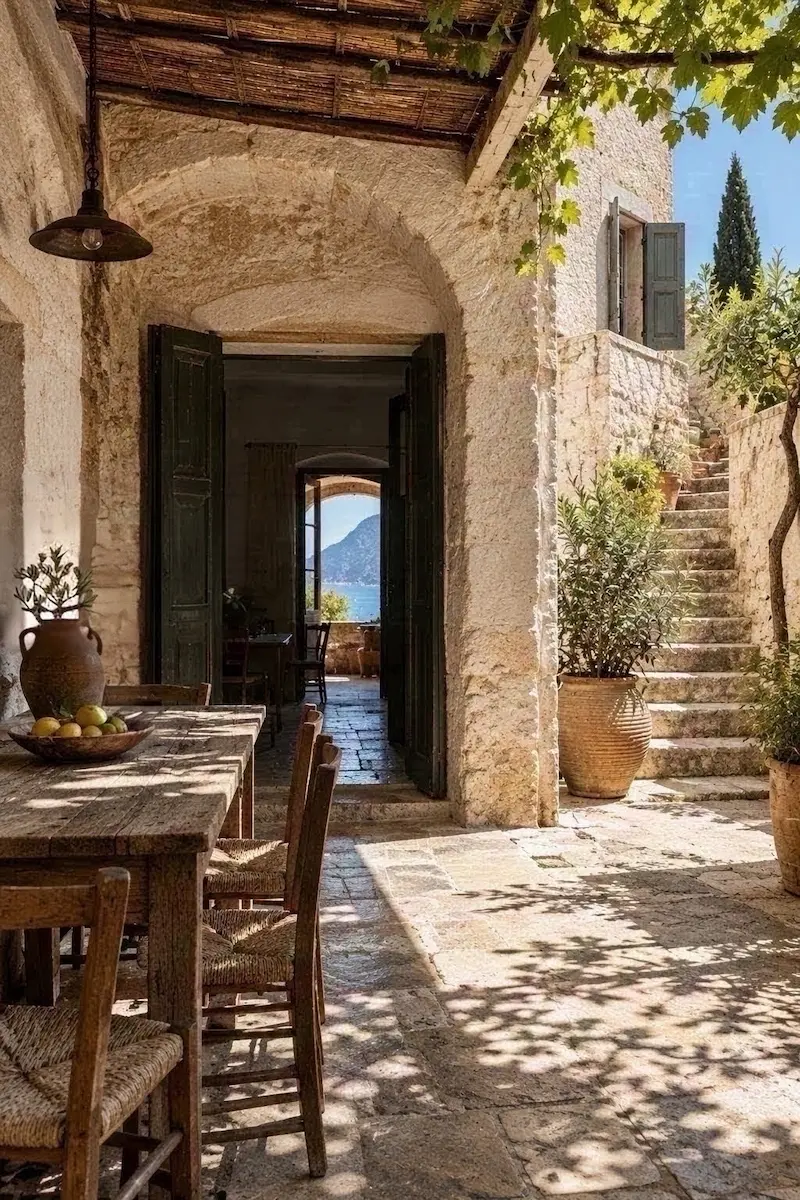
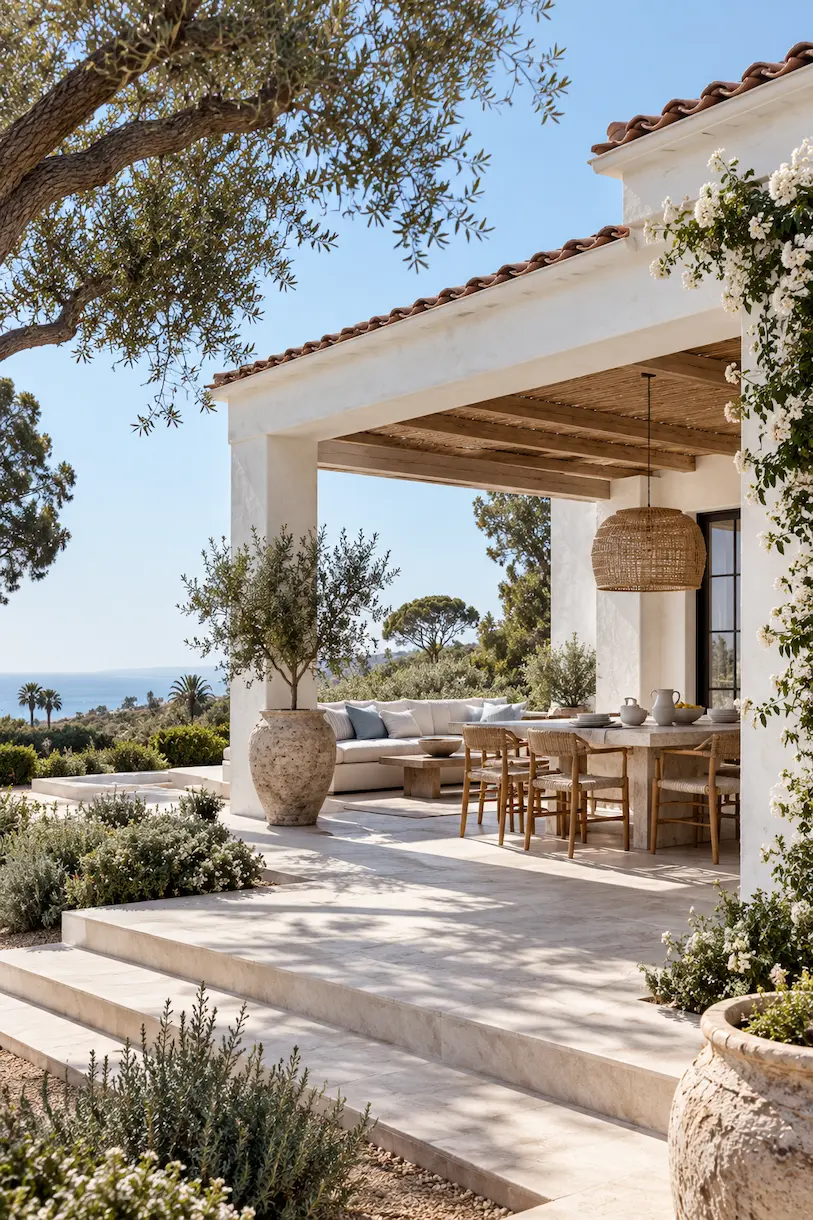
Architecture is where those problems became beautiful. Across the Mediterranean, houses evolved according to place, climate, available materials and culture. Thick masonry could moderate heat; shutters and screens controlled sun; courtyards created protected outdoor rooms; arcades and pergolas provided shade; stone, clay, plaster and timber came from what was close enough to use. None of this began because someone had assembled an especially persuasive mood board. That matters because today we tend to define Mediterranean architecture through its ingredients: stucco, tile, arches, terracotta, perhaps an olive tree positioned photogenically beside the door. But those are the visible results. The more interesting Mediterranean principle is underneath them: the house negotiates with the climate instead of pretending the climate is not there.
A room can open to a courtyard because outdoor space is part of living space. A deep overhang is useful before it is beautiful. A plaster wall, stone floor or timber shutter ages because the material is expected to participate in life rather than remain eternally showroom-perfect. What we now admire as Mediterranean ease often began as common sense.
California recognized that logic early. Spanish Colonial and later Mediterranean Revival architecture gave the state some of its most recognizable buildings, especially in Southern California, but the deeper affinity goes beyond copying arches from another coast. California also has intense sun, dry summers and a culture built around moving between indoors and outdoors. The Mediterranean house offered not merely a look, but a convincing answer to a climate California understood. That is also why the most successful contemporary California-Mediterranean homes often look less “Mediterranean” than their predecessors. They may have no decorative columns, ornate ironwork or theatrical Tuscan kitchen. Instead there is lime-wash, stone, oak, linen, shade, restrained color and enormous attention to the threshold between house and landscape.
Strip away the décor and the relationship survives. This may be the first clue to what Mediterranean actually means: it is not a collection of objects. It is a response to place.
The Mediterranean Diet Was Never Just About Food
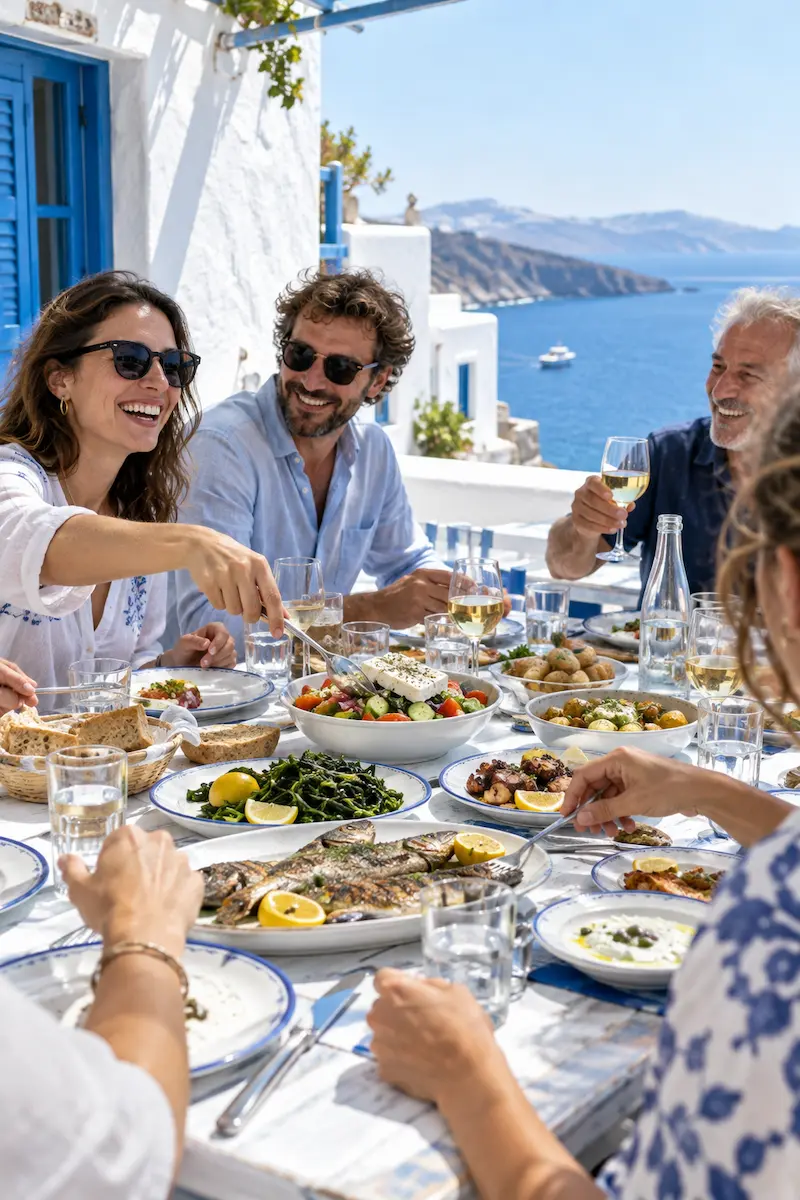
Food tells almost exactly the same story. We now speak about “the Mediterranean diet” as though somebody somewhere around the sea once gathered the region together, distributed matching grocery lists and strongly suggested more legumes. In reality, the cuisines around the Mediterranean are wonderfully inconsistent. Greek food is not Spanish food; Provençal cooking is not Tunisian cooking; a Sicilian pantry and a Lebanese pantry overlap in places and depart spectacularly in others.
Even UNESCO’s description of the Mediterranean diet makes clear that the idea extends far beyond nutrients. Its designation encompasses knowledge about growing, harvesting, fishing, preserving, cooking, markets, rituals and especially the sharing of food; eating together is treated as part of the cultural practice itself. The countries represented in the UNESCO inscription include Cyprus, Croatia, Spain, Greece, Italy, Morocco and Portugal, which rather neatly demonstrates how broad the term has become.
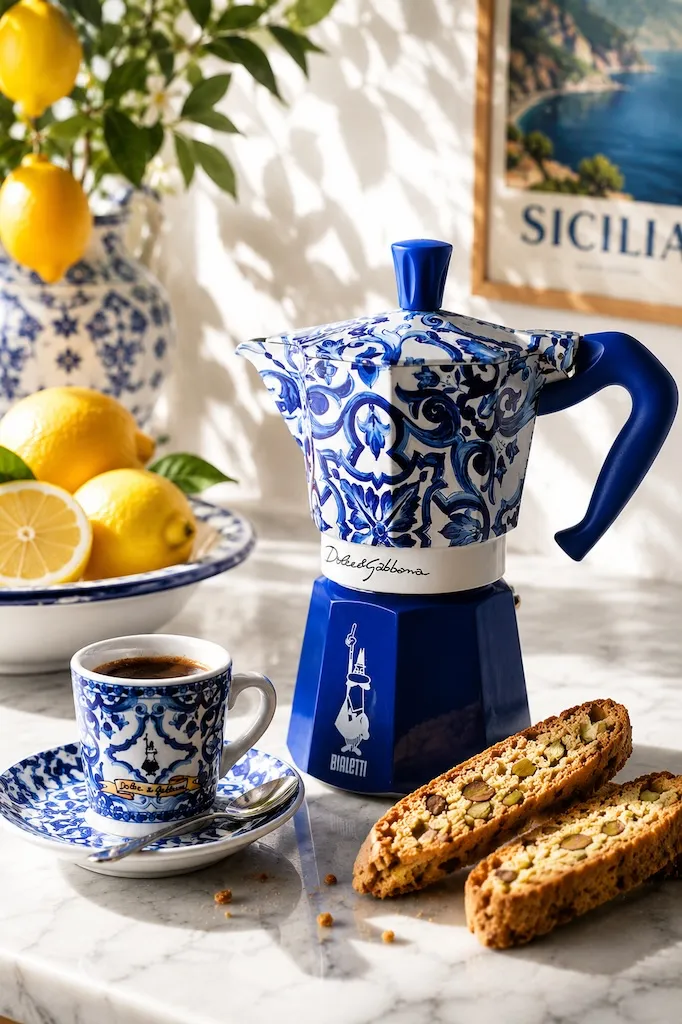
Even the word diet has been flattened by modern usage. In the Mediterranean context, UNESCO traces it to the Greek diaita, meaning a way of life. Suddenly the famous Mediterranean diet looks less like an instruction to drizzle olive oil over everything and more like an entire relationship among landscape, season, food and people.
This is another reason California recognizes itself in the idea. California’s contemporary food identity also depends heavily on climate, agriculture, seasonality and access to extraordinary produce. The farmers’ market, the citrus tree in the garden, vegetables treated as the meal rather than the apology beside it — these do not make California secretly European, but they create a similar instinct that food begins with what a landscape can produce.
The two coasts did not arrive at identical cuisines. They arrived at something more useful: the belief that place should be allowed to have a say in what ends up on the table.
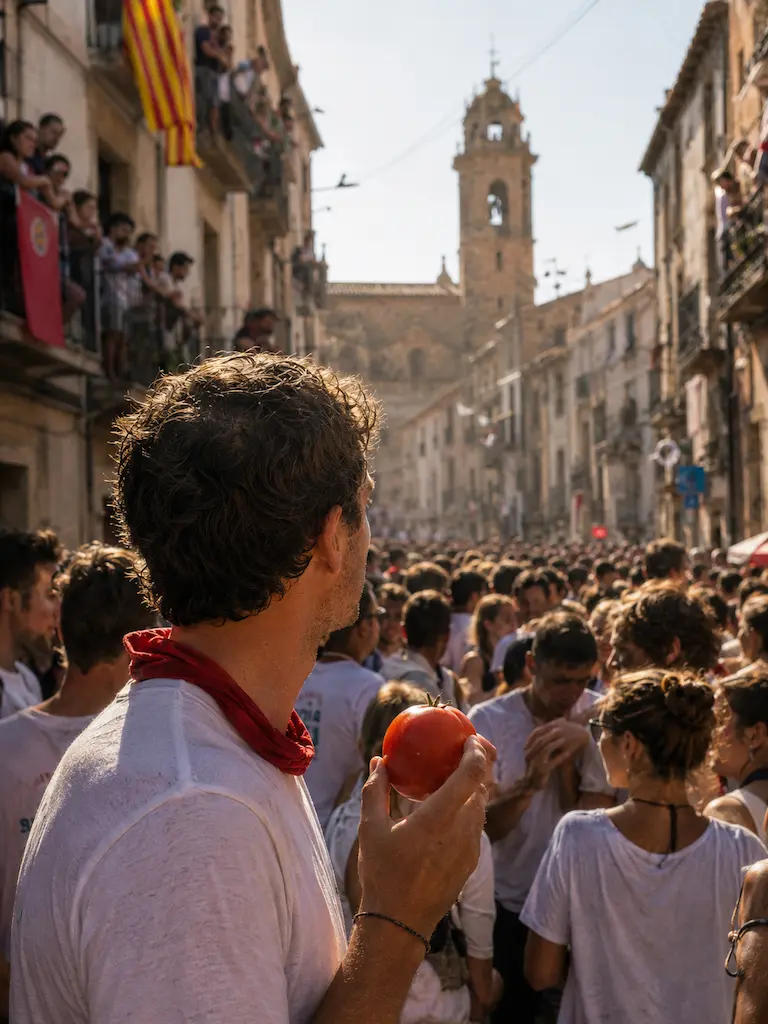
And when place matters, season follows. So does simplicity. A ripe tomato needs rather less intervention than an unripe one, which may be the closest agriculture has ever come to writing a design manifesto.

So What Makes Something Mediterranean?
So perhaps we have been asking the wrong question. Instead of asking what objects make something Mediterranean, ask what conditions produced them. The linen, stone, ceramics, shutters, grilled vegetables, shaded terraces, woven baskets, courtyards and long tables begin to look less like a style catalogue and more like evidence. They belong to cultures shaped by sun, scarcity, agriculture, trade, craft, community and constant proximity to the outdoors.
That also explains why Mediterranean style becomes ridiculous when copied too literally. A Greek island house does not require blue door or shutters to prove where it lives. Provence does not spend its mornings arranging lavender beside artisanal soap. Real places are busy being real places; it is usually the rest of us who turn them into décor.
The contemporary Mediterranean influence becomes much more interesting when the costume disappears. In California, that might mean a house designed around shade and cross-ventilation rather than arches, a garden chosen for a dry climate rather than imported symbolism, local ceramics instead of faux-antique accessories, and meals dictated by what actually grows nearby. The lesson is not to make California look more like the Mediterranean. It is to notice that both places are at their best when they look more closely at themselves.
This is perhaps the connection at the heart of our journey. California and the Mediterranean are separated by an ocean, languages and histories, yet they repeatedly arrive at familiar ideas because certain landscapes ask similar questions: How do we live with sun? How do we make scarcity beautiful? How much of the house really needs to be indoors? What should we eat when the land is dry for months? And why, after designing the perfect terrace, would anyone eat dinner inside?
The Mediterranean therefore cannot be reduced to a look, because it existed long before anyone thought to market one. It is a sea surrounded by distinct cultures that spent thousands of years adapting to landscape, climate and one another. Their solutions became architecture, food, craft, clothing and rituals; eventually those solutions became desirable enough for the rest of the world to give them a collective name.
California borrowed many of them because California recognized something familiar. That may be what we are really describing whenever we call a room, meal, garden or way of living Mediterranean. Not Greece, Italy, Spain or Morocco compressed into one photogenic fantasy, but a particular relationship between land, climate, material and daily life. The Mediterranean gave that relationship countless forms; California is still inventing its own.
And somewhere between the two coasts lies our Caliterranean idea: not copying a place, but understanding why a way of living feels so right on both shores — and discovering what happens when the same principles blend together. We simply gave that meeting between California and the Mediterranean a name: Caliterranean.
CONTINUE EXPLORING
Inspired by this story? Continue your journey with What Is the California Lifestyle, Really? →